Cart
0
A tray of hot grilled chicken, a stack of prepared sandwiches, and a bowl of cut fruit should not be covered the same way. The question of ورق ألمنيوم أم نايلون تغليف is not about choosing one product for every task. It is about matching the wrap to the temperature, food type, storage period, and service method.
For restaurants, caterers, offices, and busy households, the right choice prevents leaks, protects food quality, reduces waste, and keeps prep work moving. Aluminum foil and plastic wrap are both essential packaging supplies, but each performs best under different conditions.
Aluminum Foil vs. Plastic Wrap: The Quick Difference
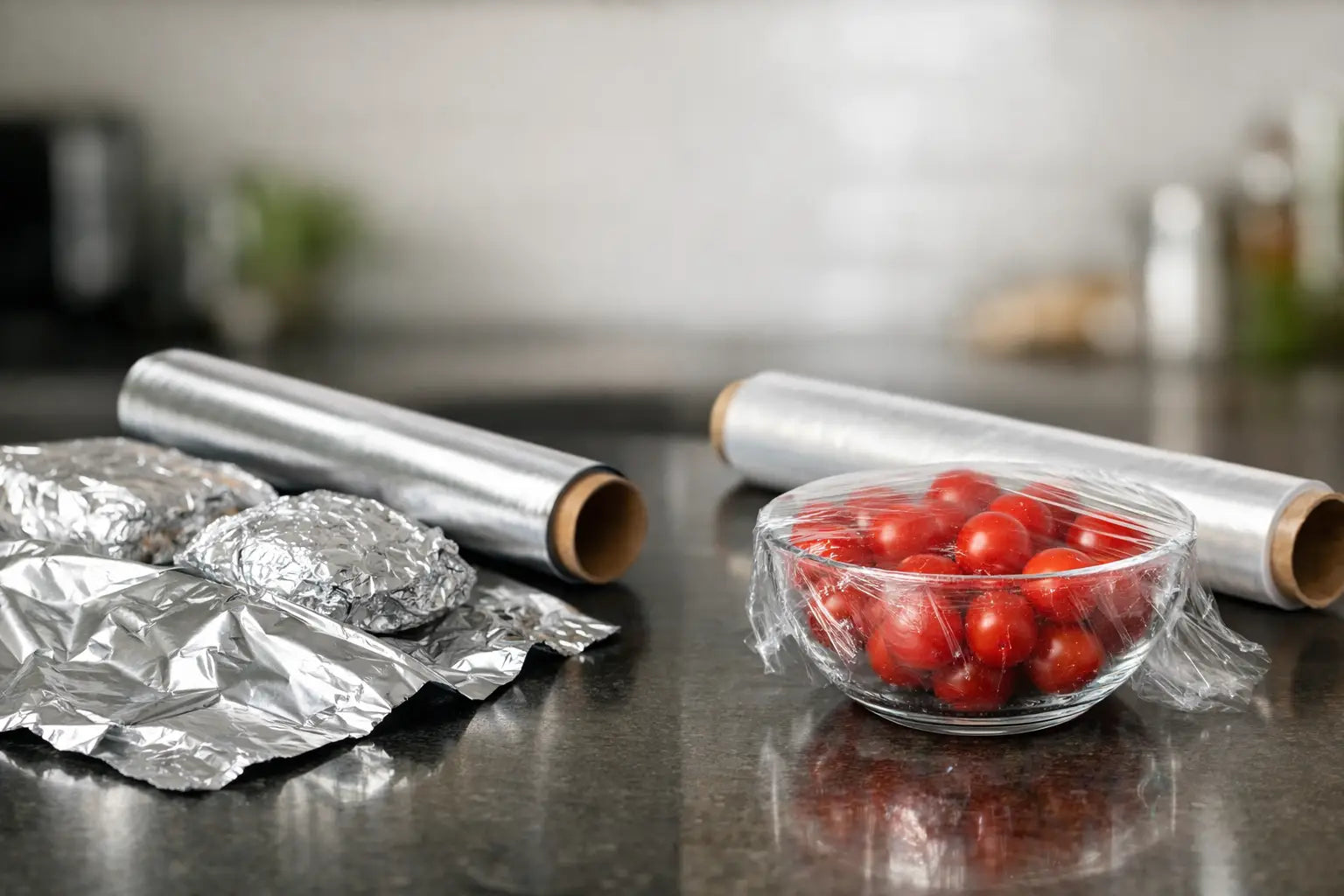
Aluminum foil is strong, heat-resistant, and easy to shape around pans, trays, and containers. It works especially well for hot food, oven use, grilling, and protecting cooked dishes during transport. Its firmer structure also makes it useful when a package needs to hold its shape.
Plastic wrap, often called cling film, creates a close seal around bowls, plates, produce, sandwiches, and cold food containers. It is designed to help retain moisture and limit exposure to air in the refrigerator. Because it is transparent, staff and household users can identify the contents without removing the wrap.
Neither is automatically better. Foil is generally the practical choice for heat and structure, while plastic wrap is usually the better choice for a tight seal on cold or room-temperature food.
Choose Aluminum Foil for Heat, Baking, and Carryout
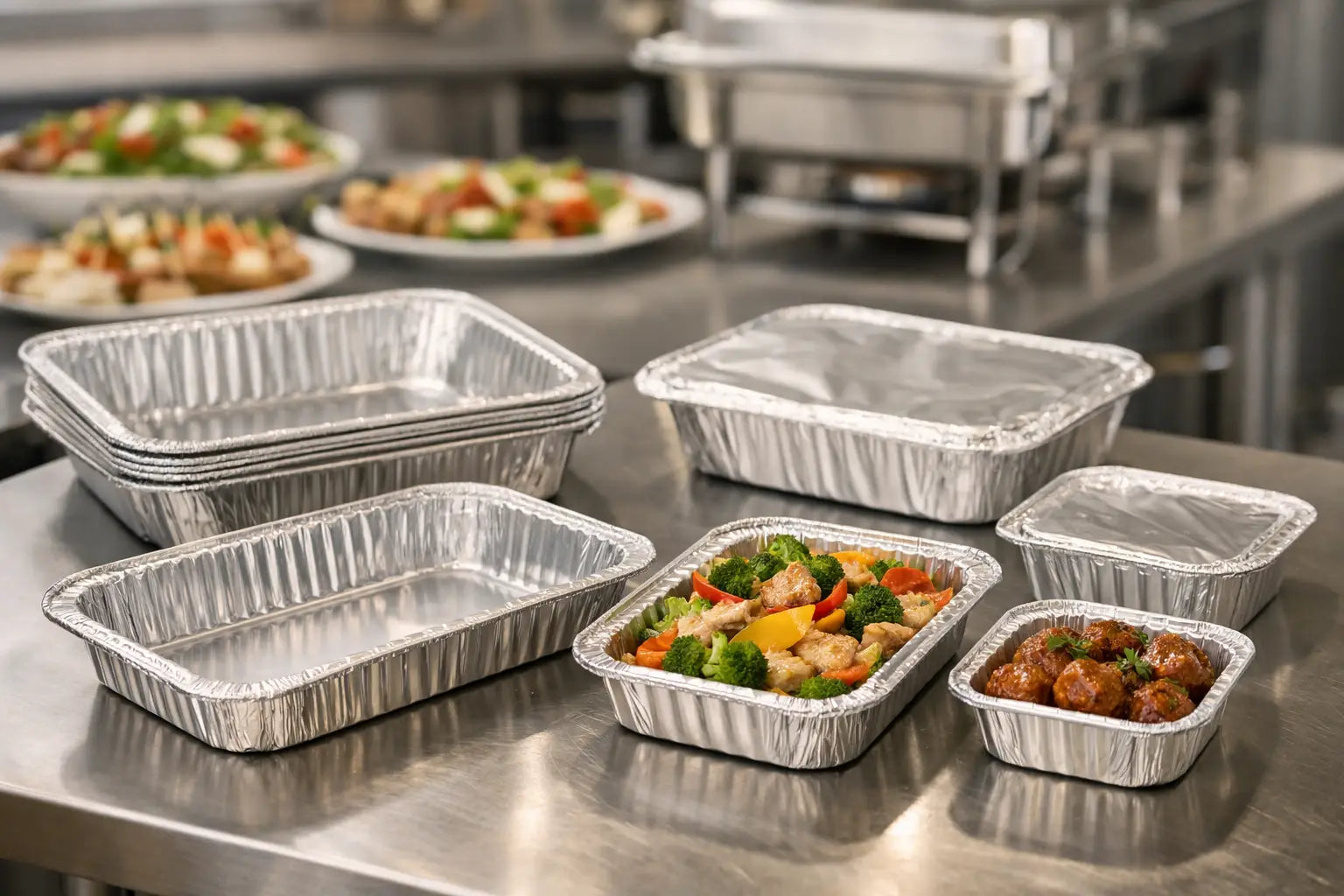
Aluminum foil earns its place in high-volume food service because it handles demanding temperatures. Use it to cover hotel pans, line baking trays, wrap baked potatoes, protect roasted meats, or hold heat in prepared dishes waiting for service. It can go in the oven and is commonly used for grilling, provided it is used appropriately for the cooking method.
For catering and takeout, foil is particularly helpful when food needs to arrive warm and intact. It wraps neatly around aluminum containers and helps reduce heat loss during short delivery windows. A securely crimped foil cover can also provide more stability than cling film over a large tray.
Foil is not always the best material for every food. Highly acidic foods, such as tomato-based dishes, citrus-heavy recipes, or vinegar marinades, can react with bare aluminum during extended contact. For short coverage periods this may not be a concern, but for long storage, use a food-safe container with a lid or place a barrier between the food and foil.
Foil also does not naturally cling to itself in the way plastic wrap does. Covering a bowl with foil may protect it from dust and help hold warmth, but it may not create a fully airtight seal. That matters when freshness depends on limiting air exposure.
Best uses for aluminum foil
Aluminum foil is a dependable option for hot entrées, oven-baked foods, grilled items, covered trays, foil pans, and warm carryout meals. It is also useful for separating portions, lining equipment for easier cleanup, and wrapping foods that need protection from light.
For businesses serving large groups, keep multiple foil widths on hand. Narrow rolls work well for individual portions and small containers, while wider rolls help cover catering pans and buffet trays without awkward overlaps.
Choose Plastic Wrap for Freshness and Cold Storage
Plastic wrap performs where foil is less effective: sealing food closely to preserve its texture and moisture. It is ideal for covering prepared salads, sandwich ingredients, sliced fruits, baked goods, cold desserts, and leftovers stored in the refrigerator.
A good layer of plastic wrap can sit directly against the surface of certain foods, limiting air contact. This is useful for items like guacamole, dips, dough, custards, and cut produce that may dry out or discolor when exposed. Its clear finish also makes it easier to label, inspect, and organize food during a busy shift.
For home kitchens and event prep, plastic wrap offers speed. Cover a bowl, press the film around the rim, and store it. In commercial settings, this can help teams protect prepped ingredients between service periods without transferring everything into a different container.
However, standard plastic wrap is not intended for direct oven or grill use. Heat can cause it to melt or deform, and using it near high temperatures can create unnecessary risk. Always follow the product instructions for microwave use, because not every wrap is made for the same temperature range.
Best uses for plastic wrap
Plastic wrap is best for refrigerated ingredients, cold platters, bowls, deli items, sandwiches, cheese, fruit, and short-term food storage. It is especially valuable when visibility matters, such as organizing a prep refrigerator or displaying covered trays before an event.
It can also help prevent spills in shallow containers when applied tightly, though a fitted lid is more reliable for soups, sauces, and long-distance delivery.
Compare the Two Before You Pack
The right material becomes clearer when you focus on the actual job rather than the product name.
| Packaging need | Better choice | Why it works |
|---|---|---|
| Covering hot trays or oven dishes | Aluminum foil | Resists heat and holds its shape |
| Storing cold leftovers in a bowl | Plastic wrap | Creates a close, moisture-retaining seal |
| Wrapping a baked potato or grilled corn | Aluminum foil | Handles heat and protects the food |
| Covering cut fruit or a salad | Plastic wrap | Helps reduce air exposure and keeps contents visible |
| Packing a warm catering pan | Aluminum foil | Provides durable coverage for hot food |
| Protecting a dip or dessert in the refrigerator | Plastic wrap | Can sit close to the surface to preserve freshness |
This comparison also shows why many kitchens need both products. Buying only foil can make cold storage less efficient. Buying only plastic wrap can leave a team unprepared for hot holding, baking, or tray service.
Cost, Waste, and Daily Efficiency
When purchasing packaging supplies, price per roll is only part of the calculation. Consider how much material your team uses per order, whether the product tears easily, and whether it solves the task on the first attempt.
A thin wrap that requires two or three layers can cost more in practice than a dependable option that seals properly with one layer. Likewise, foil that tears while covering large pans slows down staff and creates extra waste. For restaurants and caterers, choosing the right roll width and thickness can improve consistency across every shift.
Households can use the same approach. Keep a practical roll of plastic wrap for refrigerator storage and a reliable foil roll for cooking, reheating preparation, and events. This prevents using too much of one material to compensate for a job it was not designed to do.
For high-volume operations, it is worth standardizing use. Train staff to use foil for hot-food pans and plastic wrap for cold prep containers. That small step reduces guesswork, protects food presentation, and makes inventory planning easier.
Food Safety and Storage Details That Matter
Both materials work best when they support good food-handling practices. Cover food only after it has been placed in a clean, food-safe container or pan. Label prepared items with the date and contents, especially in commercial refrigerators where multiple employees access inventory.
Do not rely on wrap alone to make unsafe food safe. Hot foods should be cooled and stored according to proper food safety procedures, and cold foods should remain refrigerated. Foil can hold warmth, but it is not a substitute for temperature control. Plastic wrap can protect a dish from air, but it cannot extend the safe storage life of food beyond recommended limits.
For delivery and takeout, use the wrap as one part of the packaging system. A foil-covered tray may need a sturdy bag for transport. A plastic-wrapped cold container may need a secure lid before it is stacked with other items. The best result comes from combining the right wrap, container, and carrying solution.
Stock Both for Faster, Smarter Service
The practical answer to aluminum foil or plastic wrap is usually both. Foil handles the heat, structure, and tray coverage needed for cooking and warm service. Plastic wrap supports freshness, visibility, and close sealing for refrigerated food and prep work.
White Pack helps businesses and households source everyday packaging essentials in one place, so restocking does not have to mean placing separate orders for every kitchen need. Choose the roll size and material that fit your volume, then keep both within reach where food is prepped and packed.
When the next tray comes out of the oven or the next batch of ingredients goes into the refrigerator, the right wrap should be an easy decision: use foil for heat and plastic wrap for a close cold-food seal.