Cart
0
Running out of sanitizer in the middle of a lunch rush, a busy office week, or pre-event cleanup is more than an inconvenience. It slows work, creates avoidable stress, and usually leads to rushed reorders at higher prices. A solid bulk cleaning products guide helps you buy with more control, keep core supplies on hand, and avoid paying for products that do not fit the job.
Buying in volume makes sense for restaurants, hotels, offices, event planners, and households that go through cleaning essentials quickly. But bulk purchasing only works when the products match your actual usage. Too little stock creates disruption. Too much of the wrong item ties up storage space and cash. The goal is not just to buy more. It is to buy smarter.
What a bulk cleaning products guide should help you decide
The best purchasing decisions usually come down to four practical questions. What needs to be cleaned, how often does it need attention, who will use the product, and how much space do you have to store it? Those answers shape everything from pack size to product format.
For example, a restaurant kitchen and a household pantry may both need degreasers, trash liners, sponges, paper goods, and disinfecting supplies. The difference is turnover. Commercial spaces use products faster, need consistent replenishment, and often benefit from case quantities. Households may still save by buying bulk, but only for products they use regularly enough to justify the space.
That is where many buyers get it wrong. They focus only on unit price and ignore waste, shelf life, and day-to-day usability. A cheaper case is not a better value if half of it sits unused or if staff avoid using the product because it is inconvenient.
Start with consumption, not catalogs
Before you add anything to your cart, look at your real usage. Estimate how much of each product you go through in a week or month. If you manage a business, review ordering history and note where shortages happen most often. If you are buying for home or events, think in terms of routines and frequency rather than best-case savings.
High-turn items are the safest bulk buys. These usually include paper towels, trash bags, multipurpose cleaners, dishwashing supplies, gloves, sanitizing products, and restroom essentials. If you reorder these often, there is a clear case for buying larger packs.
Lower-turn items need more caution. Specialty chemicals, seasonal products, or items with narrow use cases can look attractive in bulk, but they may not move fast enough. In those cases, a moderate quantity is often the better operational decision.
Bulk cleaning products guide by product type
Not every cleaning supply should be bought the same way. Some items are ideal for volume purchasing because they are stable, simple to store, and used daily. Others need a more selective approach.
Paper and disposable cleaning essentials
Paper towels, wipes, napkins used in cleaning stations, and disposable gloves are often strong bulk candidates. They are easy to rotate, simple to store, and used across many environments. Businesses especially benefit from buying these in larger quantities because demand is consistent and predictable.
The main trade-off is storage volume. Paper products take up space quickly, so the lowest price per unit only helps if you have room to keep cartons clean and dry.
Liquids, sprays, and concentrates
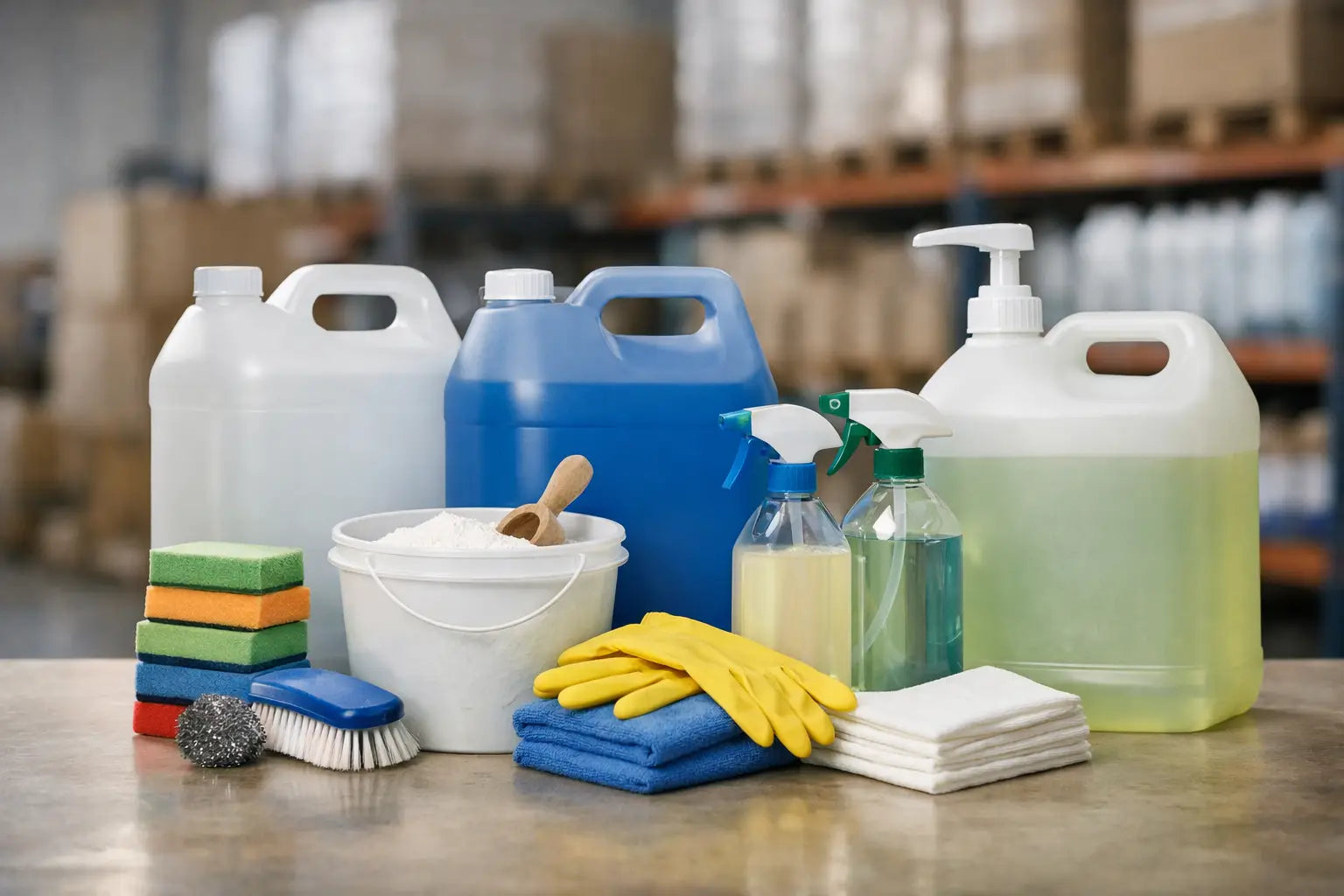
All-purpose cleaners, disinfectants, glass cleaners, dish soap, and floor care products can offer strong savings in larger formats. Concentrates can stretch value further, especially in commercial settings where staff are trained to dilute correctly.
Still, concentrates are not always the right answer for every buyer. They reduce packaging and often lower cost per use, but they also require measuring, labeling, and process consistency. Ready-to-use bottles may cost more per ounce, yet they save time and reduce misuse. For smaller teams or households, that convenience can be worth it.
Tools and consumables
Sponges, scrub pads, mop heads, brooms, liners, and cleaning cloths fall into a middle category. They are often worth buying in bulk when replacement cycles are regular. For a restaurant, office, or event venue, these supplies quietly disappear faster than expected.
The key is to match quantity to wear rate. Overstocking bulky tools can create clutter, while underordering leads to downtime and inconsistent cleaning standards.
How to compare value without guessing
A practical bulk cleaning products guide should make cost comparison easier, not more complicated. Start with cost per unit, then go one step further and calculate cost per use. A gallon of cleaner may look economical, but if it is overapplied or wasted, your real cost rises quickly.
Packaging format matters too. Cases, multi-packs, refill jugs, and concentrates each affect labor, dispensing, and storage. A product that saves a few dollars on paper may create extra handling time or increase breakage risk if the packaging is awkward.
Consistency also matters. Switching between low-cost alternatives can create uneven results, especially in commercial spaces where staff need familiar products that perform the same way every time. Stable purchasing often beats constant product experimentation.
Storage can make or break a bulk order
Buying in volume works best when storage is part of the plan. Cleaning supplies need to stay organized, accessible, and protected from heat, moisture, and cross-contamination. That applies to both businesses and households.
If your stockroom is limited, buy in tighter cycles with faster replenishment instead of chasing the largest case size. If you do have space, organize products by use area - kitchen, restroom, front-of-house, office, or home utility area - so reordering and daily pickup are simpler.
A clean storage setup reduces waste. It also helps you avoid duplicate purchases, which is one of the most common hidden costs in supply buying.
Who should buy in bulk and who should scale carefully
For restaurants, caterers, hotels, offices, and event businesses, bulk cleaning purchases usually make financial and operational sense. Usage is steady, hygiene standards matter, and last-minute shortages are costly. Buying larger quantities of core supplies creates stability.
For households, bulk buying works best for staples with reliable turnover. If you host often, manage a large family, or prefer fewer shopping trips, larger packs can be a smart move. If space is tight or product use is irregular, smaller bulk formats are usually safer than full commercial cases.
There is no single rule here. The right order size depends on frequency, storage, and how disciplined you are about inventory.
Common buying mistakes to avoid
The first mistake is overbuying because a promotion looks good. Savings disappear when products expire, get damaged, or occupy space needed for faster-moving items.
The second is buying too many product variations. A simpler lineup is easier to train around, easier to store, and easier to reorder. In many cases, one dependable multipurpose cleaner and a few task-specific products are more efficient than a crowded shelf of overlapping options.
The third is ignoring refill logic. If you buy sprays, soaps, or sanitizers in bulk, make sure you also have the dispensers, trigger bottles, pumps, or compatible accessories needed to use them properly.
A simple way to build your order
Start with your non-negotiables - the items you cannot afford to run out of. Then separate them into daily-use, weekly-use, and backup stock categories. That gives you a clearer picture of what belongs in bulk and what belongs in smaller quantities.
From there, keep your product mix practical. Choose dependable formats, reasonable case sizes, and products your team or household will actually use correctly. A broad supplier helps because it lets you source cleaning essentials alongside other operational products in one order, which cuts time and simplifies restocking.
If you are managing a business, it also helps to standardize your buying schedule. Regular reorder points are usually more efficient than reactive purchasing. And if you are buying for home, event prep, or shared spaces, a simple monthly review can prevent both shortages and overstock.
White Pack fits this approach well because it supports volume-driven purchasing across everyday essentials, making it easier to keep practical supplies together instead of splitting orders across multiple vendors.
The real goal of buying bulk cleaning supplies
Bulk purchasing is not just about lower prices. It is about staying ready. When the right products are in the right quantities, cleaning routines run smoother, teams work faster, and homes or businesses stay better organized without constant reordering.
A good buying decision should save money, reduce friction, and make the next week easier than the last. If your order can do all three, you are buying the right way.