Cart
0
A missed lunch rush rarely starts in the kitchen. More often, it starts with the wrong lid, a leaking container, or a stack of cups that runs out faster than expected. That is why buying food packaging supplies wholesale is not just a cost decision. It is an operating decision that affects speed, cleanliness, customer experience, and how smoothly your day runs.
For restaurants, caterers, offices, event planners, and even busy households, packaging is part of the job. It protects food, supports transport, and helps service stay organized when demand picks up. The right wholesale approach keeps those basics covered without forcing you to piece orders together from multiple suppliers.
Why food packaging supplies wholesale makes sense
Buying in bulk is the obvious move when you want better unit pricing, but price is only one part of the picture. Wholesale purchasing also gives you consistency. When you reorder the same cups, containers, trays, bags, foil, and serving essentials from one dependable source, you reduce guesswork and avoid small compatibility issues that slow people down.
That matters more than many buyers expect. A container that does not stack well takes up shelf space. A lid that fits too loosely creates spills during delivery. A thin takeaway bag might be cheaper upfront, but if it tears under weight, the real cost shows up later.
Food service businesses feel this first. A restaurant handling dine-in, takeout, and delivery needs packaging that can keep up across multiple service formats. Caterers need products that travel well and still present food properly on arrival. Hotels and offices often need dependable disposable items in predictable volumes, without the time burden of frequent reordering. Households buying for parties, family gatherings, or regular use also benefit from bulk packs that reduce repeat purchases.
What to look for in a wholesale supplier
A strong wholesale supplier should make life easier, not add another layer to manage. Product range is the first test. If you need aluminum containers, paper cups, plastic cups, takeaway bags, microwave containers, trays, straws, and cleaning supplies, it is far more efficient to source them in one place.
The second test is reliability. A broad catalog means little if quality changes from one order to the next. Buyers need packaging that performs the same way every time. That means secure lids, durable materials, practical sizing, and products designed for real service conditions.
The third is ordering convenience. Business buyers do not want to chase quotes for routine stock. Household customers do not want a complicated process for simple replenishment. Clear product categories, straightforward ordering, and volume-friendly pricing all matter because they reduce friction.
Fast fulfillment also deserves attention. If you run low on essential items such as cups, foil containers, or takeaway bags, you need a supplier that understands these are not optional extras. They are operating essentials.
Choosing the right products for your service model
Not every business needs the same packaging setup, which is why the best buying decisions start with how food is actually served. A quick-service restaurant may prioritize speed, stackability, and easy grab-and-go handling. A catering business may care more about presentation, heat retention, and secure transport. An office pantry may simply need convenient, affordable cups and disposable serving items that are easy to restock.
Containers and lids
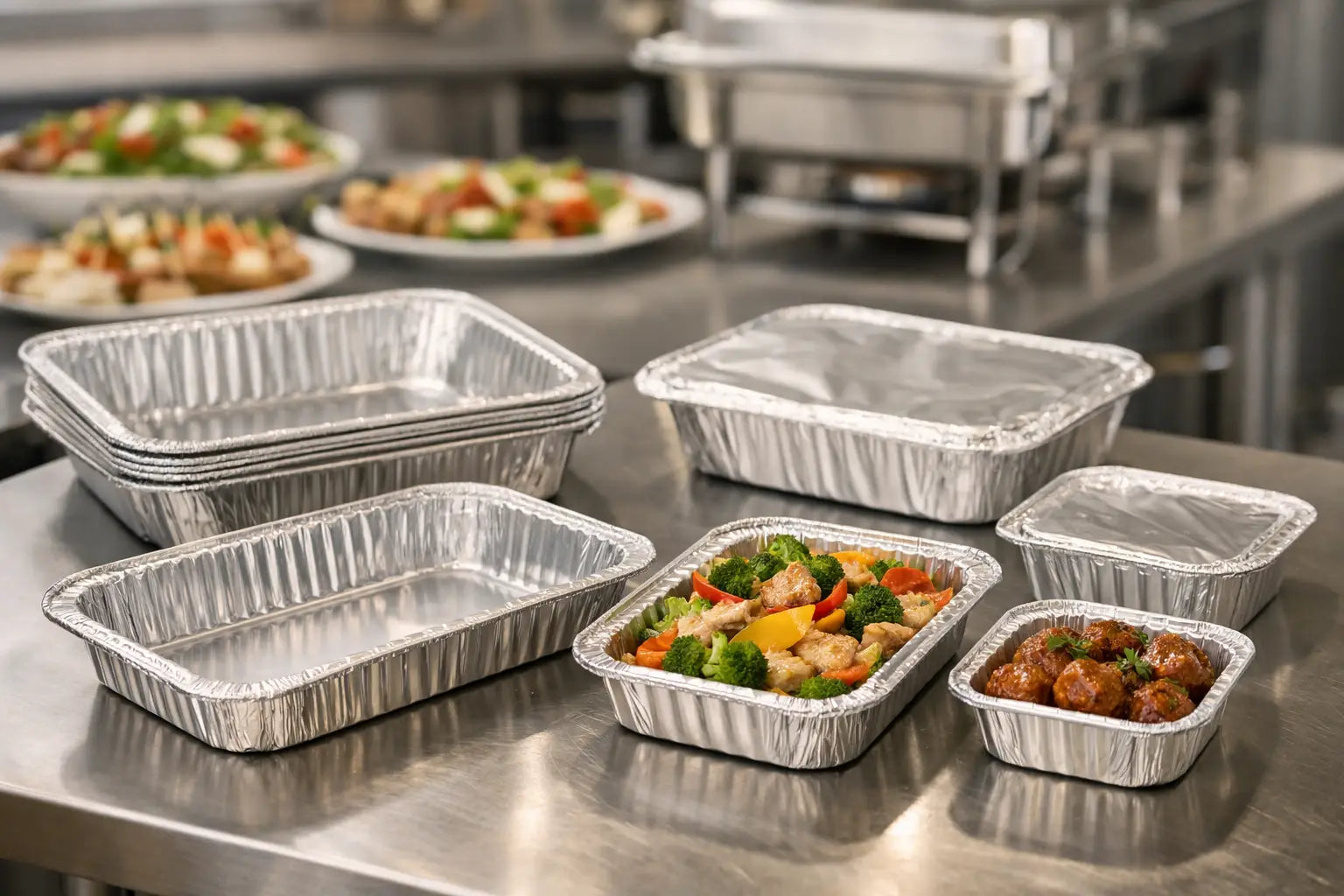
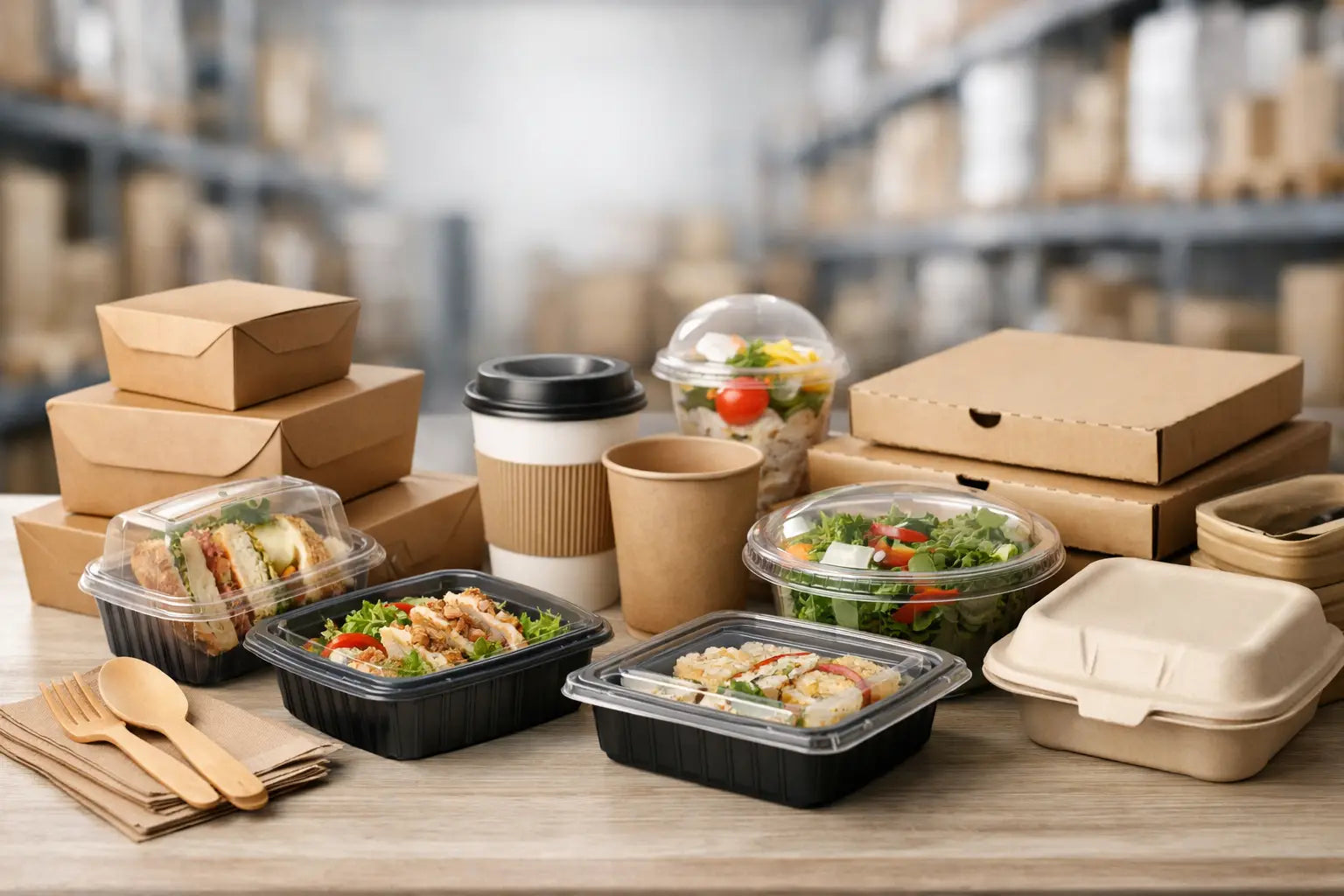
Containers usually carry the biggest workload. They need to match portion size, food type, and handling conditions. Microwave containers are practical for prepared meals and reheating. Aluminum containers are a strong option for hot foods, oven use, and catering trays. Craft containers can work well when presentation matters or when you want a simple, clean look for takeaway service.
The trade-off is that one container type rarely fits every menu item. Using a single format for everything may simplify ordering, but it can also lead to wasted space, poor fit, or weaker presentation. Many buyers get better results by narrowing choices to a few dependable sizes rather than forcing one container across the entire menu.
Cups and beverage service items
Paper cups and plastic cups may seem basic, but they affect customer convenience and inventory planning. Cold drinks, hot beverages, office refreshment stations, and event service all call for different volume and durability needs. If your busiest periods include large drink orders, consistent cup sizing helps avoid confusion and supports faster service.
Straws, lids, and companion beverage items should be treated as part of the same purchasing decision. Buying cups without thinking through the full serving setup often creates last-minute gaps.
Bags, trays, and carryout support
Takeaway bags do more than carry an order from point A to point B. They support presentation, keep items together, and reduce handling issues during pickup or delivery. Trays add another layer of order stability, especially for high-volume service or catered events.
This is one area where buying too cheaply can backfire. Light-duty bags may look like a savings on paper, but if they fail during transport, the replacement cost and customer frustration outweigh the initial discount.
Balancing cost with performance
Every buyer wants competitive pricing. The smarter question is how to control total packaging cost without reducing service quality. That usually means comparing products based on use, not just on unit price.
A cheaper container that leaks or buckles under heat is not less expensive if it leads to remakes, complaints, or damaged presentation. A slightly stronger cup or bag may deliver better value because it performs properly under normal use. Wholesale buying works best when cost savings come from volume and smart product selection, not from compromising on essentials.
It also helps to separate high-use items from occasional-use items. Your most frequently used containers, cups, foil, and bags deserve the closest pricing and performance review because they shape your monthly spend. Specialty items matter too, but they usually have less impact on overall cost.
How businesses and households buy differently
Commercial and household buyers often shop from the same packaging categories, but their priorities are not identical. Businesses usually need continuity. They want dependable reordering, practical case quantities, and products that hold up under daily use. They are looking for supply support that keeps operations moving.
Household buyers are more likely to focus on convenience, value, and event readiness. They may need disposable cups, trays, foil containers, and bags for family gatherings, meal prep, parties, or seasonal hosting. For them, wholesale-style purchasing can still make sense because it cuts down on repeat shopping and keeps useful basics on hand.
That is part of what makes a broad online supplier so useful. A business can restock service essentials, while a household can source practical disposable products for everyday needs or larger events from the same catalog.
Why assortment matters more than people think
When packaging purchases are split across several vendors, small inefficiencies start to pile up. You spend more time checking stock, managing deliveries, comparing prices, and tracking what is missing. You also increase the chance of inconsistent product quality across categories.
A one-stop approach solves a lot of that. If your supplier can cover containers, cups, bags, trays, foil, and cleaning basics, purchasing becomes simpler and more predictable. White Pack is built around that kind of practical convenience, giving buyers access to everyday essentials in one place instead of turning routine supply into a multi-step project.
This matters even more for smaller operators. Independent restaurants, event businesses, and office managers often do not have a dedicated procurement team. They need a straightforward way to buy what works, reorder quickly, and stay within budget.
A better way to buy food packaging supplies wholesale
The most effective wholesale strategy is usually the least complicated one. Start with the items you use most, standardize where it makes sense, and choose products based on actual performance in your setting. Then work with a supplier that offers enough range to keep purchasing simple.
You do not need the largest possible catalog if half the items are irrelevant. You need the right mix of reliable food-service and disposable essentials, fair pricing, and a buying process that does not slow you down. That is what turns wholesale ordering into a real business advantage instead of just another task.
Good packaging keeps service moving, protects the product, and supports the way customers experience your business at home, at work, or on the go. When your supplies are dependable, the rest of the day gets easier.