Cart
0
A tray that bends under a full pan of baked ziti can turn a smooth service into a cleanup problem fast. When you're comparing the best aluminum trays for catering, the real question is not just size or price. It is whether the tray can hold heat, carry weight, stack cleanly, and keep food looking presentable from kitchen to table.
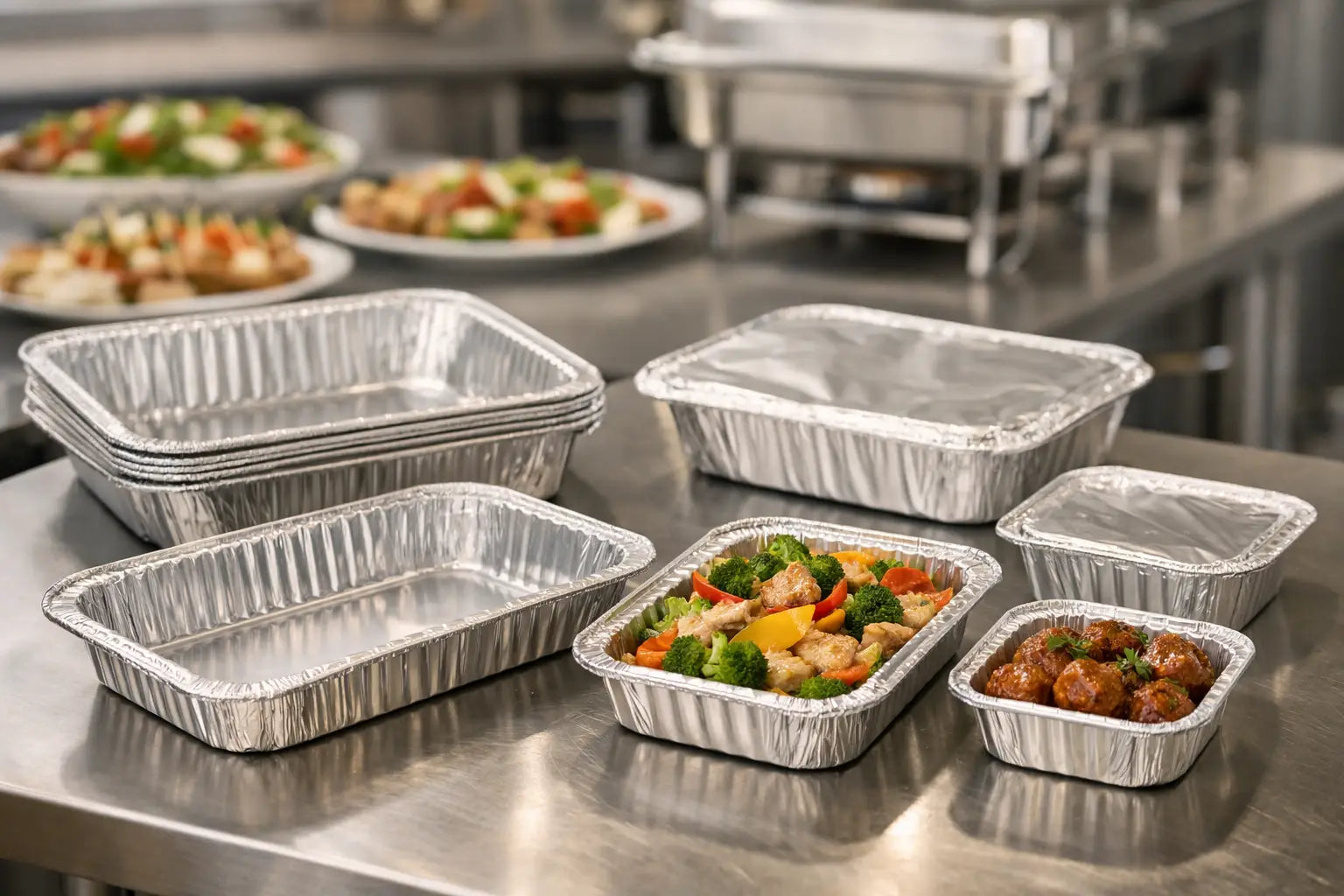
For caterers, restaurants, event planners, and even households hosting large gatherings, aluminum trays are a working essential. They help with prep, transport, reheating, buffet setup, and leftovers. But not every tray performs the same way. Gauge, depth, rim strength, lid fit, and intended use all matter, especially when you are serving volume and cannot afford leaks, warping, or wasted food.
What makes the best aluminum trays for catering?
The best option depends on the menu and the service style. A shallow tray that works well for roasted vegetables may be the wrong choice for saucy pasta or heavy meat dishes. A tray used for buffet presentation also has different demands than one packed for drop-off delivery.
Start with structure. A good catering tray should feel stable in the hand, especially when full. Lightweight trays can still be useful for cold items, desserts, or short transport, but heavier foods usually need a stronger base and reinforced rim. If the tray flexes too much before it is filled, it is probably not the best choice for hot entrees served in quantity.
Heat performance is next. Aluminum is popular because it heats quickly and evenly, which helps with cooking, reheating, and hot holding. That said, thinner trays can cool faster and may lose their shape if moved while still very hot. If your operation relies on chafers, warming cabinets, or oven-to-service transitions, tray consistency matters as much as initial cost.
Lid compatibility also deserves attention. Some catering setups need tight foil covers for transport. Others need dome lids to protect taller food presentations. If the lid fit is loose, steam can escape too quickly, and spills become more likely during delivery or setup.
Choosing tray size by menu type
Catering buyers often focus on full-size versus half-size trays first, and that makes sense. Full-size trays are efficient for high-volume service, while half-size trays offer better flexibility for mixed menus and tighter buffet layouts. The better buy depends on how many dishes you are serving and how often portions need replenishing.
Full-size trays for bulk service
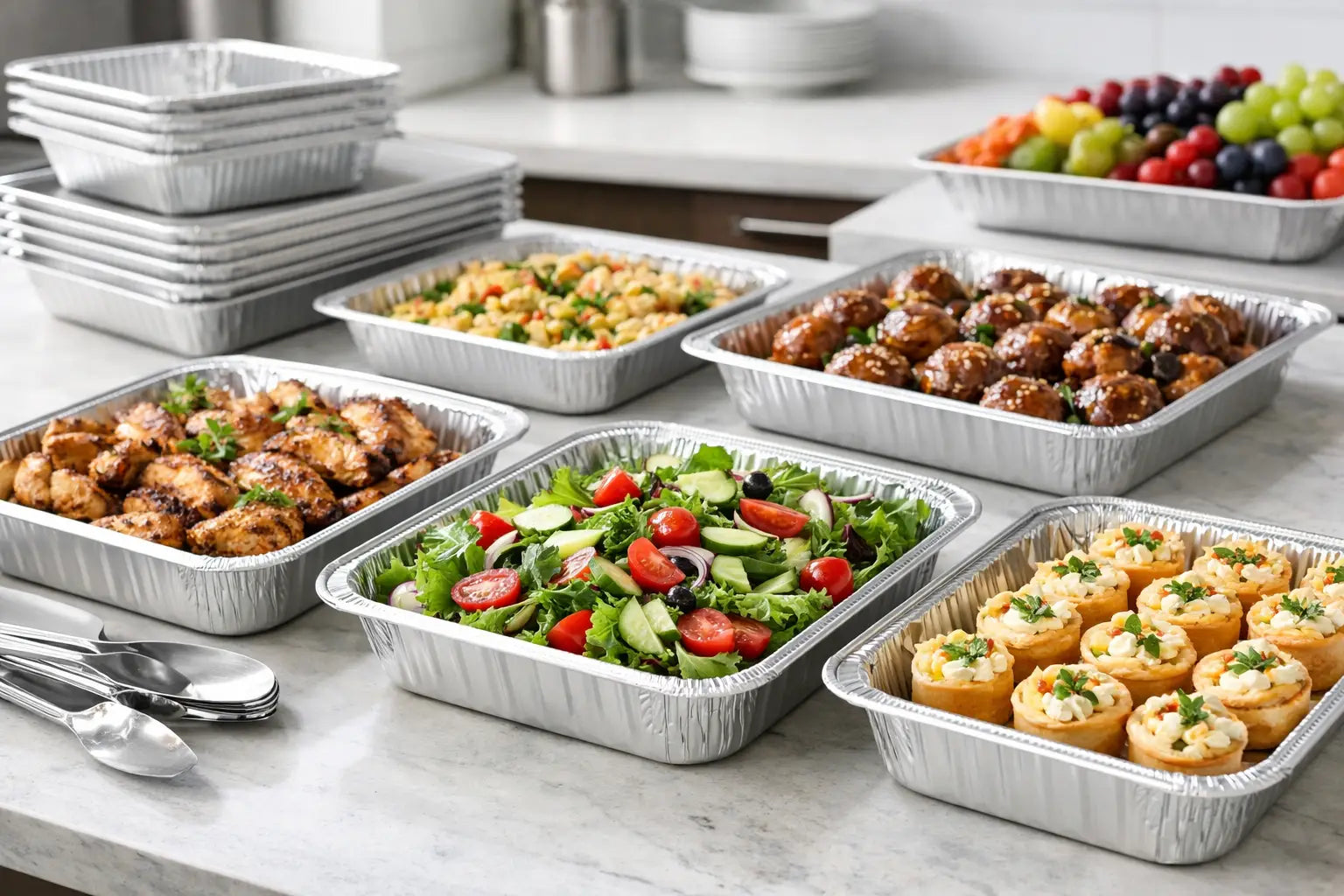
Full-size aluminum trays are usually the go-to choice for weddings, corporate lunches, school functions, and large family events. They work well for pasta, rice, chicken, casseroles, and other high-yield dishes. They reduce the number of pans needed on the line, which can simplify loading, transport, and setup.
The trade-off is weight. A full-size tray filled with dense food can be difficult to lift safely with one hand. If your team is moving trays quickly from kitchen to van to buffet, a stronger gauge is worth paying for.
Half-size trays for flexibility
Half-size trays are often the smarter choice when variety matters more than maximum volume per pan. They help portion out side dishes, vegetarian options, desserts, and smaller menu runs. They also fit more easily into compact warming setups and are simpler to replace during service.
For smaller caterers and home hosts, half-size trays can reduce waste. Instead of opening one large tray that sits too long, you can rotate in fresh trays as needed and keep the presentation cleaner.
Deep vs. shallow trays
Depth changes performance. Deep trays are better for saucy entrees, marinated meats, layered dishes, and anything that may shift during transport. They offer more spill protection and support larger serving volumes. Shallow trays make sense for bakery items, sandwiches, grilled vegetables, and foods that benefit from a wider surface area.
A deeper tray is not always better. If you're serving crisp foods, too much depth can trap steam and soften texture. That is why matching tray depth to the menu is one of the easiest ways to improve food quality in service.
Best aluminum trays for catering by use case
Rather than looking for one perfect tray, it is more practical to match the tray to the job.
Best for hot buffet service
For buffet lines, choose a tray with a rigid rim and reliable heat retention. It should sit securely in chafer frames or buffet stands and hold its shape as guests serve themselves. Medium to heavy-duty trays tend to perform better here because they are handled repeatedly and stay on display longer.
Best for delivery and transport
For off-site catering, strength and lid fit matter most. A tray that seals well and resists bending during loading will protect both the food and your presentation. Deep trays are usually the better option for delivery, especially for dishes with sauces, gravies, or oils.
Best for oven prep and reheating
If the tray is going from prep station to oven to service, even heat distribution becomes more important. Aluminum is naturally strong in this category, but the tray should still be thick enough to support the dish once cooked. This is especially relevant for lasagna, baked pasta, enchiladas, and casseroles.
Best for cold catering and desserts
Cold items place less stress on the tray, so lighter options can work well. Fruit platters, pastry assortments, sandwiches, and salad trays do not usually need the same gauge as hot entrees. This can help lower per-event packaging costs without sacrificing function.
Features worth paying for
Not every premium feature is necessary for every order, but a few details tend to pay off quickly in catering operations.
A rolled or reinforced rim makes lifting safer and reduces distortion. This matters when trays are stacked, carried while hot, or placed into racks. Better edge strength also helps maintain lid fit.
A flatter base improves stability on prep tables, buffet stands, and oven racks. Uneven bases can lead to tipping, poor heat contact, or awkward serving.
Compatible lids are another practical upgrade. Flat foil lids are useful for stacking and transport, while dome lids help protect foods that sit above the rim. If appearance matters at delivery, a clean-fitting lid also makes the order look more professional.
Bulk pack consistency is easy to overlook, but it matters. If tray dimensions vary from case to case, storage, lid matching, and service setup become harder than they should be.
When cheaper trays make sense and when they do not
Low-cost aluminum trays have a place. For short events, light foods, or household entertaining, they can be a smart buy. If the tray only needs to move from kitchen counter to dining table, you may not need heavy-duty construction.
But if the tray is carrying a full hotel pan of food into a venue, holding in heat for service, or traveling with a delivery order, the cheapest option can become the expensive one. Bent corners, leaking juices, and collapsed bases create food loss, labor issues, and avoidable stress.
For repeat buyers, it often makes more sense to standardize around a few dependable tray sizes and strengths. That keeps ordering simple and reduces last-minute substitutions.
How to buy the best aluminum trays for catering in bulk
Bulk purchasing is not just about getting a lower unit price. It is about buying a tray assortment that supports real service needs. A practical mix usually includes full-size trays for main dishes, half-size trays for sides and menu variety, and a few shallow options for cold service or baked goods.
Think about storage space before buying large case quantities. Full-size trays and matching lids take room, and disorganized storage can slow down prep. Standardizing sizes where possible helps staff work faster and keeps supply planning cleaner.
It is also worth considering event seasonality. If your busiest periods involve holiday catering, office lunches, or wedding weekends, buying ahead in the right formats can prevent rushed purchasing and mixed packaging. For many buyers, a dependable supply partner matters as much as the trays themselves. White Pack fits that need by offering practical assortment, business-friendly quantities, and everyday value for both commercial and home use.
Common mistakes buyers make
One common mistake is buying based only on dimensions without checking depth and gauge. Two trays can look similar on paper and perform very differently under load.
Another is choosing one tray type for every menu item. That sounds efficient, but it often leads to poor fit, wasted space, or lower food quality. A little variety in tray selection usually improves both service and cost control.
The last mistake is forgetting the full service chain. The tray has to work in prep, storage, transport, heating, serving, and cleanup. If it only performs well in one stage, it is not the right tray for catering.
The best tray is the one that keeps service moving without extra effort. Choose for weight, heat, depth, and transport first, and your events will run a lot smoother from the first pan packed to the last serving cleared.