Cart
0
If you have ever loaded a flat cart with cups, foil pans, gloves, napkins, and cleaning products, you already know the real question behind restaurant supplies vs wholesale clubs is not just price. It is whether your buying method actually supports your operation. A lower shelf price means very little if you still need a second stop, end up with mismatched products, or run short during service.
For restaurants, caterers, offices, event planners, and even busy households, this choice affects cost control, storage, labor, and day-to-day consistency. Wholesale clubs can look attractive because the model feels familiar. You walk in, see large packs, and assume you are getting a deal. Restaurant supply purchasing, especially through a focused online supplier, is usually less about impulse and more about repeatable results.
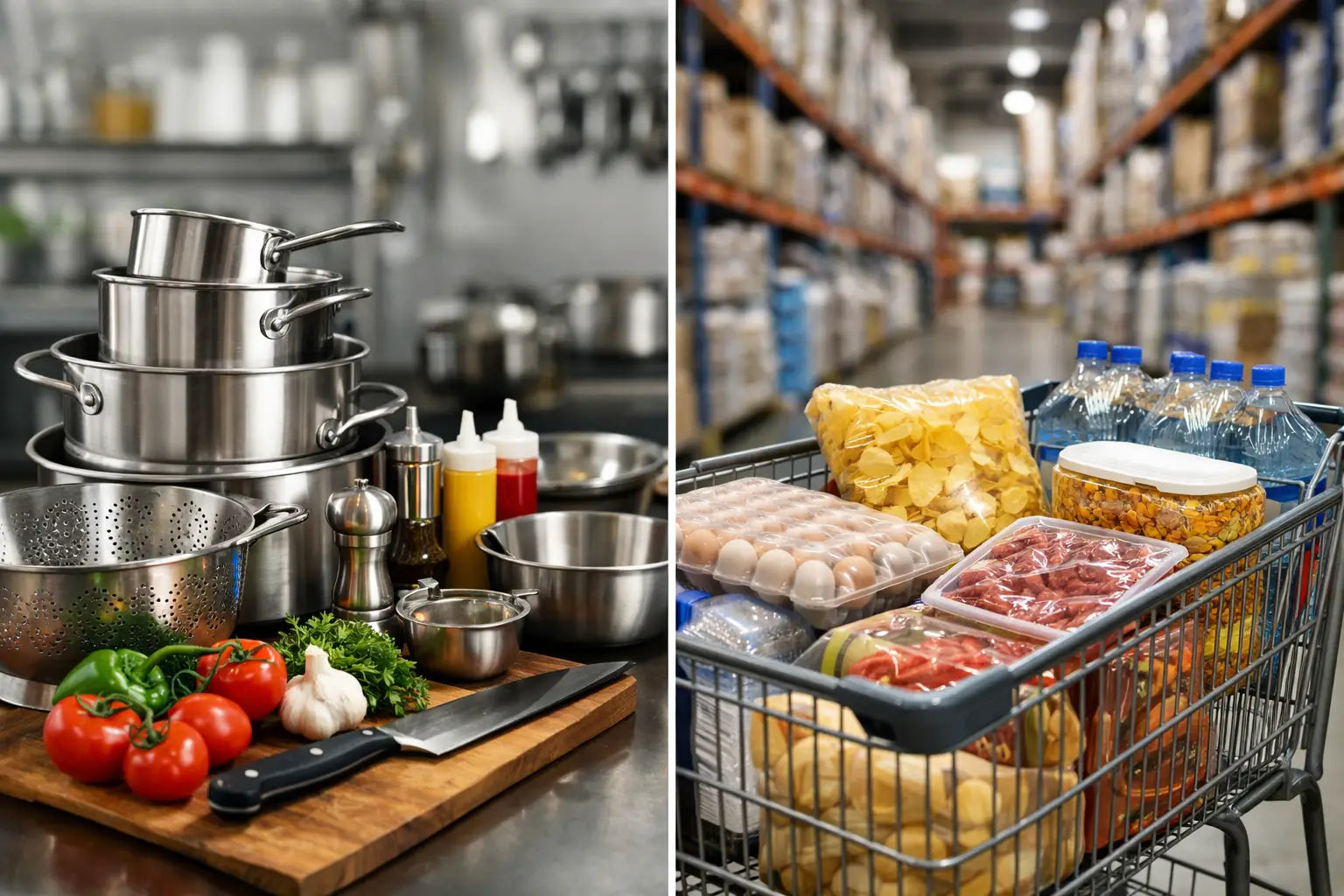
Restaurant supplies vs wholesale clubs: What is the real difference?
At a basic level, wholesale clubs are general bulk retailers. They stock a wide mix of groceries, household products, paper goods, and some food-service items. Their strength is convenience for mixed shopping trips. You can buy drinks, snacks, janitorial basics, and a few disposable items in one visit.
Restaurant supply sellers are built around operational products. That usually means better depth in categories like takeout containers, portion cups, aluminum pans, food wrap, straws, gloves, paper products, carryout bags, and cleaning essentials. The difference is focus. A wholesale club offers some of what a business needs. A restaurant supply source is built for buyers who need those items regularly, in practical quantities, and with fewer substitutions.
That distinction matters when your business depends on consistency. If you use a specific cup size, lid fit, tray style, or microwave-safe container, product variation can create waste and slow down staff.
Price is important, but total buying cost matters more
Many buyers start with sticker price, and that is fair. But the cheapest visible unit is not always the lowest actual cost.
Wholesale clubs often compete well on certain high-volume staples. If you need bottled water, canned drinks, or general cleaning products, they may offer strong pricing. The trade-off is that food-service disposables are not always the category they optimize around. A sleeve of cups or a case of containers may look inexpensive until you compare count, size accuracy, durability, and how often the item goes out of stock.
Restaurant supply purchasing tends to make more sense when you calculate the full cost of replenishment. That includes travel time, fuel, employee time spent shopping, stockouts, emergency runs, and product mismatch. If your team has to stop service to deal with weak lids, wrong-size bags, or containers that do not stack properly, that cost shows up somewhere.
For small operators, the best answer is often mixed. You may use a wholesale club for select food and breakroom items while relying on a dedicated supply source for disposables, packaging, and sanitation products. That gives you better control where consistency matters most.
Pack size and product fit can make or break efficiency
This is where restaurant supplies vs wholesale clubs becomes more practical than theoretical.
Wholesale clubs are designed for broad appeal. Their pack sizes are bulk, but not always business-right. You might find a quantity that is too large for one item and too small for another. That can create storage problems in some categories and frequent reordering in others.
Restaurant supply assortments are typically closer to real usage patterns. If you run takeout, catering, or events, you often need products matched by function - cups with compatible lids, trays with appropriate covers, foil containers in useful counts, and bags sized for actual orders. A supplier focused on these categories usually offers more options across sizes, materials, and case quantities.
That matters for homes too. If you host often, prep meals in batches, or need dependable party and cleanup supplies, the right size assortment saves hassle. Buying a giant mixed pack because it is available is different from buying exactly what you will use.
Consistency matters more than most buyers expect
A lot of supply problems start small. One week the cups feel thinner. The next week the lids fit loosely. Then the paper bags are slightly different dimensions, and your packing routine slows down. None of this seems major until staff are working fast and customers are waiting.
Wholesale clubs rotate inventory based on broader retail demand, vendor agreements, and seasonal merchandising. That can mean brand changes, missing items, or limited choice in specific categories. If you are flexible, that may be fine. If your workflow depends on repeat purchases of the same item, it can become frustrating fast.
A restaurant supply source is generally better suited for repeatability. Buyers who need dependable quality tend to value that more than an occasional one-time bargain. When you know the product will perform the same way next week and next month, purchasing gets easier and waste drops.
Convenience is not just about getting the item
A wholesale club is convenient if you are already making a trip and can physically transport what you need. For some businesses, that works. For others, it shifts the burden onto the owner, manager, or staff member who has to leave the building, shop the aisles, wait in line, load the vehicle, unload the order, and still get back to operations.
That process is rarely as cheap as it looks.
Restaurant supply buying, especially online, is more convenient when replenishment is routine. You can order what you need, keep purchasing organized, and avoid unplanned shopping runs. For businesses trying to stay lean, that predictability matters. For households planning parties, family gatherings, or weekly restocks, it is also easier to buy by category and move on.
This is one reason customers choose White Pack for practical supply purchasing. The value is not only in product range. It is in being able to source packaging, disposables, and cleaning essentials in one place without turning a supply run into half a workday.
Restaurant supplies vs wholesale clubs for different buyers
Not every buyer should shop the same way.
For a restaurant or ghost kitchen, restaurant supply purchasing is usually the stronger foundation. You need stable packaging, food-service-ready disposables, and enough assortment to support dine-in, takeout, prep, and cleaning. A wholesale club can still help with selected pantry or beverage purchases, but it is less reliable as the core source for operational supplies.
For caterers and event organizers, supply-specific buying is often the safer option because events punish inconsistency. If trays, cutlery, cups, or containers are off, you feel it immediately on setup day. The more moving parts you manage, the more valuable product consistency becomes.
For offices, churches, schools, and community groups, the choice depends on volume and frequency. If you buy occasionally and your needs are simple, wholesale clubs may cover enough. If you restock regularly for meetings, kitchens, breakrooms, or events, a dedicated supply source usually saves time.
For households, wholesale clubs work well for mixed grocery and home shopping. But if you are preparing for holidays, parties, meal prep, or large family use, restaurant-style supply buying can be more efficient for disposable tableware, aluminum containers, storage, and cleanup products.
When wholesale clubs make sense
Wholesale clubs are still useful. If you want one trip for groceries, beverages, frozen foods, and a few paper goods, they are hard to dismiss. They can also be a practical option for low-frequency buyers who are not tied to specific product specs.
They make the most sense when your purchase is broad rather than specialized. If you only need a few common items and have time to shop in person, the model can work well. The issue is not that wholesale clubs are bad. It is that many buyers expect them to function like a true operational supply partner, and that is not really their role.
When restaurant supply purchasing is the better move
Restaurant supply purchasing stands out when your needs are recurring, category-specific, or tied to customer experience. If you rely on takeout packaging, disposable serving items, cleaning products, and food prep essentials every week, a focused supplier is usually the more efficient choice.
It also becomes the better move when purchasing needs to scale. As order volume grows, the hidden cost of patchwork buying grows with it. A dependable source helps standardize what you use, simplifies reordering, and reduces avoidable disruptions.
The smartest buying strategy is often not either-or. It is knowing which channel fits which job. Use wholesale clubs for broad retail bulk purchases when flexibility is fine. Use restaurant supplies for the items that affect service, packaging, hygiene, and repeatability.
If your goal is to buy once, buy correctly, and keep operations moving, start with the products you cannot afford to get wrong.