Cart
0
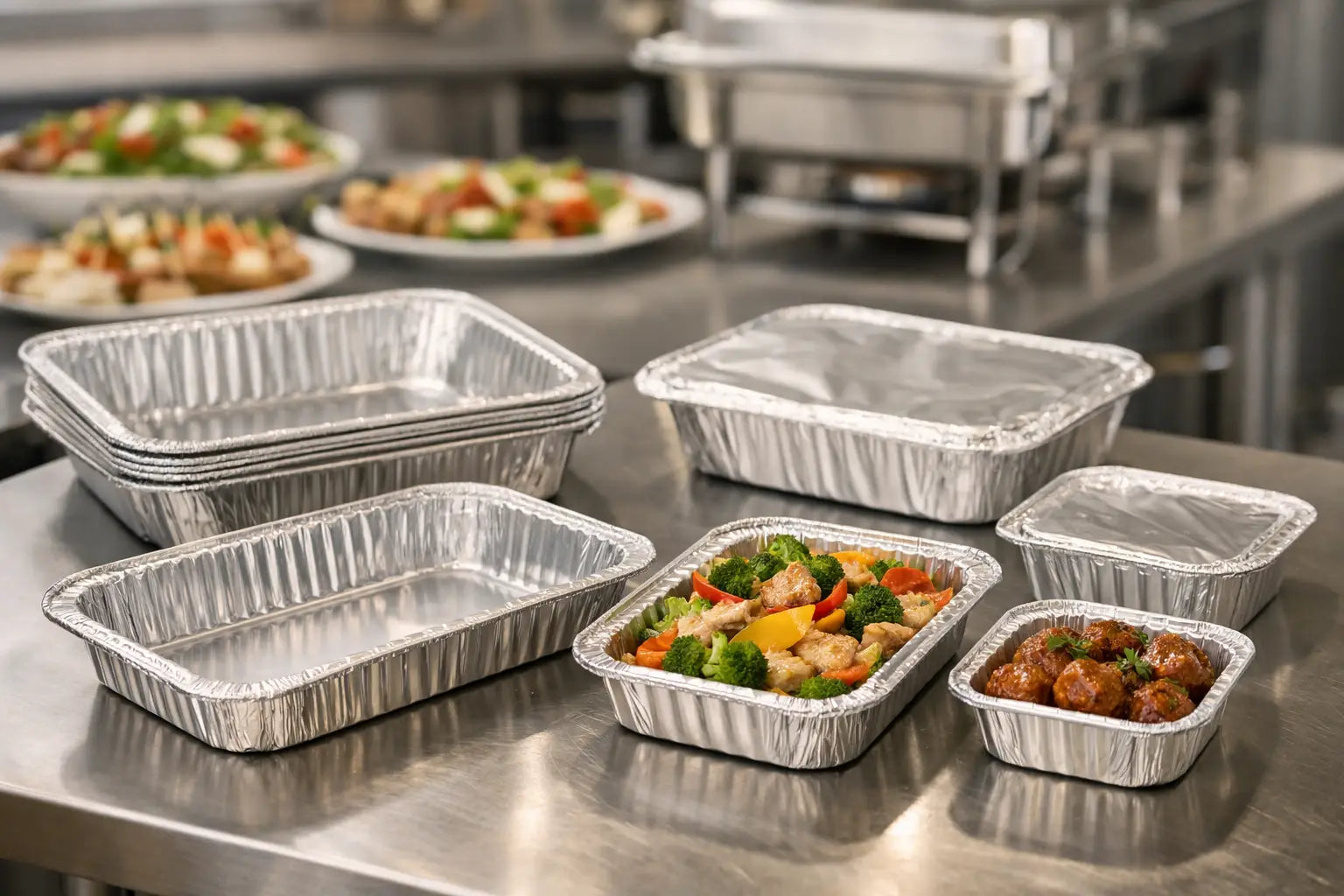
A tray that is too small creates rushed refills, messy stacking, and food that arrives looking less than its best. A tray that is too large can waste food, take up valuable chafing-dish space, and raise your packaging cost. Choosing the right catering foil tray sizes comes down to the menu, the serving style, and how long the food needs to stay hot, covered, and presentable.
For restaurants, caterers, event planners, and home hosts, foil trays offer a practical balance of convenience, heat performance, and easy cleanup. They are especially useful when preparing food ahead, transporting several dishes, or serving a crowd without relying on reusable pans that need to be collected and washed later.
Understanding Catering Foil Tray Sizes
Foil trays are usually described by their length, width, depth, and capacity. The outside dimensions tell you whether a tray will fit your oven, chafing frame, delivery bag, or storage shelf. Capacity is the more useful figure for portion planning, although it varies with the type of food being served.
A deep tray may hold more volume than a shallow tray with the same length and width, but that does not make it the better option for every dish. Roasted vegetables, baked pasta, saucy entrees, and foods that need heat retention often benefit from deeper pans. Shallow trays are better for appetizers, cookies, sandwiches, and foods that should be arranged in a single visible layer.
Many suppliers use familiar food-service formats, including full-size, half-size, third-size, quarter-size, and smaller rectangular or round trays. These formats are useful because they can align with standard chafing racks and make buffet setups easier to organize. However, dimensions can differ slightly by manufacturer. Always check the listed measurements and lid compatibility before placing a bulk order.
Full-Size Foil Trays
A full-size foil tray is commonly used for large-format catering. It is often around 20 to 21 inches long and 12 to 13 inches wide, with shallow, medium, and deep versions available. Exact depth and capacity vary, so treat these as working ranges rather than fixed rules.
This size works well for buffet entrees such as baked ziti, chicken pieces, rice dishes, roasted potatoes, and large batches of vegetables. A deep full-size tray is a practical choice when a dish contains sauce or needs room for stirring and serving. It can also reduce the number of pans needed for a high-volume event.
The trade-off is weight. A fully loaded deep full-size pan can be difficult to carry, particularly with hot food. For delivery orders, outdoor events, or self-service stations, two half-size trays may be easier to manage than one heavy full-size tray. They also let you replenish the buffet in smaller batches, helping food look fresher for longer.
Half-Size Foil Trays
Half-size trays are among the most flexible options for caterers and households. They are generally about half the footprint of a full-size tray and are often available in several depths. Their manageable size makes them suitable for side dishes, smaller entrée quantities, and menu items that need to stay separate.
Use half-size trays for macaroni and cheese, seasoned vegetables, salad toppings, rice, beans, pulled meat, or a second entrée option. They are a smart fit when you are serving a mixed menu and want several dishes to share the same chafing setup. Two half-size pans can replace one full-size pan while giving guests more variety.
For parties at home, this format is often easier to store in a refrigerator and easier for guests to carry after the event. Pair it with a properly fitted foil lid when food must travel or be prepared in advance.
Third-Size and Quarter-Size Trays
Third-size trays are useful for buffet sides, toppings, and smaller menu components. They fit neatly beside other food pans in many warming setups, which makes them a dependable choice for taco bars, breakfast spreads, sandwich stations, and build-your-own meal service.
Quarter-size trays are even more compact. They are best for condiments, garnish, bread rolls, small appetizers, dessert portions, or limited quantities of a specialty item. They can also help control food waste. Instead of opening a large tray of a slow-moving item, place a smaller tray on the line and refill it as needed.
Smaller trays are not just for small events. At a large buffet, they help create a cleaner layout and make it easier to separate vegetarian, dairy-free, or spicy dishes. Clear labeling is still essential, especially when guests have dietary restrictions.
Match Foil Tray Size to the Food You Serve
The same tray capacity can produce very different serving counts depending on the recipe. A dense pasta dish delivers more portions per tray than fluffy salad greens. Bone-in chicken takes up more space than sliced chicken, and a tray filled with ice for cold displays will hold less actual food than a tray used for hot sides.
As a planning starting point, estimate portions by the food category. A full-size deep tray may serve roughly 20 to 30 people as a side dish, while a half-size deep tray may serve roughly 10 to 15. For a main dish, those counts can be lower because guests take larger portions. Use your own portion standards and guest profile to refine the estimate.
For saucy foods, leave headspace below the rim. Overfilling makes lids harder to secure and increases the chance of spills during transport. For crisp foods, avoid trapping steam for too long. A tightly covered tray preserves heat but can soften fried items, toasted bread, and roasted foods with a crisp finish.
Choose the Right Depth and Lid
Tray depth is one of the most overlooked decisions in catering. Shallow trays are efficient for foods that need wide surface area, such as brownies, sliders, nachos, cut fruit, and roasted vegetables. They are also easier to serve from on a buffet line.
Medium and deep trays are better for foods with liquid, layers, or substantial volume. Think lasagna, baked beans, chili, curries, soups, and sauced meats. A deeper pan also provides more protection from spills, but it may require longer reheating time if food is chilled.
Lids should be selected with the tray, not afterward. A matching foil lid supports stacking, protects food from debris, and helps retain heat during delivery. If presentation matters, smooth the lid around the rim and avoid stacking heavy items on top of trays with delicate foods. For cold items, a secure lid also helps keep moisture and odors out during storage.
Plan for Heat Holding, Transport, and Cleanup
Foil trays are built for convenience, but safe food service still depends on the full process. Consider how food will move from kitchen to vehicle, from vehicle to venue, and from venue to serving line. A tray that works perfectly in the oven may not be the best choice for a long delivery route without sturdy support.
For hot buffet service, select trays that fit the warming equipment you use. Full-size and half-size formats are often easiest to place in standard chafing frames. Do not let the tray touch an open flame, and use appropriate water pans and fuel holders where required. Food should be held at safe serving temperatures according to your local food-service requirements.
For transport, place filled trays on flat, rigid surfaces and avoid overstacking. Heavy foods may need to be carried with both hands or placed in a catering box. If you are serving several menu items, choosing one or two compatible tray formats simplifies lids, racks, storage, and ordering.
Buy the Sizes You Use Most
A practical supply plan usually includes a core range rather than every tray size available. Keep full-size or half-size deep trays for bulk entrees, shallow trays for baked and arranged foods, and smaller pans for sides, toppings, and limited-quantity items. This gives a catering operation flexibility without creating excess inventory.
For regular events, track which sizes move fastest and where waste occurs. If guests consistently leave food in large side-dish trays, shift to smaller pans and refill as needed. If your team struggles with heavy full pans, use more half-size trays. Small adjustments can improve presentation, reduce waste, and make service easier for staff.
White Pack helps businesses and households source dependable disposable food-service essentials in one place, making it easier to prepare for daily operations, parties, and high-volume events. Choose tray sizes based on how your food is actually cooked, carried, and served, and every buffet line will be easier to run.