Cart
0
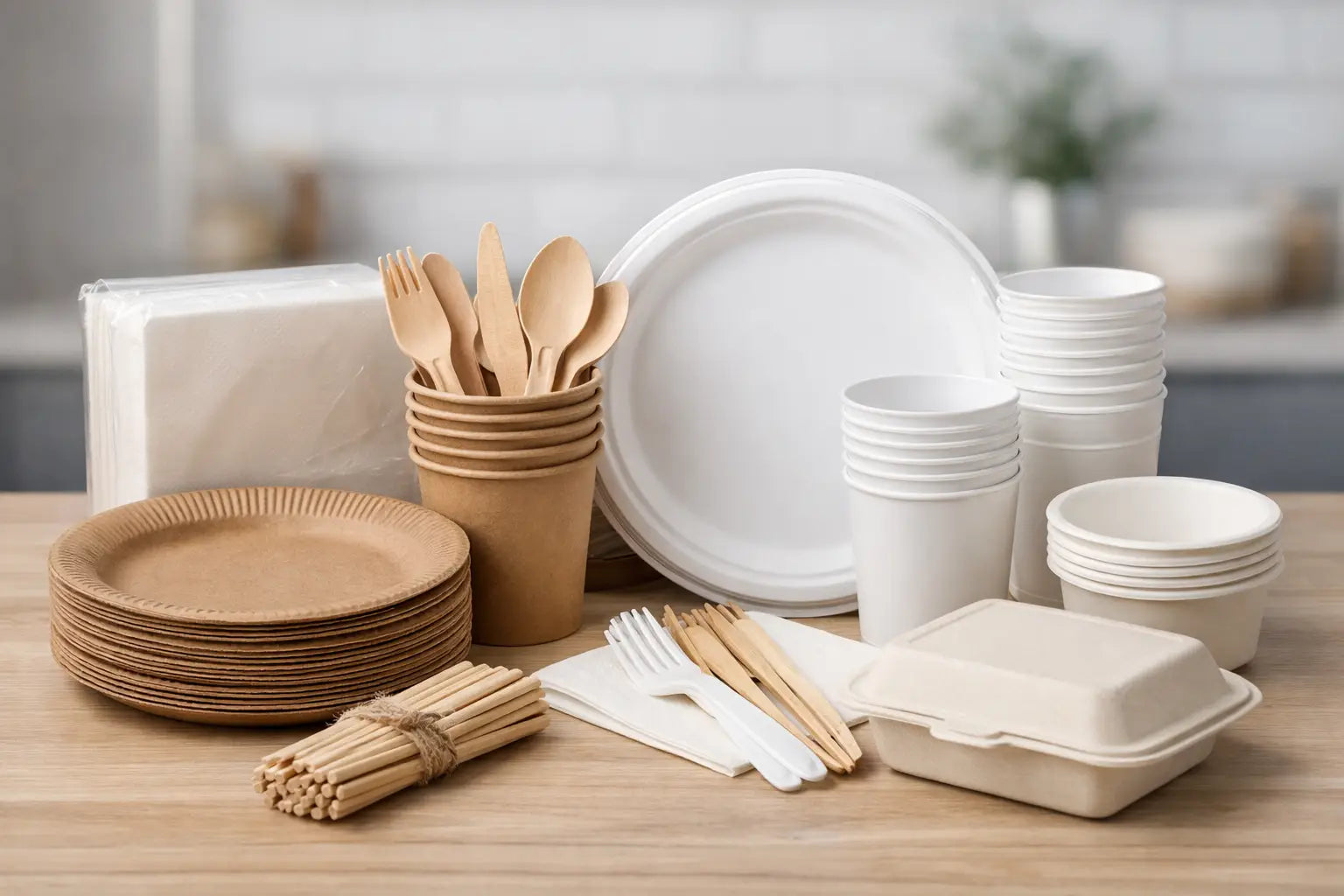
A rushed lunch service, a weekend party, and a catered office meeting all need the same thing - tableware that works without creating extra problems. This disposable tableware guide is built for buyers who want to get the order right the first time, whether that means stocking a restaurant, planning an event, or covering household use without overspending.
Disposable tableware sounds simple until the details start costing you time and money. Cups that soften too fast, lids that do not fit well, plates that bend under hot food, or cutlery that feels flimsy can affect service, presentation, and cleanup. The better approach is to buy based on use, not just price per pack.
What a good disposable tableware guide should help you decide
The main job of disposable tableware is straightforward. It should hold food and drinks reliably, support hygiene, and make service easier. But the right choice depends on volume, menu type, event style, and how quickly items move from storage to use.
For a food business, consistency matters most. You need products that perform the same way during every shift and fit into a repeat ordering process. For households and event hosts, flexibility often matters more. You may need a smaller mix of items that looks presentable, handles different foods, and keeps cleanup fast.
That is why buying disposable tableware should start with a few practical questions. Are you serving hot or cold items? Is this for dine-in convenience, takeout, buffet service, or a one-time gathering? Do you need a basic utility product, or does presentation play a bigger role? Those answers narrow the field quickly.
Disposable tableware guide by product type
Plates, bowls, and food containers
Plates and bowls need to match both portion size and food weight. Light snacks, cake, and pastries can work well with lighter options, while full meals, saucy dishes, or hot foods usually need sturdier construction. If the plate bends while guests are carrying food, the small savings on unit cost stop looking like savings.
Bowls are the better choice for rice dishes, pasta, salads with dressing, soups, and mixed meals. They reduce spills and help portioning stay neat. For operations that serve food on the go, containers may be a better fit than open tableware because they support transport, stacking, and storage.
Cups and drink service items
Drink service is where fit and temperature matter most. Paper cups are a practical choice for many hot drinks and quick-serve cold beverages, while plastic cups are often preferred for cold drinks where visibility and crack resistance matter. The decision is not only about appearance. It is also about lid compatibility, how long drinks sit before use, and whether customers are carrying them away.
For offices, events, and homes, cup size can be an easy place to control waste. Oversized cups encourage overpouring, while undersized cups create refill traffic and frustration. Match the cup to the actual serving habit, not the largest possible use case.
Cutlery, straws, and small accessories
Cutlery is usually treated as an afterthought, but it affects customer experience more than many buyers expect. A fork that breaks during a meal or a knife that cannot cut through basic food creates a poor impression fast. Heavier meals need stronger cutlery, while desserts, fruit, or office pantry use can often be covered with simpler options.
Straws, toothpicks, napkin pairings, and similar add-ons should be ordered with the main service format in mind. These smaller items are inexpensive individually, but they become a sourcing problem when they are forgotten and have to be reordered separately.
How to choose the right disposable tableware for the job
Start with the food or drink, not the product category. Hot foods need more heat resistance and structure. Oily foods can expose weak materials quickly. Sauces and dressings put pressure on seams, edges, and coatings. Cold beverages may look fine in many cup types, but condensation, stacking, and handling still matter.
Next, think about service style. A self-serve buffet needs tableware that guests can carry easily with one hand. A catered event may need a cleaner, more polished look. A break room or household setting usually benefits from simple, affordable options that are easy to store and replenish.
Volume is another key factor. If you are ordering for a restaurant, hotel, or regular events, case quantity and repeat availability matter just as much as item performance. A product that works well once but is hard to reorder consistently creates avoidable friction. Buyers who order frequently are usually better served by standardizing a small number of dependable items instead of constantly switching.
Storage should not be ignored either. Bulky products can tie up shelf space, especially in smaller kitchens, office pantries, and stock rooms. Nesting efficiency, pack format, and ease of access all affect how smoothly service runs.
Price matters, but total value matters more
Low unit pricing gets attention, and it should. For many businesses and households, staying on budget is a real priority. Still, the cheapest option is not always the best buy when performance problems lead to double-cupping, using two plates instead of one, or replacing damaged items too often.
A better way to judge value is to ask how the product performs in real use. Does it hold up through the full meal or drink service? Does it reduce mess and complaints? Does it simplify purchasing because you can reorder with confidence? Those are the details that make tableware cost-effective rather than just inexpensive.
For business buyers, there is another layer. Reliable tableware supports labor efficiency. If staff spend less time handling leaks, replacing broken items, or managing mismatched stock, the operational payoff is real. For households, the benefit is simpler but just as useful - fewer last-minute store runs and less hassle during gatherings.
Common buying mistakes to avoid
One of the most common mistakes is buying for best-case conditions. A plate may seem fine for a sample portion but fail under a full serving. A cup may work for water but not for hot coffee. Testing products against actual use gives you a more honest answer.
Another mistake is overcomplicating the assortment. Many buyers carry too many sizes and styles when a tighter range would cover most needs. That ties up budget and storage without improving service. In many cases, a few well-chosen core items handle the majority of day-to-day demand.
It is also easy to overlook compatibility. Cups, lids, containers, and covers need to work together. Buying pieces separately without checking fit can create waste and delays. The same goes for ordering too late. Disposable supplies move from background item to urgent problem very quickly when stock runs low.
Disposable tableware guide for businesses and households
Businesses usually need consistency, bulk value, and speed. Restaurants, caterers, hotels, offices, and event operators benefit from ordering tableware as part of a broader supply plan rather than as a last-minute add-on. When core products are easy to reorder and arrive packaged securely, procurement gets simpler and service stays steady.
Households often shop with different priorities, but the logic is similar. Birthday parties, holidays, cookouts, family gatherings, and everyday convenience all benefit from products that are easy to store, easy to use, and dependable when guests arrive. Buying from one source instead of piecing together an order from multiple sellers can save both time and effort.
This is where a broad catalog becomes useful. If you can source cups, trays, containers, straws, bags, and cleaning basics in one place, the process is faster and easier to manage. For buyers who want straightforward ordering and dependable stock, that matters as much as the product itself.
White Pack serves that need well by focusing on practical disposable products that support both commercial operations and household use. The advantage is not just selection. It is the ability to buy routine essentials with less friction.
When simple is the smarter choice
There is a tendency to overbuy for appearances, especially for events. Sometimes that makes sense. If presentation is part of the experience, style deserves attention. But for many use cases, simple and reliable beats decorative and inconsistent.
That does not mean every product should be the bare minimum. It means matching the product to the actual job. A busy food operation needs speed and dependability. A home host usually needs convenience and cleanup made easy. A smart buyer knows the difference and buys accordingly.
The right disposable tableware does not call attention to itself. It just works, keeps service moving, and helps you stay prepared for the next order, the next shift, or the next gathering.