Cart
0
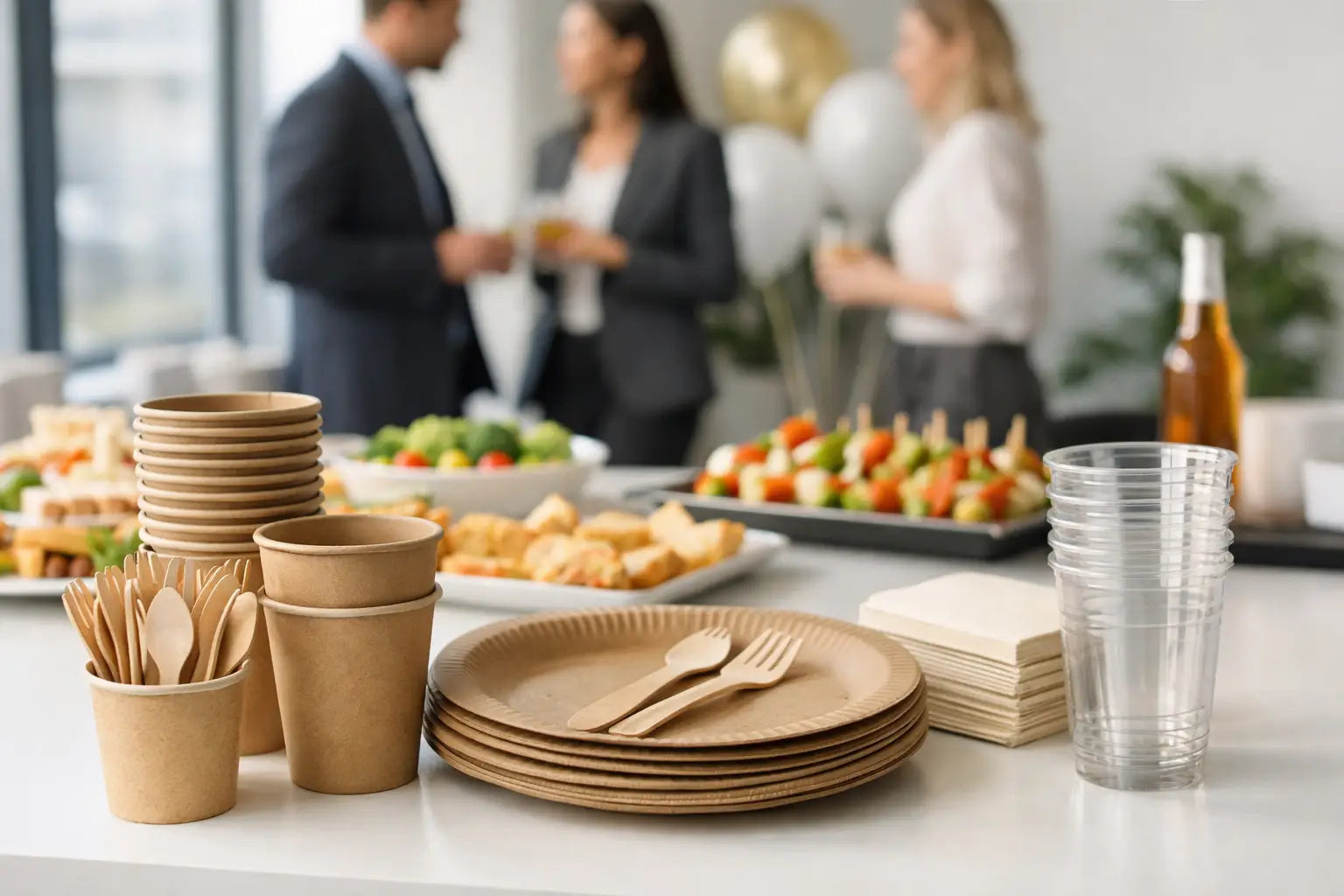
A birthday cake cut with a flimsy fork, coffee served in cups that soften halfway through the meeting, or a lunch buffet with no place for used plates can make even a well-planned office event feel disorganized. The right disposable tableware for office parties prevents those small service problems before they reach the break room. It keeps food moving, supports a clean workplace, and lets the organizer focus on employees and guests instead of washing dishes.
For office managers, administrators, and team leads, the goal is not to buy the most tableware. It is to buy the right mix for the menu, guest count, and setup. A practical supply plan controls costs while giving every attendee what they need.
Start With the Party Menu and Service Style
Tableware should follow the food, not the other way around. A morning coffee and pastry station needs sturdy paper cups, napkins, stirrers, and small plates. A catered lunch with salads, pasta, or saucy entrees needs stronger plates or bowls, dependable forks and knives, and containers for leftovers.
Think about how people will eat. If employees are standing, mingling, or moving between meetings, choose plates that are firm enough to hold with one hand and cups with secure lids when drinks are served away from tables. For a seated lunch, a coordinated set of plates, bowls, cups, and cutlery creates a more polished presentation without adding work for the facilities team.
Temperature matters as well. Cold desserts and fruit can be served in clear plastic cups or bowls, while hot foods need tableware designed to handle heat and moisture. Lightweight options may be suitable for dry snacks, but they can bend under a full meal or become uncomfortable with hot food. Matching the product to the menu is a simple way to avoid waste and last-minute replacements.
How Much Disposable Tableware for Office Parties?
A common ordering mistake is counting only one plate, one cup, and one set of cutlery per person. Office events rarely work that neatly. Employees may return for dessert, use a fresh cup for a second drink, or pick up an extra plate for a colleague.
For a straightforward meal, plan for one full place setting per guest plus a 15% to 20% buffer. If the event includes coffee, soft drinks, appetizers, dessert, or multiple food stations, increase the cup and small-plate quantities. A larger buffer is also useful for open-house events, training days, and celebrations where attendance can change during the day.
For example, a 50-person lunch usually calls for at least 60 dinner plates, 60 cutlery sets, and 60 napkins. If coffee and cold drinks are both available, order separate cup quantities for each beverage. This approach costs less than scrambling for supplies during an event, while avoiding excessive leftovers that take up storage space.
Build a complete serving setup
A complete tableware order often includes more than plates and forks. Consider the full path from serving food to clearing the room. For larger office gatherings, the following items help keep service organized:
- Dinner plates, appetizer plates, bowls, and dessert cups suited to the menu
- Forks, knives, spoons, straws, stirrers, and toothpicks where needed
- Beverage cups, lids, napkins, and dispensers for coffee or cold drinks
- Food trays, serving containers, aluminum pans, and takeaway containers for leftovers
- Trash bags, cleaning wipes, and other cleanup supplies for a fast reset
Choose Materials That Fit the Occasion
Disposable tableware is not one-size-fits-all. Paper, plastic, aluminum, and microwave-safe food containers each serve a different purpose. The best choice depends on food type, event length, budget, and the impression your office wants to create.
Paper plates and cups are a practical choice for light refreshments, breakfast meetings, and casual celebrations. They are easy to stock and quick to distribute. For heavier meals, look for thicker paper options or sturdier plastic plates that will not buckle under foods with sauces, sides, or generous portions.
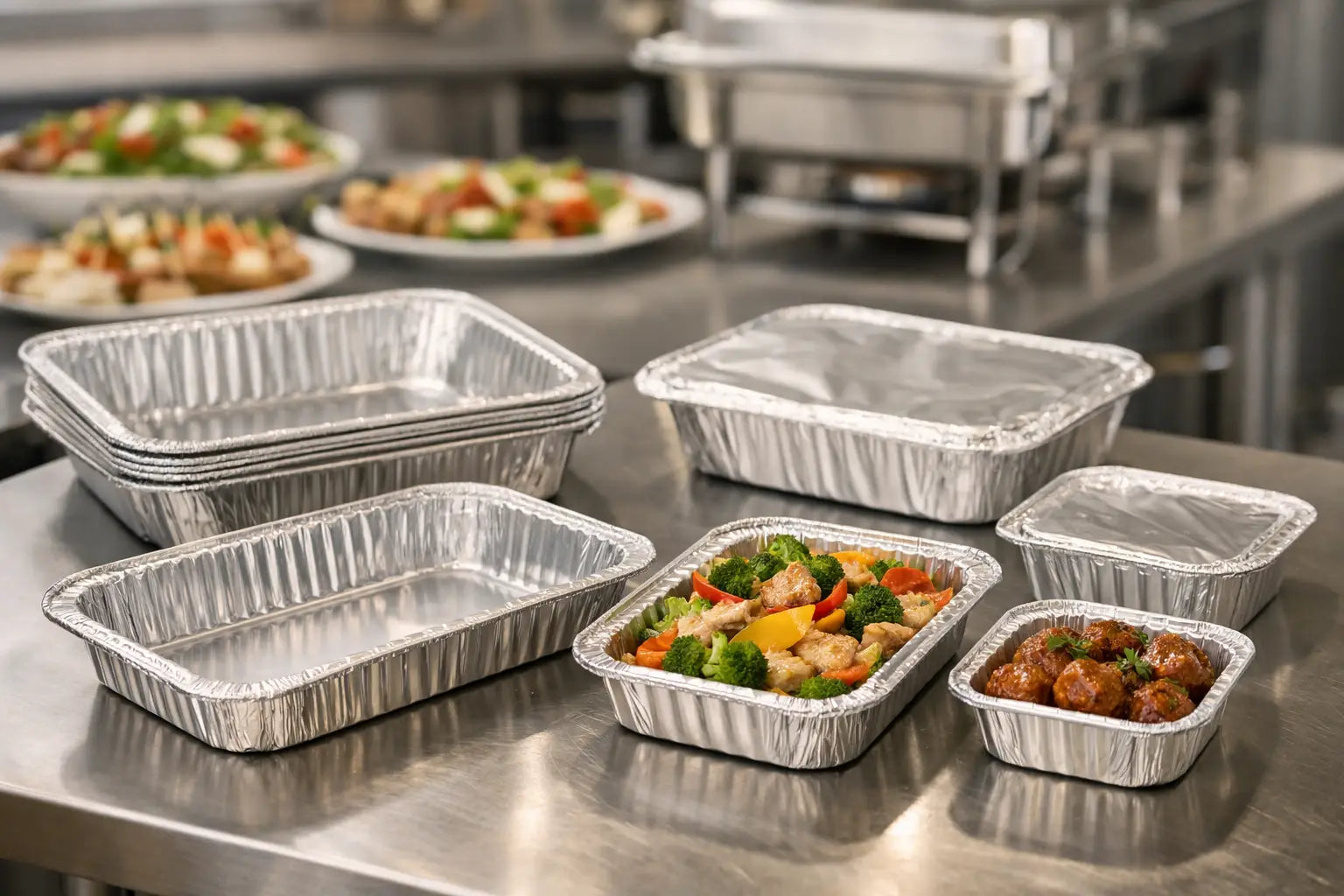
Clear plastic cups work especially well for cold drinks, parfaits, fruit cups, and desserts because employees can see what is being served. Plastic cutlery offers convenience for most lunches, but heavier foods may call for stronger utensils. When serving hot dishes from a caterer or office kitchen, aluminum pans and food containers help keep portions organized and make transport easier.
If sustainability goals influence office purchasing, review the materials your workplace prefers and separate recyclables or compostable items where local facilities accept them. The key trade-off is practical performance. A greener-looking product that leaks, tears, or cannot handle the meal may create more waste, not less. Choose items that work reliably for the specific event.
Make the Break Room Easy to Navigate
The best tableware can still lead to a messy event if the setup creates traffic jams. Arrange the serving area in the order employees use it: plates and bowls first, then food, then cutlery and napkins near the end. Place drinks on a separate table whenever possible. This keeps people from blocking the food line while they choose a beverage.
Keep extra supplies close by, but not on the main service table. Refill stacks of plates, napkins, and cups as needed so the setup stays tidy. For a catered meal, set aside containers and foil near the end of the event for leftovers. Employees appreciate being able to take a portion home, and the office avoids throwing away usable food.
Waste stations deserve the same attention as food stations. Put clearly lined trash bins near exits and eating areas, rather than relying on one overloaded container across the room. If your office separates waste streams, clear labels are more useful than complicated instructions. The easier cleanup is for employees, the more likely the workspace will be ready for business afterward.
Buy in Bulk Without Overbuying
Office parties may happen only a few times a year, but disposable supplies are useful for meetings, client visits, training sessions, and daily break rooms. Bulk purchasing can lower the cost per unit and reduce reordering, especially for dependable basics such as cups, napkins, plates, and cutlery.
Still, bulk only creates value when you have room to store it and a realistic plan to use it. Start with high-turnover items that suit many occasions. Neutral plates, clear cups, basic cutlery, and standard-size food containers can serve everything from a staff breakfast to a customer event. Specialty colors, unusually shaped serving items, and holiday-specific designs are better purchased closer to the event unless your office uses them regularly.
A single supplier also makes procurement easier. White Pack helps offices source tableware, food-service packaging, cleanup materials, and other everyday essentials in one order, making it simpler to maintain a ready-to-use event supply cabinet.
Keep a Simple Party Supply Checklist
After each event, record what ran out first and what remained unopened. This small habit turns future ordering into a quick routine instead of a rush. Note the guest count, menu, number of drinks served, and any item that did not perform as expected.
Over time, your office can build a reliable baseline: enough essentials for routine meetings, plus a scalable order for larger celebrations. Store supplies in a clean, dry area and rotate older inventory forward so cups, plates, and napkins remain ready when the next occasion appears.
A well-supplied office party does not need elaborate décor or costly rentals to feel welcoming. When the food is easy to serve, the drinks are easy to carry, and cleanup takes minutes instead of hours, the team gets the part that matters most: more time together.