Cart
0
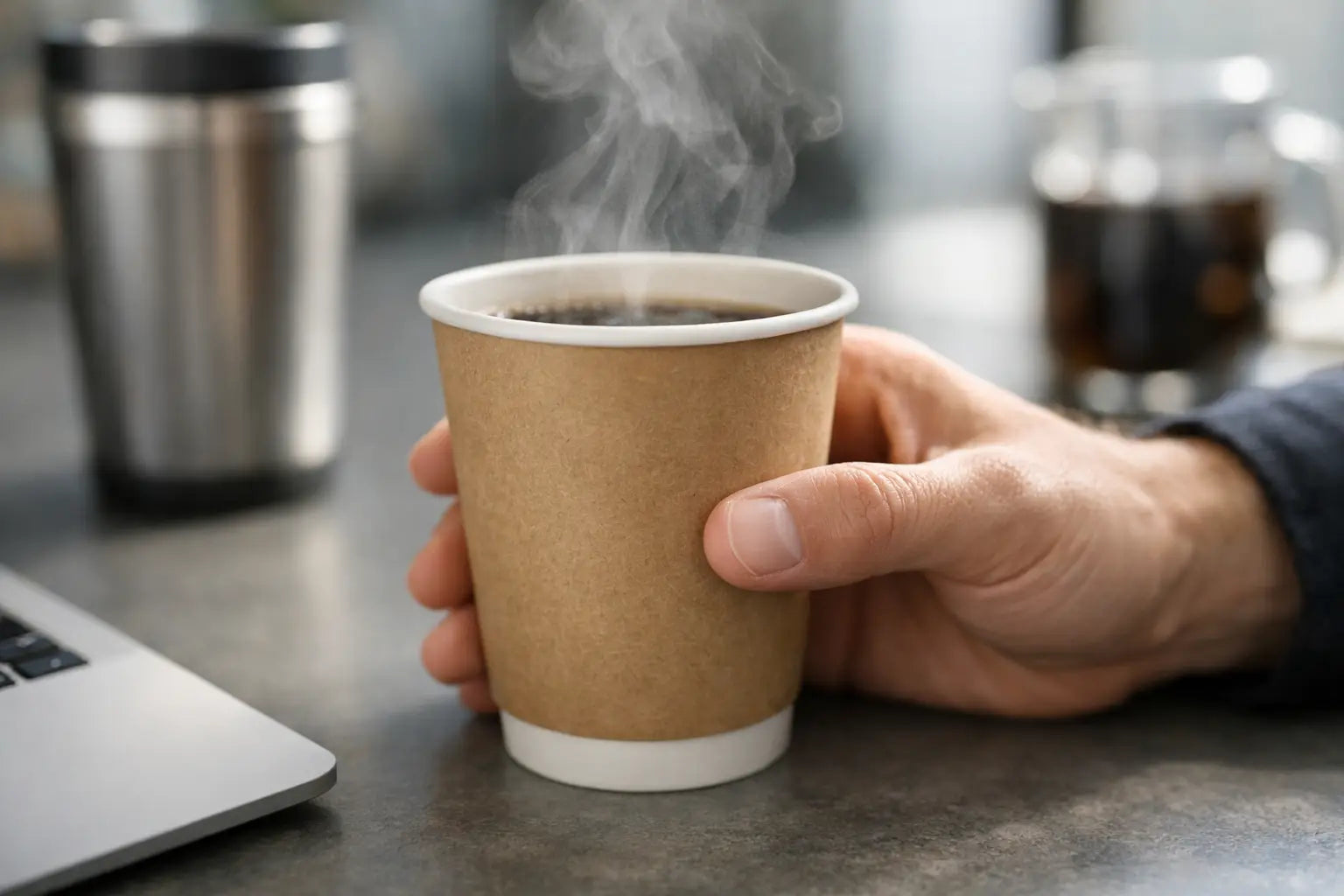
That first pour tells you a lot. If a cup goes soft, leaks at the seam, or feels too hot to carry, it is not ready for coffee service. So, can paper cups hold hot drinks? Yes - but only when the cup is made for heat, has the right lining, and is matched to the drink, fill level, and serving setup.
For cafes, offices, caterers, and households hosting a crowd, that distinction matters. A paper cup is not just a container. It affects safety, customer comfort, drink temperature, speed of service, and how many backups you need on hand. Choosing the right one helps you avoid waste, complaints, and the small problems that slow everything down.
Can paper cups hold hot drinks in real use?
In normal food-service use, paper cups can hold hot drinks very well. They are commonly used for coffee, tea, hot chocolate, and similar beverages because they are lightweight, stack easily, and are designed for quick, hygienic service. The key point is that hot paper cups are not plain paper. They are made with a protective inner lining that helps resist moisture and prevents the cup from absorbing liquid too quickly.
That lining is what makes the difference between a cup that performs and a cup that fails. Without it, hot liquid would weaken the paper fast. With it, the cup can keep its shape long enough for drinking, takeaway service, or event use.
Still, performance depends on more than just whether the material says paper. Cup wall thickness, seam quality, lining type, and whether it is single-wall or double-wall all affect how the cup handles heat. A basic cup may be fine for short use in an office break room, while a busier coffee station may need a stronger option that is easier to hold and more dependable during transport.
What makes a paper cup suitable for hot drinks?
A proper hot drink paper cup is built in layers. The outer paper provides structure, while the inner lining acts as a barrier against liquid. This keeps hot coffee or tea from soaking into the paper fibers right away.
The cup's construction also affects how comfortable it is to hold. Single-wall cups are common and cost-effective, but they can feel hot when filled with very warm drinks. That is why many businesses pair them with sleeves or choose thicker cups. Double-wall paper cups add insulation, making them easier to hold without an extra sleeve and helping the drink stay warmer a little longer.
The rolled rim matters too. A sturdy rim improves lid fit and drinking comfort. In takeaway service especially, a secure lid and strong rim reduce spills when customers are walking, driving, or carrying multiple items.
If you are buying in volume, it helps to think beyond the cup alone. The cup, lid, sleeve, and beverage temperature all work together. A good cup can still feel inadequate if the drink is near boiling and there is no insulation for the person holding it.
Hot drink type changes the answer
Not all hot drinks put the same stress on a cup. Black coffee, tea, and hot water are usually straightforward for quality paper hot cups. Hot chocolate can be slightly heavier, but it is still generally fine. Drinks with milk, syrups, or whipped toppings do not usually damage the cup, but they may change how the drink is handled and how long it sits before being consumed.
Very high temperatures are where the practical limits show up. Freshly boiled water is harsher on both the cup and the person holding it than coffee served at a standard drink-ready temperature. If staff are filling cups immediately after boiling, the outside may become uncomfortable faster, especially with single-wall options.
Long holding times matter as well. A paper cup designed for hot drinks works best for intended service windows, not for storing a beverage on a desk for hours. The longer the liquid sits, the more important material quality becomes.
When paper cups struggle
Paper cups are reliable, but they are not all-purpose forever containers. Problems usually appear in a few predictable situations.
The first is using the wrong cup type. Cold drink paper cups are not always built the same way as hot drink cups, and using them for coffee or tea can lead to softening, discomfort, or leakage. The second is overfilling. Leaving too little headspace makes spills more likely and can compromise lid performance.
The third issue is rough handling. Paper cups are designed for convenience, not heavy pressure. Squeezing the sides too firmly, stacking badly during busy service, or carrying them without trays can lead to deformation. The fourth issue is extended use. If someone plans to nurse one hot drink through a long meeting, a stronger insulated cup will usually perform better than a thin economy option.
These are not flaws so much as buying and usage decisions. Match the cup to the application, and most of these issues are easy to avoid.
Single-wall vs double-wall paper cups
If you are deciding what to stock, this is usually the most practical comparison. Single-wall paper cups are a strong fit for straightforward service where cost control matters and drinks are consumed quickly. They work well in offices, waiting areas, community events, and standard takeaway counters, especially when paired with sleeves.
Double-wall cups are the better choice when customer handling is part of the experience. They are easier to hold, feel more substantial, and help reduce the need for extra accessories. For coffee shops, hotel service points, catered events, and any operation that wants cleaner presentation with less heat transfer, they often make more sense.
The trade-off is cost. Double-wall cups typically cost more upfront, but that can be offset if you use fewer sleeves or have fewer complaints about heat. For many buyers, the right answer depends on volume, price sensitivity, and how the drink is served.
Can paper cups hold hot drinks for takeaway?
Yes, and this is one of their most common uses. For takeaway, the cup has to do more than hold liquid. It has to travel. That means lid fit becomes critical, along with cup rigidity and insulation.
A well-matched hot cup and lid combination can handle coffee runs, drive-through service, office meetings, and event beverage stations efficiently. But if the lid is loose, the cup is too thin, or the drink is filled too high, the risk shifts quickly from inconvenience to mess.
For operations serving on the go, consistency matters more than almost anything else. The same cup should perform the same way from one case to the next. That is why dependable supply matters just as much as product type. If you are ordering for business use, it pays to choose cups that support repeatable service rather than just the lowest piece price.
What buyers should look for before ordering
If you are stocking for a business, event, or household gathering, the smart question is not only can paper cups hold hot drinks, but which paper cups will hold them well for your setup. Start with the intended beverage. Coffee and tea service usually call for cups clearly rated for hot drinks, with compatible lids if drinks will be carried.
Then consider user experience. Will people grab and go, or sit and drink right away? Will children or guests be carrying the cups themselves? Is appearance part of the service standard? These details help determine whether an economy single-wall cup is enough or whether insulated options are worth it.
Storage and order size matter too. Paper cups are convenient because they are stackable and easy to keep on hand in volume. That makes them a practical choice for businesses managing regular demand and for households planning parties, holidays, or large gatherings.
White Pack serves buyers who need that kind of practical reliability - products that are easy to order, sensible to stock, and built for real day-to-day use.
The bottom line on hot drinks and paper cups
Paper cups can handle hot drinks effectively when they are purpose-built for the job. The safest choice is a cup designed for hot beverages, with good lining, solid seam strength, and the right lid or sleeve if needed. For coffee, tea, and similar drinks, that setup is efficient, hygienic, and well suited to both business service and home hosting.
If you are buying cups, think in terms of performance rather than just material. The right paper cup should hold heat without leaking, feel secure in the hand, and support the pace of service you need. Get that part right, and hot drink service becomes one less thing to worry about.