Cart
0
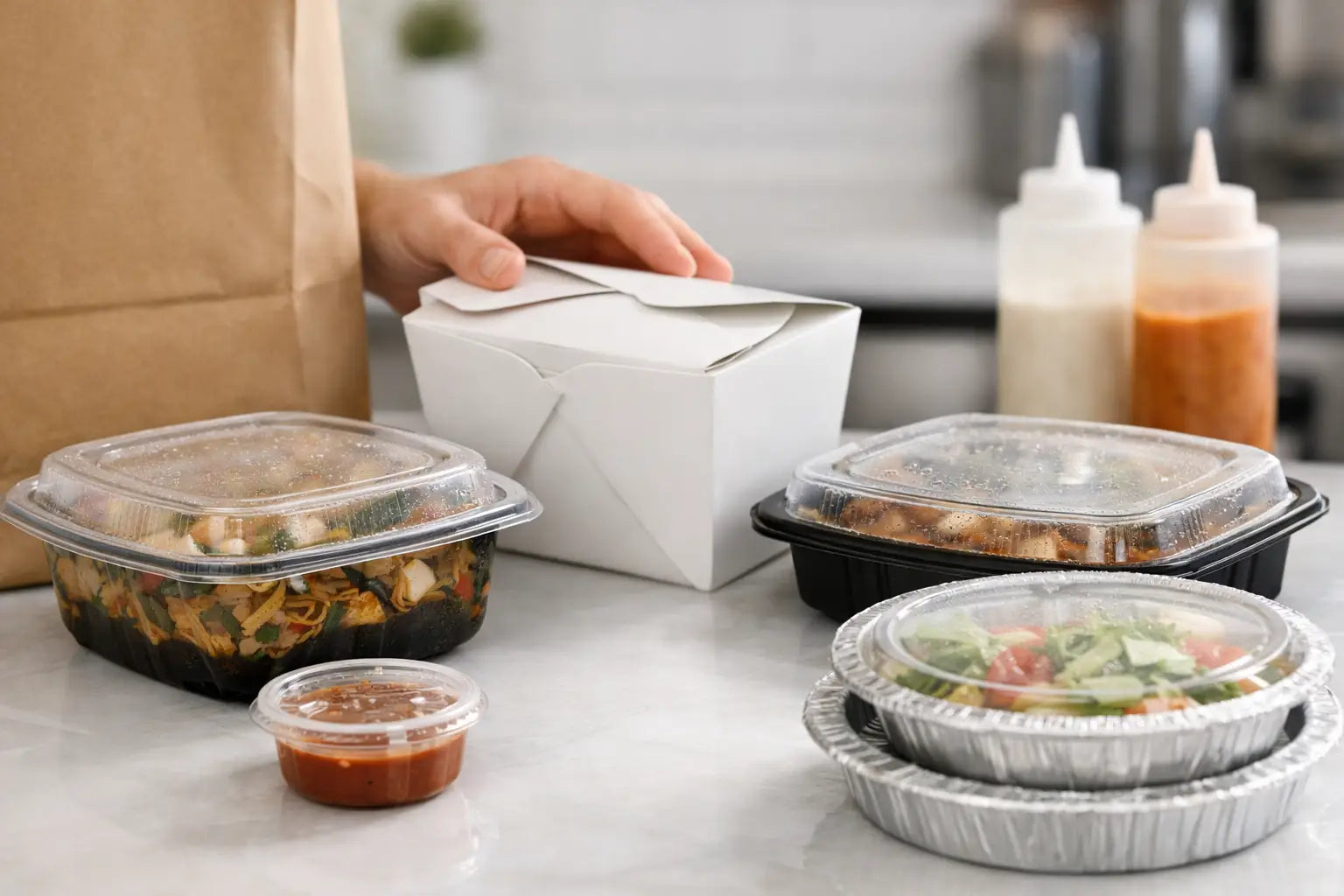
A leaking order usually costs more than one meal. It can mean a refund, a bad review, a stained delivery bag, and a customer who hesitates to order again. That is why takeout container leak prevention matters for restaurants, caterers, food trucks, event hosts, and even households packing leftovers. The right container helps, but real leak prevention comes from matching the container, lid, food type, and packing method.
Why takeout containers leak in the first place
Most leaks are not caused by one bad product. They happen when a hot, oily, wet, or heavy food is packed into a container that was not designed for that specific job. Soup in a shallow snap-lid tray, saucy pasta in a weak paper box, or grilled food packed before steam can settle - each creates pressure on the seal.
Temperature also plays a bigger role than many buyers expect. Hot food releases steam, and that steam creates condensation. Inside a closed container, moisture can soften certain materials, loosen a lid fit, and increase internal pressure during transport. Then the driver hits one speed bump, the bag tilts, and the leak appears at the rim.
Portion size is another common issue. Overfilled containers leave no room for movement. Even a well-fitted lid can fail if sauce is sitting right against the sealing edge. A container may test fine on a shelf and still fail in transit because the fill line was ignored during a busy service period.
The first rule of takeout container leak prevention
Choose containers based on the food, not just the portion size. This sounds obvious, but it is where many operations lose money.
A dry rice dish, a salad, and a curry may all be sold as a single-serving meal, but they need very different packaging. Dry foods can work well in lighter, stackable containers. Foods with broth, dressing, oil, or heavy sauce need stronger walls and a more secure lid system. If the meal contains both dry and wet components, separating them often prevents more problems than upgrading to a larger all-in-one container.
For businesses, this is really a purchasing issue, not only a kitchen issue. Standardizing a few dependable container types can simplify ordering, but going too generic often leads to waste, complaints, and replacement costs. The goal is not to stock every format available. It is to keep the right mix for the menu you actually serve.
Material matters more than most buyers think
Plastic containers
Plastic containers are a practical choice for many hot and cold foods because they offer visibility, structure, and a reliable snap-on lid when matched properly. For sauces, pasta, rice bowls, and prepared meals, they often provide one of the best balances of cost and performance.
That said, not all plastic containers seal the same way. Thin, flexible options may work for lighter foods but can twist under pressure if packed too full or stacked poorly. For delivery-heavy operations, stronger microwave-safe containers with tighter lid compatibility are usually the safer choice.
Aluminum containers
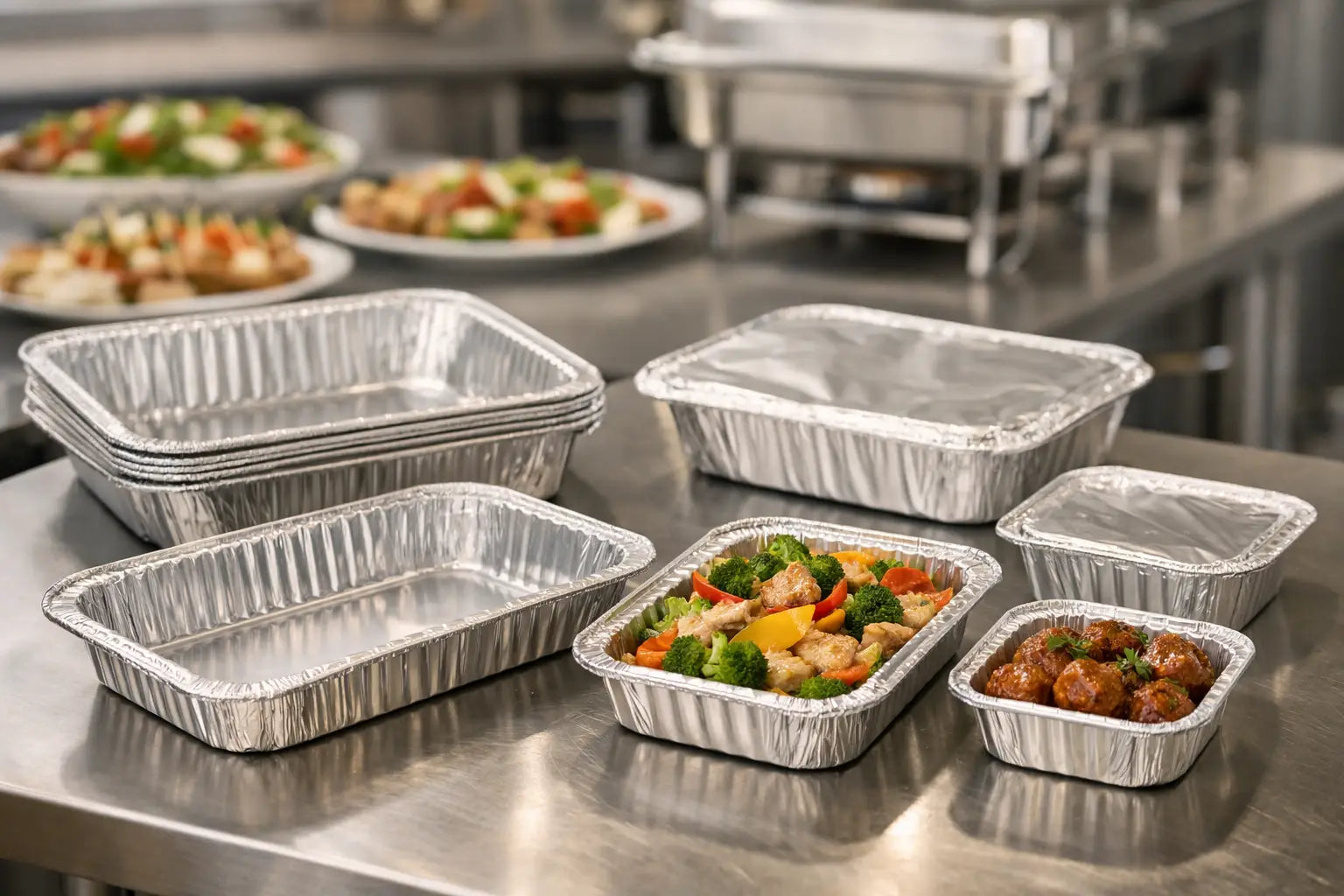
Aluminum containers are a strong option for hot foods, baked dishes, and catering trays. They hold shape well and handle heat better than many lightweight alternatives. They are especially useful when food is going from kitchen to transport to reheating.
The trade-off is that leak prevention depends heavily on the lid style. A loose board lid or lightly crimped cover may be fine for solid foods, but it is less dependable for gravy, melted butter, or thin sauce. If your menu includes liquids, aluminum works best when paired with a lid designed for a firmer fit or when the food itself is not highly mobile.
Paper and fiber containers
Paper-based containers can be a smart choice for lighter meals and customers who prefer a more straightforward disposable presentation. They perform well for many dry or semi-dry items, especially when the inner lining is suitable for grease resistance.
But paper is not a cure-all. With very hot, very wet, or very oily foods, performance depends on quality and construction. If the container softens, folds, or absorbs too much moisture, the lid area becomes vulnerable. For soups and heavy sauces, buyers should test carefully rather than assume all lined paper containers perform equally.
Lids are not an accessory
A good container with the wrong lid is still the wrong package. In many operations, the lid gets less attention than the base because the base is where food is portioned. But the lid is where leak prevention is won or lost.
Snap-fit lids need consistent compatibility. Mixing similar sizes from different product lines may seem harmless, yet even a small variation in rim shape can weaken the seal. Press-on lids should close evenly around all sides. If staff have to force one corner repeatedly, the fit is already telling you something.
For liquid-heavy foods, tamper-evident or tighter-locking styles can add protection, especially in delivery environments with longer travel times. The added cost may be worth it if you are currently losing money to remakes and refunds. For dry bakery items or cold sides, that same upgrade may not be necessary. It depends on what is inside and how far it has to go.
Packing technique affects performance
Even the best packaging can fail if the food is packed carelessly. Fast service matters, but so does consistency.
Leave headspace in the container. If sauce reaches the rim before the lid is applied, a clean seal becomes much harder. Wipe the edge when needed. This small step is often skipped during rush periods, yet it prevents many avoidable leaks.
Let extremely hot foods settle briefly when possible. Sealing a container immediately after filling can trap steam and create excess moisture. You do not want food cooling too long, but a short pause can improve the lid hold and reduce condensation.
Placement inside the delivery bag also matters. Keep containers level, place heavier items at the bottom, and avoid allowing one hot tray to tilt another item at an angle. Soups, dressings, and side sauces should be packed upright and separated from crush-prone foods.
When to separate components
One of the most effective takeout container leak prevention strategies is not sealing everything together in the first place.
If a meal includes dressing, salsa, broth, or dipping sauce, a separate small container can protect the main dish and preserve food quality. This is especially useful for fried foods, salads, grain bowls, and plated meals where texture matters. Customers also appreciate having control over how much sauce they use.
Yes, multiple containers can raise packaging cost. But combining wet and dry items in a way that ruins both is usually more expensive. Better presentation, better texture, and fewer leaks often justify the extra piece.
Testing should happen before complaints do
Many packaging problems only show up in motion. A container that looks secure on a prep counter may leak after ten minutes in a car. That is why practical testing matters.
Fill the container with the actual menu item, close it the way staff normally would, place it in a bag, and carry it, tilt it, and stack it. Test hot foods hot and cold foods cold. If your operation offers delivery, test like a delivery order, not like a dine-in handoff.
This is where dependable supply selection makes a difference. Buyers who source packaging for both cost and performance tend to avoid the cycle of cheap container, customer complaint, emergency reorder. White Pack serves customers who need that balance - everyday packaging that works in real service conditions without making ordering more complicated than it needs to be.
What businesses and households should prioritize
For restaurants and caterers, consistency is the priority. Staff need packaging that is easy to identify, easy to close, and reliable across repeated orders. A slightly better container that reduces errors and complaints can be more cost-effective than a cheaper one that fails under pressure.
For households, convenience usually matters most. Leftovers, party foods, and meal prep items need containers that store cleanly, travel well, and handle reheating if needed. In that setting, it often makes sense to keep a mix of sizes rather than force every food into the same container.
The best packaging choice is rarely the cheapest piece on the shelf or the most expensive one available. It is the one that fits the food, the route, and the way you actually use it. A little attention to container strength, lid fit, fill level, and packing method can prevent a lot of mess before the order ever leaves the counter.
Good takeout packaging does not call attention to itself. It simply arrives the way it should - clean, secure, and ready to serve.