Cart
0
A leaking curry, a tipped drink, or a torn handle can turn a routine pickup order into a refund, a complaint, and a customer who does not come back. That is why asking what bags work for takeaway is not a small packaging question. It is an operations question, a food quality question, and in many cases a profit question.
The right takeaway bag has one job on paper - carry food from counter to customer. In practice, it needs to do much more. It has to support the weight of the order, protect containers in transit, resist grease and moisture when needed, and still look clean and reliable when it leaves your business. For restaurants, cafes, caterers, and event operators, bag choice affects speed, presentation, and waste. For households hosting events or sending food home with guests, the same logic applies.
What bags work for takeaway depends on the order
There is no single best bag for every takeaway setup. A bakery order, a burger combo, and a family-sized hot meal all place different demands on packaging. The bag that works best depends on five practical factors: food weight, temperature, moisture, container shape, and travel time.
Light, dry items are usually the easiest. Pastries, sandwiches, or boxed snacks can often go into standard paper takeaway bags without much risk. Heavier meals need more structure and stronger handles. If the order includes sauces, steam, or oily foods, the bag material matters more because weak paper can soften and lose shape.
This is where many businesses get caught out. A bag may look fine at the counter but fail ten minutes later in the customer’s car or the delivery rider’s hand. Good takeaway packaging is not just about appearance at handoff. It needs to hold up through the full trip.
Paper bags for takeaway
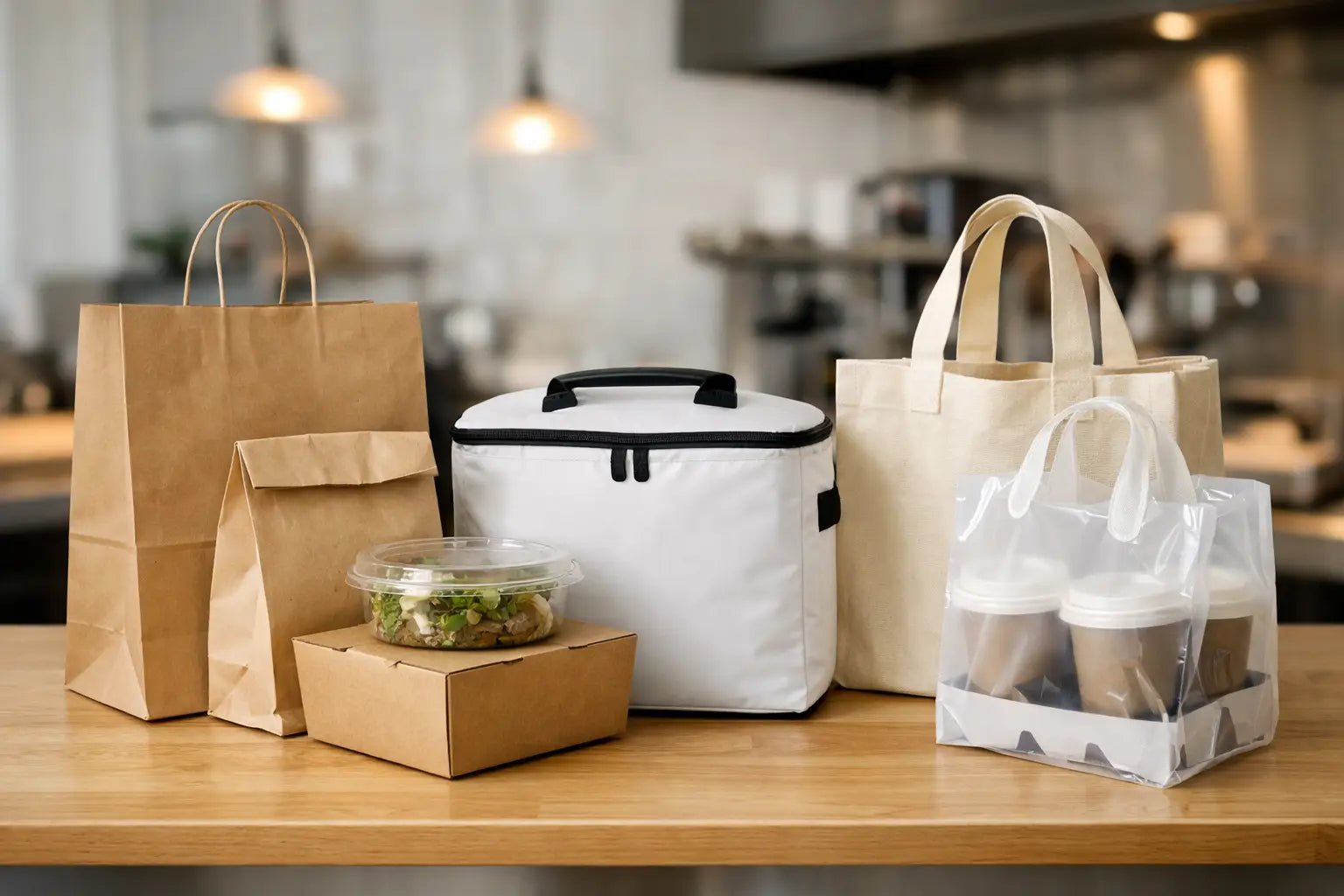
Paper bags are a strong choice for many takeaway businesses because they are simple, presentable, and versatile. They work especially well for dry foods, boxed meals, baked goods, wrapped sandwiches, and orders packed in secure containers.
Kraft paper bags with flat or twisted handles are common because they balance appearance and carrying comfort. For front-of-house use, they also give a cleaner, more organized look than thin plastic. Customers tend to associate sturdy paper bags with better presentation, especially for cafes, bakeries, and quick-service food outlets.
That said, paper has limits. If a container is too hot and releases a lot of steam, or if the order includes greasy packaging with weak seals, the paper can soften. Weight is another factor. A small paper bag may be fine for one meal, but a large family order with multiple containers can strain the base if the bag is not heavy-duty.
If you use paper, thickness matters. So does base width. A bag that closely matches your containers will perform better than one that leaves too much empty space and allows items to shift.
When paper works best
Paper bags are usually the right fit when the food is relatively stable inside the container and the order is handed over for a short trip. They are ideal for pastries, deli items, sandwiches, dry snacks, boxed lunches, and many standard restaurant takeaway meals packed in leak-resistant containers.
They also work well when presentation matters. For businesses that want an orderly, dependable look without adding complexity to packing, paper is often the practical first choice.
Plastic bags for takeaway
Plastic takeaway bags still have a place, especially when moisture resistance matters. If the order includes cold drinks, wet containers, chilled items with condensation, or foods that may release sauce, plastic can offer better short-term protection than standard paper.
T-shirt style plastic bags are widely used because they are lightweight, fast to load, and economical in volume. They suit convenience-focused operations where speed is essential and the products inside are already packed securely. They are also useful for separating food from cleaning items or household supplies in mixed retail purchases.
The trade-off is structure. Plastic does not provide the same upright support as a good paper bag, so containers can tilt more easily if they are not packed carefully. Thin plastic can also cut into hands when carrying heavier orders. For that reason, plastic bags are usually better for lighter takeaway loads or as a secondary outer bag rather than the main solution for large meal bundles.
Where plastic makes sense
Plastic works best for lightweight orders, cold items, or situations where moisture is the main concern. It can also be useful for businesses that need a low-cost backup option during busy periods. If the order is heavy or tray-based, plastic alone is rarely the best answer.
What bags work for takeaway with hot food
Hot food creates a specific packaging challenge because heat and steam can weaken the wrong bag fast. If a meal is packed immediately after cooking, steam builds inside the containers and around the bag interior. That can affect both bag strength and food quality.
For hot takeaway, sturdy paper bags often work well when paired with containers that vent properly and seal reliably. If containers trap too much steam, crispy foods can soften and paper can absorb moisture. If they vent too much, heat retention drops. The right balance matters.
For larger hot orders, reinforced paper bags or stronger handled bags are usually the safer choice. They keep shape better, carry more comfortably, and reduce the risk of splitting under weight. If the journey is longer or the order value is high, insulated bags may be needed at the transport stage, especially for delivery operations. Those are generally used by the driver or courier rather than handed to the customer as the final bag.
Matching the bag to the container
A takeaway bag performs best when it is selected around the container, not the other way around. This is one of the simplest ways to reduce packing problems.
Shallow trays need a bag with enough width to sit flat. Tall containers need height without excessive movement. Multiple small containers need a base that keeps them grouped tightly. If you pack drinks, sauces, and food together in a bag that is too large, every turn and stop increases the chance of spills.
It also helps to think in order types rather than single products. A coffee shop may need one bag for pastries, another for lunch combos, and a third for multi-drink takeaway. A restaurant may need separate bag sizes for one-person meals, family orders, and catering trays. Standardizing around common order patterns can speed up service and reduce waste.
Handle strength and load capacity matter more than most buyers expect
Handles are one of the first failure points in takeaway packaging. A bag may have enough internal space, but if the handle attachment is weak or the material is too thin, it will not matter.
This is especially relevant for restaurants packing rice dishes, combo meals, meal prep containers, or bulk orders. Weight adds up quickly. Two or three containers, sides, cutlery, and drinks can become a demanding load. A stronger handled paper bag often costs more per unit, but it can save money by reducing breakages, remakes, and customer complaints.
For operators buying in bulk, it makes sense to test bags with real orders before fully committing. Fill them to actual working weight, hold them for several minutes, and check how the base and handles respond. Packaging that performs in a product photo does not always perform in service.
Choosing takeaway bags for different businesses
Cafes and bakeries usually do well with paper bags because their products are lighter, drier, and more presentation-led. Quick-service restaurants often need a mix of bag sizes, with stronger paper options for meal bundles and moisture-resistant options for drinks or chilled items. Caterers and event businesses may need larger-capacity bags with reliable structure, especially when transporting multiple boxed meals or grouped servings.
Households planning parties or family gatherings can use the same logic. If you are sending leftovers, packed desserts, or prepared meals home with guests, choose bags based on weight and container fit rather than whatever is left in the cabinet. A neater, better-fitted bag makes transport easier and prevents last-minute mess.
For buyers managing regular supply, consistency matters as much as cost. Reordering the same dependable bag size and strength helps staff pack faster and with fewer mistakes. That is one reason businesses often prefer to source food packaging from a supplier with a broad assortment rather than piecing orders together from multiple places.
The best takeaway bag is the one that prevents problems
If you are deciding what bags work for takeaway, start with the most common orders you actually send out, not the ideal ones. Look at weight, heat, moisture, and travel time. Then choose the bag that protects the order without slowing down packing or adding unnecessary cost.
In practical terms, sturdy paper bags cover a large share of takeaway needs, especially for meals, bakery items, and boxed foods. Plastic bags still make sense for certain light or moisture-prone orders. For heavier or hotter food, stronger construction becomes essential. White Pack serves businesses and households that need that kind of dependable, everyday packaging choice.
A good takeaway bag does not call attention to itself. It simply gets the order home intact, keeps service moving, and gives customers one less reason to complain.