Cart
0
A leaking lid can turn a good meal into a refund, a complaint, or a mess in the car. That is why takeaway containers are not just a packaging detail. For restaurants, caterers, offices, and households, they affect food quality, hygiene, presentation, storage, and cost all at once.
The right container helps hot food stay hot, sauces stay contained, and portions arrive looking the way they should. The wrong one does the opposite. If you are buying for daily service or stocking up for parties and family use, it pays to choose containers based on what they need to do, not just what they cost per piece.
What takeaway containers need to do
At a basic level, takeaway containers need to protect food from the kitchen to the customer or table. But in real use, the job is broader than that. A container has to match the temperature of the food, the weight of the portion, the moisture level, and how long the item will sit before it is eaten.
A rice dish with curry, a grilled sandwich, a salad, and a slice of cake all create different packaging demands. Some foods release steam and soften the container if the material is too light. Others need a tighter lid because even a small spill is enough to ruin presentation. In busy operations, stackability matters too. If containers slide, crush easily, or take up too much shelf space, they slow down service.
For home users, the same logic applies. If you are packing leftovers, meal prepping, or serving at a gathering, dependable takeaway containers make storage simpler and cleanup faster. You want something easy to fill, easy to carry, and easy to throw away after use.
How to choose takeaway containers by food type
The fastest way to make a smart buying decision is to start with the menu or use case. Not every item needs the same shape or material.
Hot meals usually need more structure and better heat resistance. Microwave-safe containers are often the practical choice when customers may reheat food later. For saucy dishes, secure-fitting lids matter more than appearance alone. If the meal includes multiple components, compartment containers can help keep texture and flavor separate.
Cold foods need a different approach. Salads, fruit, desserts, and deli items often benefit from containers that show the product clearly and hold their shape in chilled storage. Presentation counts here because customers see the food before they eat it. A container that looks clean and keeps ingredients neat adds value without changing the food itself.
Bakery items and snacks tend to be lighter, but they still need protection from crushing and shifting. A flimsy container may cost less upfront, but if it arrives dented or lets icing smear against the lid, the saving disappears quickly.
If you serve family-style portions or catering trays, capacity becomes the bigger issue. Small containers create extra handling, while oversized ones can make portions look sparse and shift during transport. The right size helps with both appearance and portion control.
Material matters more than many buyers expect
When buyers compare takeaway containers, price is often the first thing they notice. That makes sense, especially for volume orders. But material affects performance so directly that focusing only on unit cost can lead to waste.
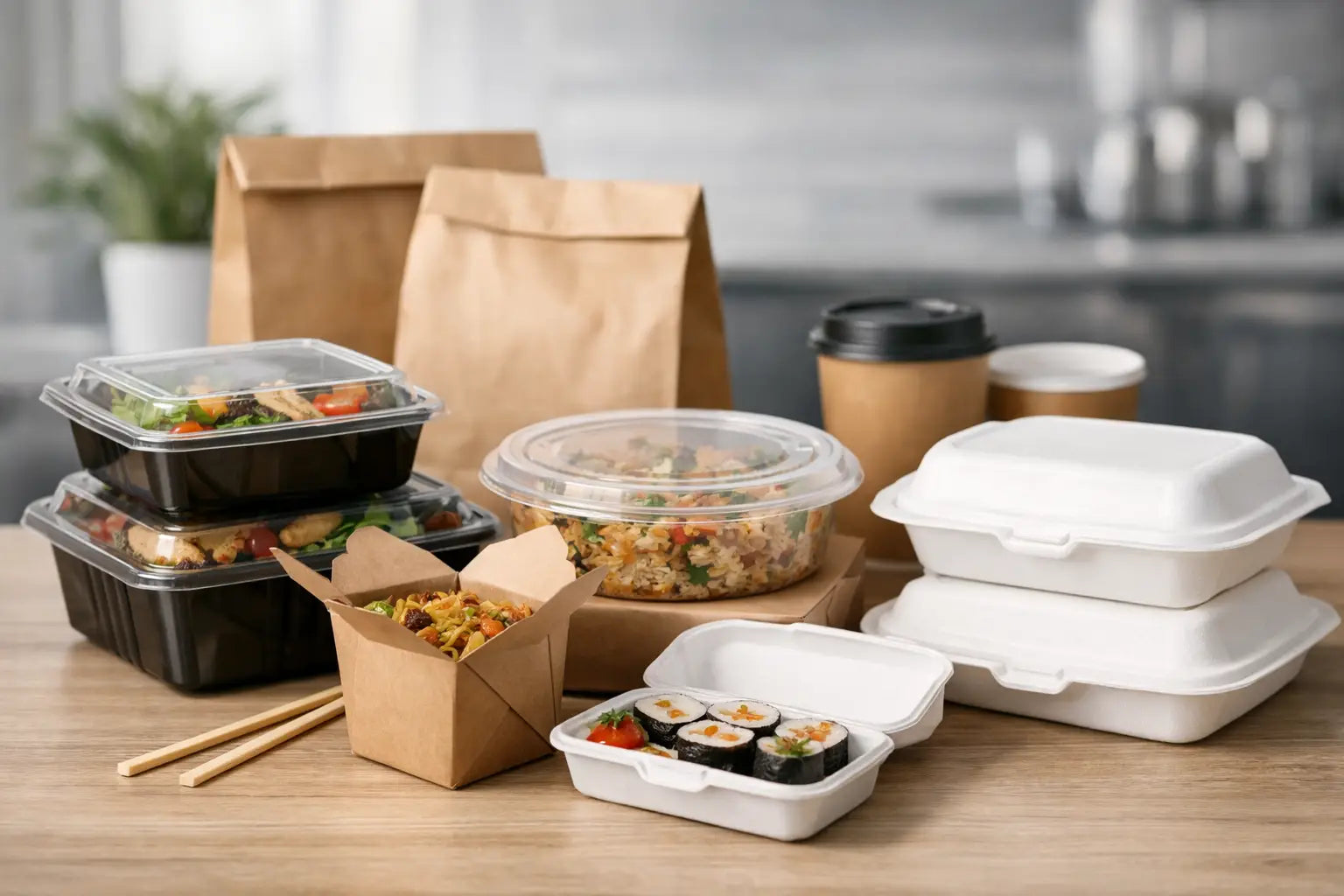
Plastic containers are a common choice because they are lightweight, practical, and available in many sizes. They work well for a wide range of foods and are often a good fit for operations that need clear, functional packaging with dependable lids. For cold items and general food storage, they are hard to beat on convenience.
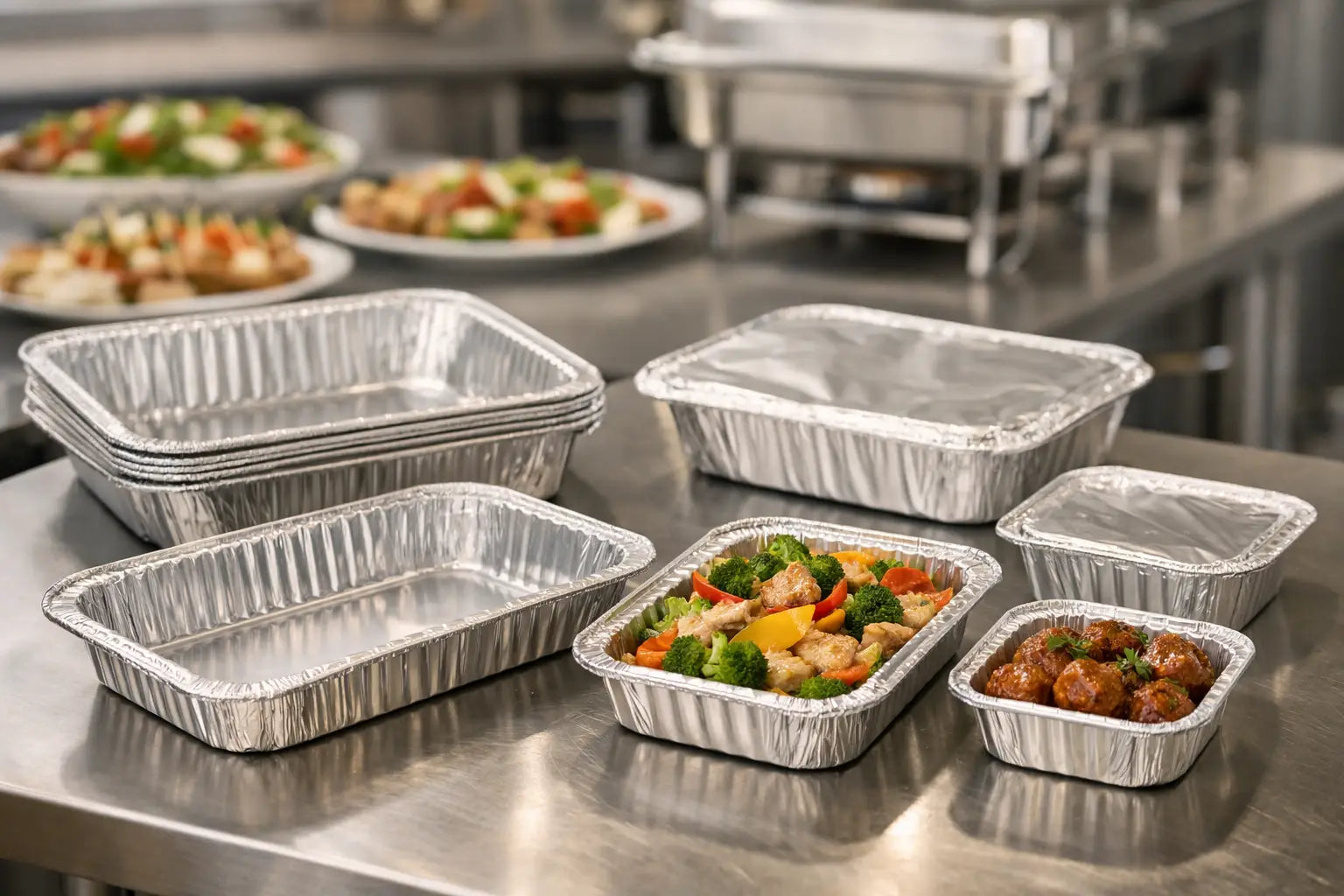
Aluminum containers are useful when strength and heat resistance matter most. They are a solid option for baked dishes, reheating, and heavier meals. They also suit catering and larger portions because they hold shape well during transport and service.
Paper-based options can work well for lighter foods or quick-service packaging, especially where a simple, easy-to-handle format is enough. The trade-off is that not every paper container handles grease, moisture, or long holding times equally well. That is where product selection becomes important.
There is no single best material for every business or household. The better question is whether the container matches the actual food, service style, and delivery conditions.
Size, shape, and lid fit affect daily efficiency
Small packaging mistakes repeat themselves all day. If a lid is hard to snap on, staff lose time. If the shape wastes shelf space, storage gets harder. If containers do not stack neatly, transport becomes less stable.
Round containers are often practical for soups, sides, sauces, and foods that are scooped or stirred. Rectangular shapes usually make better use of shelf, fridge, and bag space. Shallow containers can improve presentation for certain dishes, while deeper ones are better for layered meals or saucy items.
Lid fit deserves more attention than it usually gets. A container may look fine when empty and still fail once hot food creates steam or movement during delivery. A secure lid reduces spills, keeps food covered, and gives customers more confidence carrying the meal away.
For businesses, standardized sizing can make a noticeable difference. Using a smaller range of dependable container formats simplifies ordering, staff training, and storage. For home users, buying versatile sizes helps cover leftovers, packed lunches, and event servings without cluttering cabinets with mismatched stock.
Cost control is about performance, not just price
Cheap packaging can become expensive quickly. If a container cracks, leaks, or fails under normal use, the real cost includes wasted food, replacement orders, unhappy customers, and more time spent fixing problems.
A better approach is to look at cost per successful use. If a slightly stronger takeaway container prevents one spill issue in a busy shift, it may already be the better value. The same goes for households and event buyers. A product that is easy to store, dependable to carry, and suitable for more than one purpose usually gives better overall value than the lowest-priced option.
Buying in volume also helps when usage is predictable. Restaurants, offices, and event organizers generally benefit from keeping core container sizes in stock rather than making frequent small purchases. It saves time, supports consistency, and reduces the risk of running short during peak demand.
When households need takeaway containers too
Takeaway containers are not only for food businesses. They are useful in everyday home routines because they make portioning, storing, and serving simpler. Leftovers stay organized, packed lunches are easier to prepare, and parties become easier to manage when cleanup is part of the plan from the start.
They are especially practical for birthdays, family gatherings, holiday meals, and neighborhood events. Guests can take food home neatly, hosts spend less time sorting containers after the event, and the kitchen stays more organized. For busy families, keeping a reliable supply on hand is often as useful as stocking foil, cups, or cleaning items.
That is one reason buyers often prefer a supplier with a broad range of essentials in one place. White Pack serves that need well by making it easier to source packaging and disposable products together instead of splitting routine purchases across multiple stores.
Common buying mistakes to avoid
One common mistake is choosing containers by appearance alone. A clean design matters, but performance matters more. Another is buying one type for every menu item. That can work in limited cases, but many operations need at least a few formats to cover different foods properly.
It is also easy to underestimate lid quality, heat tolerance, and storage space. A container may seem suitable until it is stacked, carried, reheated, or filled with something heavier than expected. Testing with actual menu items is often the smartest step before ordering in larger quantities.
For home users, a frequent mistake is buying too many single-purpose sizes. A smaller number of well-chosen containers usually handles daily needs better and keeps storage simple.
A practical standard for better packaging
Good takeaway containers do a quiet but essential job. They support food quality, protect presentation, speed up packing, and make transport easier for everyone involved. Whether you are serving customers every day or planning meals and events at home, the best choice is the one that fits the food, holds up under real use, and makes the next step easier. When packaging works properly, everything around it runs more smoothly.