Cart
0
The rush starts at 7:30 a.m. Hot coffee orders stack up, iced drinks follow by noon, and suddenly a simple buying decision affects speed, cost, and customer experience all day long. That is exactly why the question of أكواب ورقية أم بلاستيكية للمقاهي is not a small detail. The cup you choose changes how drinks travel, how your brand looks in customers’ hands, and how efficiently your team serves during busy hours.
For most cafes, the right answer is not strictly paper or plastic. It depends on what you sell, how you serve it, and what kind of operating pressure you manage every day. A busy coffee shop with mostly hot drinks has different needs than a juice bar, dessert cafe, or mixed beverage concept. The smart decision comes from matching cup type to menu, margin, and workflow.
أكواب ورقية أم بلاستيكية للمقاهي حسب نوع المشروب
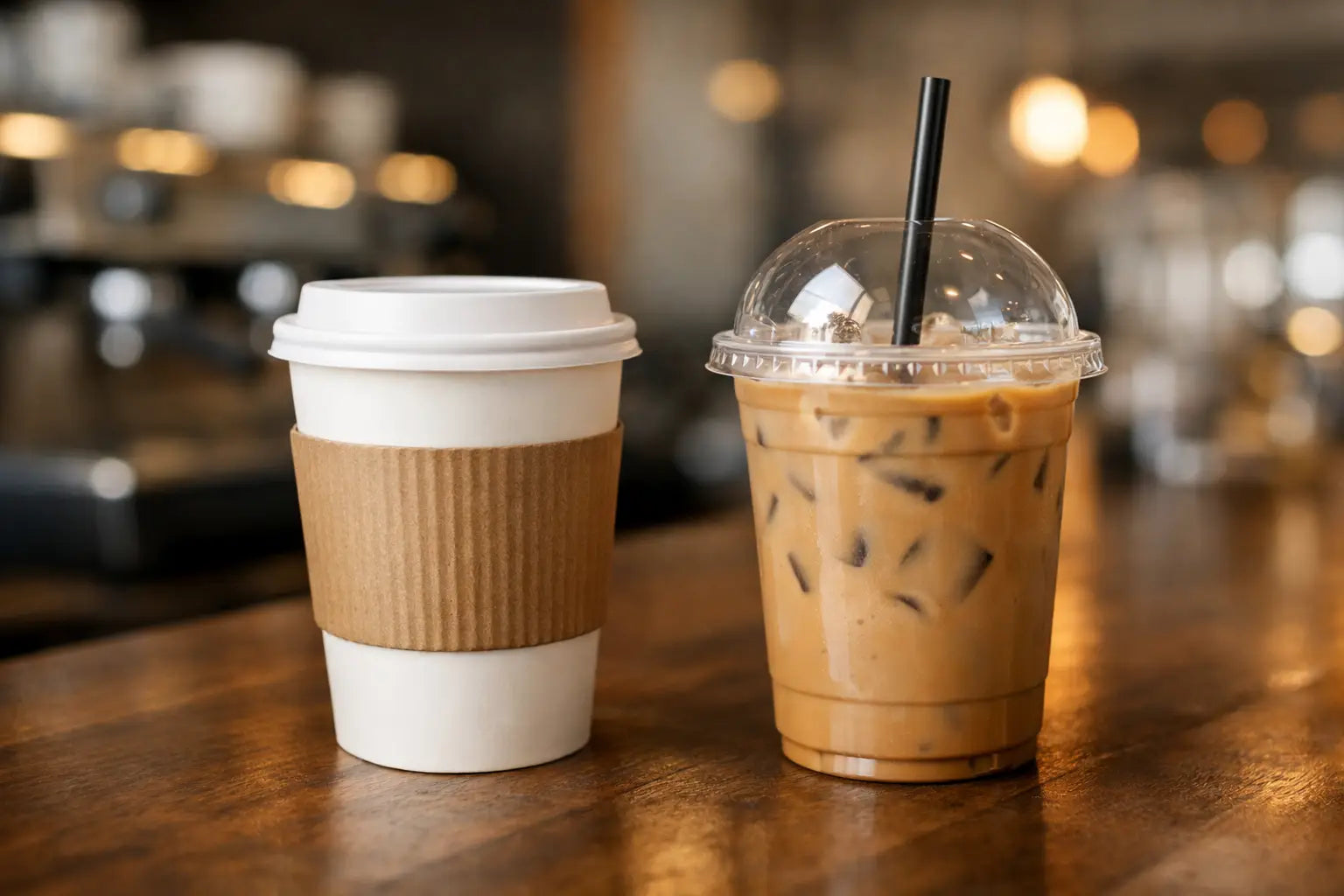
If your sales are driven by hot coffee, tea, and specialty espresso drinks, paper cups usually make more operational sense. They are more comfortable to hold with hot beverages, support sleeve and lid combinations well, and feel familiar to customers ordering drinks to go. In many cafe settings, they also offer a stronger surface for printed branding and a more premium takeaway impression.
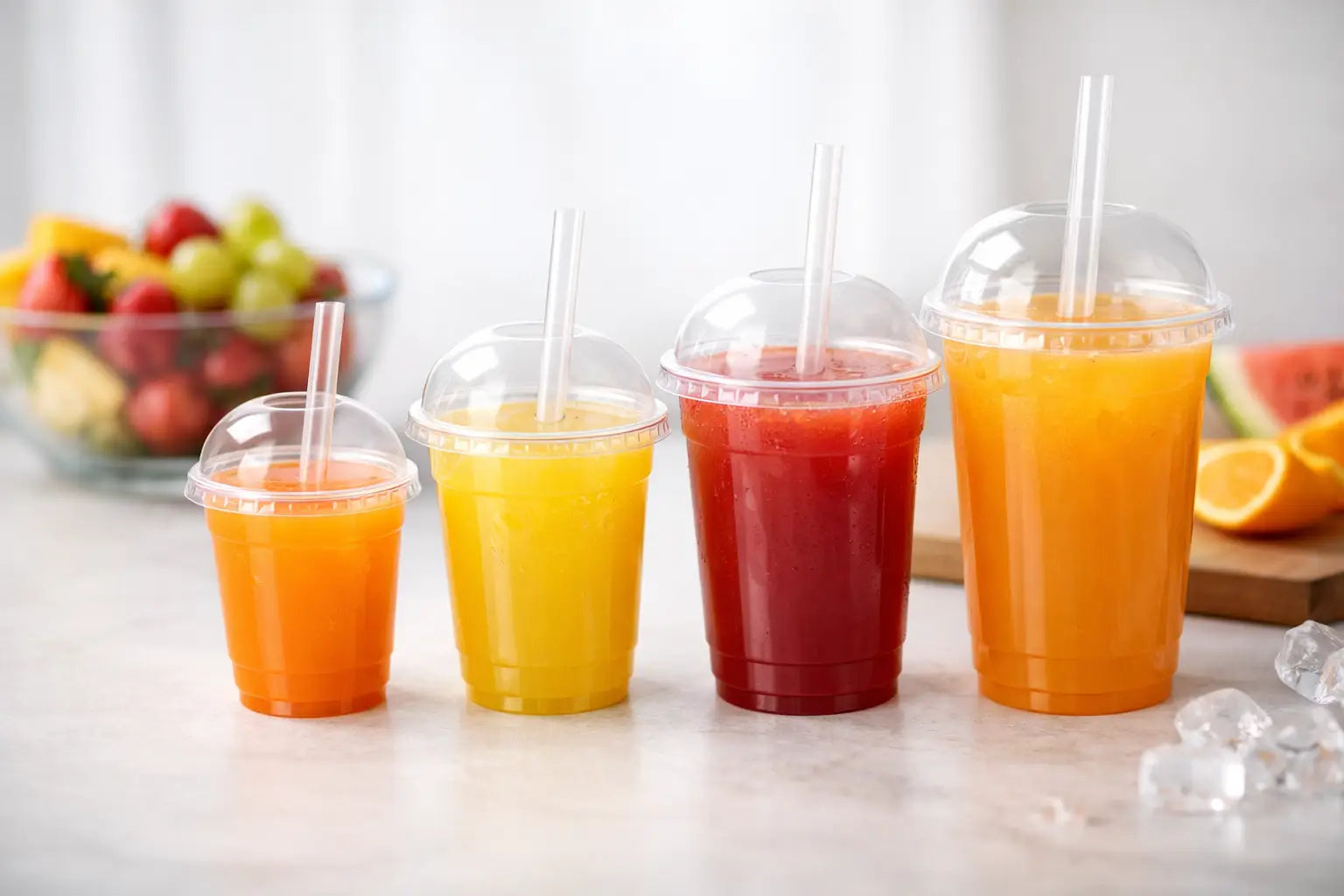
Plastic cups are typically the better fit for iced drinks. Iced coffee, cold brew, juice, smoothies, refreshers, and layered beverages all benefit from a clear cup that shows the product. Presentation matters, especially for drinks customers photograph or carry around. A clear plastic cup can help sell the drink before the customer even takes the first sip.
That is why many cafes do not choose one over the other across the board. They stock paper for hot service and plastic for cold service. This avoids forcing one cup type into jobs it does not handle as well.
Where paper cups work best
Paper cups are often the default choice for cafes because hot drinks remain a core part of the business. They are practical for drip coffee, cappuccinos, lattes, Americanos, and tea. The outer surface is generally easier to handle than a thin plastic wall around a hot liquid, and with the right thickness or double-wall construction, they improve customer comfort.
Branding is another advantage. If your cafe depends on repeat local traffic, the takeaway cup acts like a moving advertisement. Paper cups usually support logos, seasonal designs, and clean label placement more naturally. That matters for small businesses trying to look consistent without overcomplicating packaging.
Paper cups can also support smoother service in high-volume settings. Staff know which lids fit, customers expect the format, and the handoff process is simple. When operations are tight, familiarity saves time.
Still, paper is not automatically the better option in every case. Some paper cups may need sleeves for hotter beverages, which adds cost. Lower-quality cups may soften if drinks sit too long or if lids are poorly matched. If you serve heavy iced beverages in a paper cup not designed for condensation, the customer experience can drop quickly.
Where plastic cups make more sense
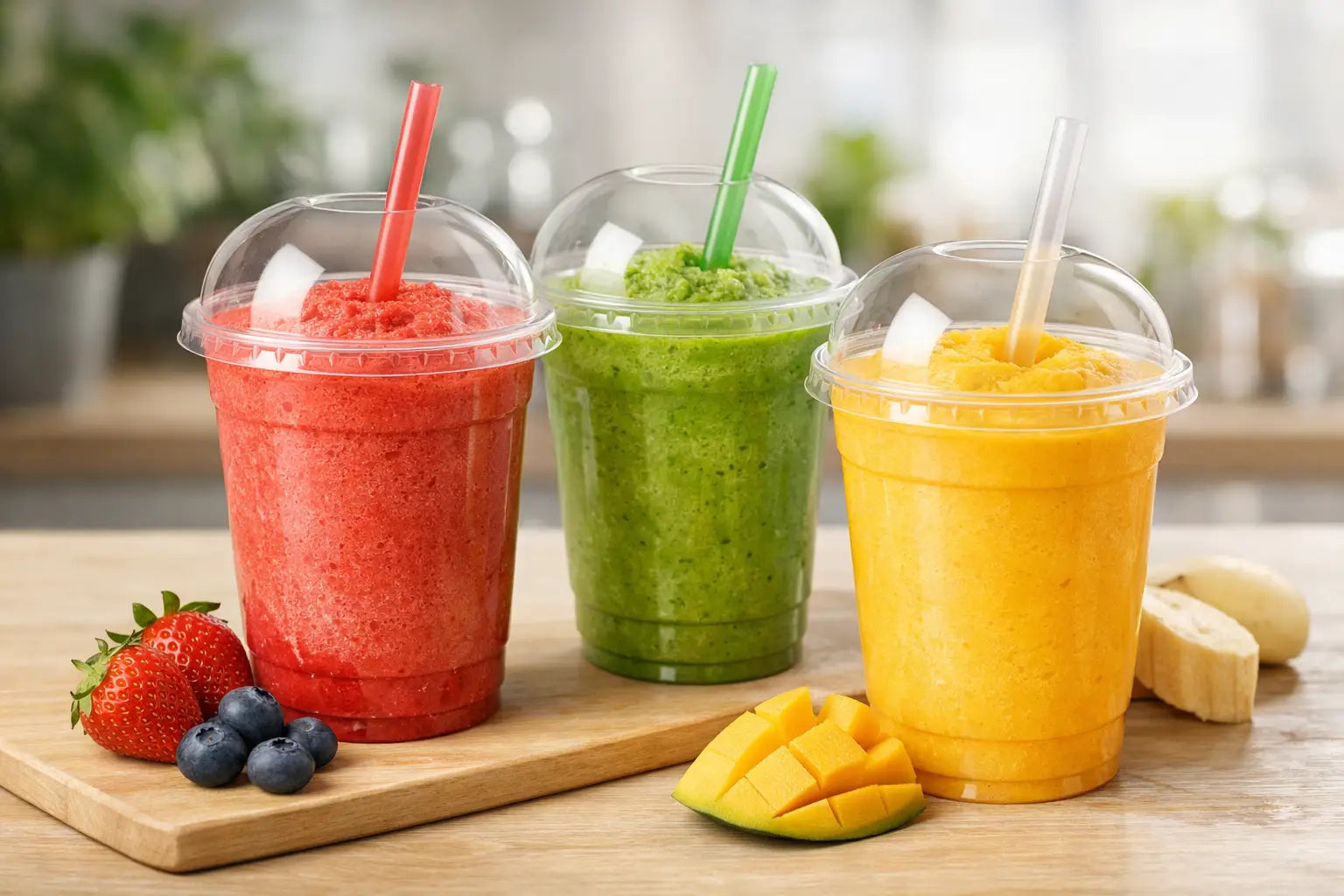
Plastic cups perform especially well for cold beverage programs. They are durable, resistant to leaks when paired with the correct lids, and visually strong for drinks with color, texture, fruit, foam, or toppings. If your menu includes iced matcha, frappes, milkshakes, lemonade, or fruit tea, plastic often supports the product better.
There is also a practical service angle. Plastic cups can be easier for dome-lid drinks with whipped toppings or blended beverages. They also hold up well in delivery and grab-and-go environments where the drink may move around more before reaching the customer.
For some operators, cost consistency is another reason to use plastic for cold drinks. Depending on size, thickness, and order volume, plastic options can be competitive in price, especially when matched with standardized lids across multiple beverages. That kind of uniformity can simplify purchasing.
The trade-off is that plastic is not ideal for every brand image or every beverage. It can feel less suitable for hot drinks, and lower-grade cups may crack under pressure or give a less polished feel. If your cafe positioning is more premium or coffee-first, plastic may work best as a secondary format rather than your main one.
Cost is more than the cup price
Many buyers compare only the unit cost, but the real cost sits across the full serving system. A paper cup may require a lid, sleeve, stirrer, and possibly a stopper. A plastic cup may require a flat lid, dome lid, or straw slot lid depending on the beverage. Once you add all components, the cheapest cup on paper is not always the cheapest cup in service.
There is also waste from poor fit or poor forecasting. If lids pop off, if cups collapse, or if you overstock the wrong sizes, the packaging cost rises fast. Reliable supply matters just as much as item price. A cafe that runs out of the right cold cup on a weekend often ends up using a more expensive backup or creating service delays.
This is where procurement discipline helps. Ordering cups by actual drink mix, seasonal demand, and standard sizes keeps costs controlled better than buying by headline price alone. A dependable supplier with clear size options and bulk availability can save more than a minor per-piece discount from an inconsistent source.
Customer experience matters more than many cafes expect
Customers notice cup quality immediately. They may not talk about cup specs, but they feel the difference when a hot drink is too hot to hold, when condensation makes an iced cup slippery, or when a lid feels loose in the car. These details affect whether the overall service feels organized and professional.
Paper cups often give a warmer, more cafe-centered experience for hot drinks. Plastic cups often create a fresher, more visual experience for cold beverages. Neither is better in every situation. The better option is the one that supports the drink and reduces friction for the customer.
If your cafe offers both dine-in and takeaway, the takeaway packaging deserves more attention than it usually gets. For many customers, the cup is the final touchpoint with your brand. A drink that looks good, travels well, and feels secure creates confidence that goes beyond the beverage itself.
Storage, speed, and back-of-house efficiency
Operationally, cup choice affects more than the front counter. Storage space matters, especially in smaller cafes, kiosks, and mobile setups. If your stockroom is tight, carrying too many cup formats can become inefficient. But carrying too few can create service compromises.
The practical middle ground is to simplify around your top-selling drinks. For example, one hot cup family in a few key sizes and one clear cold cup family in a few key sizes often covers most cafe demand without overloading storage. The goal is not to have every possible option. The goal is to have the right options available every shift.
Consistency also helps staff training. When the team can quickly match the correct cup and lid to each drink, service gets faster and waste drops. That matters for cafes handling peak traffic where seconds add up across dozens of orders.
So, which should your cafe choose?
If your business is mainly coffee and tea, start with paper cups as your primary format. They suit hot beverages better, support branding well, and align with what customers expect from a cafe. If your business leans heavily into iced beverages, juices, smoothies, or visually driven drinks, plastic cups may deserve a larger share of your packaging plan.
For most cafes, the strongest setup is a split system. Use paper cups for hot drinks and plastic cups for cold drinks. It is the most practical answer to the question of أكواب ورقية أم بلاستيكية للمقاهي because it fits real service conditions instead of forcing one material to do everything.
That choice becomes even stronger when you buy with consistency in mind - reliable sizes, dependable lids, stable stock, and pricing that works at volume. White Pack serves that kind of practical purchasing need well because cafe operators usually want more than a cup. They want a supply setup that keeps service moving without adding complexity.
The best cup is the one that makes your drink look right, travel safely, and keep your team efficient during the busiest hour of the day. Choose for the way you actually serve, not just for the way the product looks on a price sheet.