Cart
0
If you have ever packed a hot tray of rice, grilled meat, or baked pasta and worried about leaks, crushed corners, or heat loss on the way out the door, container choice stops being a small detail. It affects food quality, speed of service, portion control, and customer experience in one move.
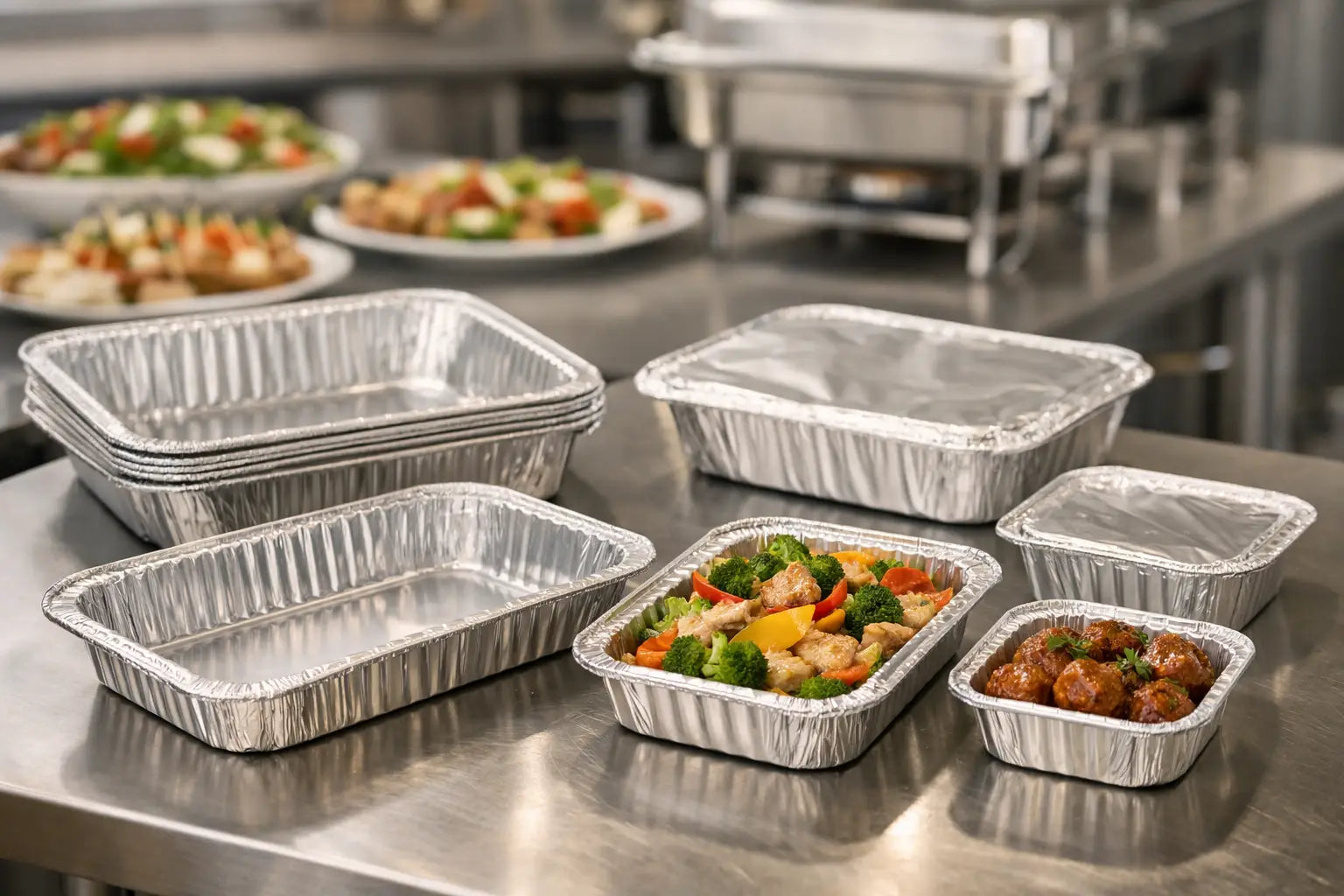
That is why aluminum food containers with lids remain a practical go-to for both commercial kitchens and home use. They are straightforward, dependable, and well suited to jobs where heat retention, structure, and easy handling matter. For restaurants, caterers, and event organizers, they help keep service moving. For households, they simplify meal prep, family gatherings, and storing leftovers without overthinking the packaging.
Why aluminum food containers with lids work so well
The appeal is simple. Aluminum handles heat well, holds its shape better than many lightweight alternatives, and works across a wide range of food applications. If you are packing hot entrees, oven-finished dishes, roasted items, or foods with some weight, aluminum usually feels more secure in the hand than flimsier options.
Lids add the second half of the value. A good lid helps protect food during transport, keeps items cleaner in storage, and supports stacking when space is tight. For takeaway operations, that can mean fewer spills and a more professional handoff. For homes and events, it means easier storage in the fridge before serving or reheating.
There are trade-offs, of course. Aluminum is not always the best choice for every cold item or every presentation style. If you want full visibility of layered desserts or salads, a clear container may make more sense. But when the priority is hot food, structure, and practical handling, aluminum remains one of the most useful options in the supply mix.
What to look for when buying aluminum food containers with lids
Not all containers perform the same way. The right choice depends on what you are serving, how far it is traveling, and how you store it before use.
Start with food type and portion size
A shallow container works well for items that are plated in layers or need a broader surface area, such as lasagna, grilled vegetables, or rice trays. A deeper container is more useful for heavier portions, mixed meals, and dishes with sauces. If you run a food business, this decision also affects consistency. Standardized sizes help staff serve faster and control costs.
For household buyers, portion size is often the easiest place to start. Smaller containers are useful for leftovers, side dishes, and meal prep. Larger trays make more sense for weekend cooking, family visits, and batch storage.
Check lid fit, not just lid availability
A container with a poorly fitting lid creates problems fast. The lid should sit securely without shifting too easily during transport. If your operation handles takeaway and delivery, fit matters as much as the container itself. A container may look sturdy, but if the lid loosens in a delivery bag, it can still fail at the moment that counts.
This is especially important for caterers and event suppliers who stack multiple trays at once. A more secure lid supports cleaner transport and better presentation on arrival.
Think about heat and handling
Aluminum performs well with hot food, but the real question is how the container will be handled from kitchen to customer or table. Will it go from prep area to oven to service? Will it be carried in bulk? Will customers reheat food later? These practical steps should shape your buying choice.
A container that works perfectly for in-house catering may not be ideal for long takeaway runs. If food spends more time in transit, structure and lid security matter more. If food is served quickly after packing, flexibility in size range may matter more than heavy-duty construction.
Best use cases for different buyers
The same category serves different needs depending on who is buying it. That is one reason it remains a high-rotation supply item.
Restaurants and takeout operations
For restaurants, aluminum containers are a reliable choice for hot meals, combo platters, oven-baked dishes, and advance-prepped items. They support fast packing during busy service and help staff maintain consistency. They also reduce the guesswork when large order volume makes every second count.
If your business handles both dine-in overflow and takeaway, keeping a range of sizes on hand is usually smarter than relying on one universal option. One size may work for mains, but side dishes, family packs, and catering portions all benefit from better matching.
Caterers and event organizers
Catering is where aluminum containers often prove their value fastest. They are practical for cooking, covering, transporting, and staging food with less handling. That can simplify setup for buffets, private events, and office catering.
For larger events, stackability becomes a real advantage. Containers with properly matched lids help protect food while moving between prep space, vehicles, and venue service areas. In busy event planning, reducing mess and repacking saves time that is better used elsewhere.
Hotels, offices, and institutional buyers
For hospitality teams and office managers, buying the right disposable packaging is often about predictability. You need products that arrive on time, store easily, and perform the same way every time. Aluminum food containers with lids fit that need well for staff meals, meeting catering, and food holding.
Bulk ordering also tends to make more sense here. If the same products are used regularly, standardizing your container sizes can simplify inventory checks and reduce ordering friction.
Households and home hosts
Home buyers usually value the same things businesses do, just on a smaller scale. Easy storage, clean transport, and dependable food holding matter when you are sending food to relatives, organizing a gathering, or storing cooked meals for later.
If you host often, having a few sizes available makes life easier. Small containers handle leftovers and side dishes, while larger trays help with baked meals or group serving. You do not need a commercial kitchen to benefit from practical packaging.
Common buying mistakes to avoid
One common mistake is buying based on price alone without considering actual use. Low-cost containers can seem like a win until they bend too easily under heavier food or the lids do not hold during transport. Value comes from the combination of price, fit, and performance.
Another issue is choosing too many sizes at once. Variety sounds helpful, but too much variation can complicate storage and slow packing. For many buyers, a focused set of core sizes works better than an oversized assortment.
It is also easy to underestimate volume needs. Businesses often order just enough for current use, then run short during promotions, holiday demand, or event spikes. Households do something similar before gatherings. It is usually better to keep a buffer, especially for products that move quickly.
Buying for convenience and supply efficiency
Packaging purchases are not just about the item itself. They are also about how efficiently you can source supplies. If you are buying containers, lids, cups, bags, foil, and cleaning products from multiple places, your ordering process becomes slower and harder to manage.
That is why many buyers prefer a one-stop supplier model. Being able to reorder operational essentials from one source saves time and supports more consistent stock planning. For businesses in Kuwait City, Salmiya, Fahaheel, and Shuwaikh, White Pack is built around that practical need, offering everyday packaging and disposable supplies in a way that suits both bulk buyers and household shoppers.
When aluminum is the right call - and when it is not
Aluminum is a strong choice when heat, structure, and reliable transport matter most. It is especially useful for baked foods, hot meals, catering trays, and food that needs a firmer container. If your priority is presentation through a clear wall, or if the food is very light and cold, another format may be more suitable.
That does not make aluminum better in every situation. It makes it dependable in the situations where handling, heat, and support matter more than display. Smart buying comes from matching the container to the job, not forcing one type into every use.
A good container should make service easier, not add risk at the point of packing. Choose the size that fits the portion, the lid that stays in place, and the supply source that keeps your shelves ready when demand picks up.