Cart
0
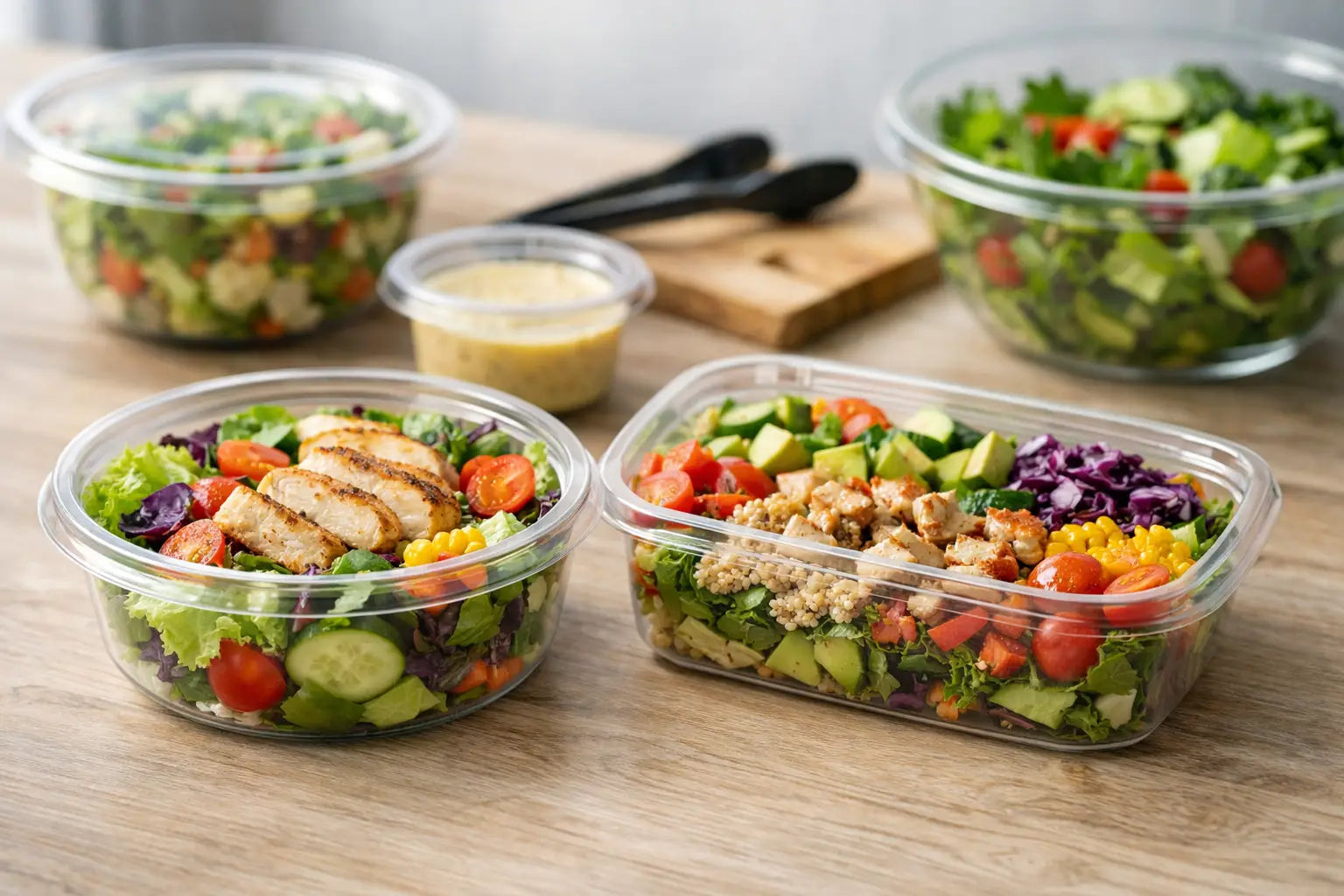
A soggy salad, a loose lid, or dressing spilled across a delivery bag can turn a simple order into a customer complaint fast. That is why عبوات سلطة بغطاء شفاف are not just a packaging detail. They directly affect food presentation, freshness, transport, and how professionally your operation is perceived.
For restaurants, cafes, caterers, and grab-and-go businesses, the right salad container helps maintain quality from prep table to customer handoff. For households and event hosts, it makes storage, serving, and portioning easier without extra mess. The best choice is usually not the cheapest container on the shelf. It is the one that fits your menu, holds up during handling, and supports efficient service.
Why عبوات سلطة بغطاء شفاف matter in daily service
Salads are visual products. Customers want to see freshness before they buy, whether that means crisp greens, colorful toppings, fruit, pasta salad, or meal-prep bowls. A clear lid supports that immediately. It lets the product sell itself without opening the package, which is especially useful in refrigerated displays, office catering setups, and delivery staging areas.
There is also a practical side. A properly fitted clear lid helps protect the contents from dust, handling, and accidental contact during transport. That matters in busy commercial environments where speed is important but hygiene cannot slip. If your team is packing dozens or hundreds of units, secure closure becomes a daily requirement, not a nice extra.
For home users, the benefit is just as straightforward. You can prep ingredients ahead, store leftovers neatly, and identify contents at a glance. That saves time in the fridge and reduces waste because food is easier to monitor and use before it loses quality.
What to look for when buying salad containers
Not every container labeled for salads performs the same way. The right option depends on portion size, ingredients, and where the product is going after packing.
Capacity is the first decision. A small side salad needs a different format than a full lunch bowl with protein, grains, and toppings. If the container is too shallow, ingredients get crushed and the lid may pop under pressure. If it is too large, the product can shift around, affecting appearance and making portions look inconsistent. Businesses that care about food cost control usually benefit from standardizing sizes across menu categories.
Material strength matters next. Lightweight containers may work for simple cold items that stay in-house or move a short distance. Heavier salads with dense toppings, multiple components, or delivery travel need a sturdier base. A container that bends too easily can make packing awkward and carrying unreliable, especially when stacked in bags or display coolers.
Lid fit should be treated as a performance feature. A clear lid needs to close firmly enough to stay secure during transport, but still open easily for the customer. If it takes too much force to seal, staff efficiency slows down. If it seals too loosely, leaks and product movement become more likely. The right balance depends on your order volume and the way containers are handled in real service.
Choosing by use case instead of price alone
Price always matters, especially for high-volume buyers. But low unit cost only helps if the product does the job. A cheaper container that cracks, leaks, or creates remake requests can cost more over time in waste, labor, and customer dissatisfaction.
For restaurant takeout, focus on reliability under movement. Delivery drivers, pickup shelves, and customer car rides all add stress to packaging. If salads include wet ingredients like tomatoes, cucumbers, fruit, or marinated proteins, stability becomes even more important.
For catering, appearance usually carries more weight. You may need containers that present layered ingredients cleanly and keep lids crystal clear for display. In those cases, consistency across every unit matters because presentation affects the perceived quality of the whole order.
For household use, convenience often leads the decision. Easy stacking, visible contents, and practical portion sizes tend to matter more than advanced transport durability. Still, if you are packing lunches or sending food with family members, lid security remains worth paying attention to.
عبوات سلطة بغطاء شفاف for restaurants and food businesses
If you run a cafe, restaurant, hotel kitchen, or meal-prep operation, packaging has to work with your workflow. That means choosing containers that are quick to fill, easy to close, and dependable across repeated use throughout the day.
A good salad container supports portion consistency. Staff can build to a clear fill line, maintain the same presentation every time, and reduce the chance of overpacking. This helps both food cost management and customer expectations. When every order looks right, operations feel tighter and more professional.
It also supports speed during rush periods. Containers that nest well, separate cleanly, and close without trial and error keep production moving. That may sound minor, but small delays compound quickly in lunch service, large catering prep, or online order peaks.
There is also branding value, even without printed packaging. When a customer sees a fresh, organized salad through a clean transparent lid, the product feels more trustworthy. Packaging becomes part of the meal experience. In practical terms, that means better shelf appeal, stronger first impressions, and fewer concerns about freshness.
Matching container shape to the food inside
Round, square, and bowl-style containers each solve a different problem. The best choice depends on the menu item, not just what is available in stock.
Round containers often work well for tossed salads, pasta salads, and fruit-based mixes because they hold ingredients naturally and present evenly from multiple angles. Square or rectangular options can be easier to stack, which helps with storage and transport in commercial settings. Bowl-style containers are useful when salads include bulkier toppings or need visual height for presentation.
If dressings, sauces, or crunchy toppings are packed separately, think about how the main container and accessories will move together. A beautiful salad loses value if add-ons are awkward to carry or force the lid upward. It is usually smarter to evaluate the full packed order rather than the container by itself.
Common mistakes buyers make
One common mistake is choosing a container based only on dimensions without testing actual menu items inside it. A salad with lettuce alone behaves differently than one loaded with chicken, avocado, cheese, and grains. Real-product testing helps avoid crushed tops, poor lid closure, and messy presentation.
Another mistake is ignoring storage and handling conditions. If containers will be refrigerated, stacked, loaded into delivery bags, or transported in volume, those conditions should guide the purchase. A container that looks fine in a sample can perform poorly in a live service environment.
Some buyers also overcomplicate the selection process. You do not need a different container for every variation if a few dependable sizes can cover most of the menu. Simplifying inventory often improves ordering, storage, and prep efficiency.
How to buy smarter in bulk
Bulk purchasing makes sense when demand is steady, but only if the product is aligned with your operation. Start with the salads you sell most often and identify the portion sizes that move consistently. That gives you a practical base for choosing the right format in larger quantities.
Then consider how often you reorder and how much storage space you actually have. A great price on volume is less useful if cases take over your back room or create inventory confusion. The best buying decision usually balances unit cost, turnover speed, and operational simplicity.
This is where a dependable supplier matters. Businesses and households both benefit from being able to source packaging alongside other routine essentials instead of placing separate orders across multiple vendors. For buyers trying to save time and keep supply costs under control, convenience has real value.
A better packaging decision starts with the product
The right salad container should protect freshness, show off the food, and make service easier from start to finish. That means looking beyond basic appearance and choosing based on portion, durability, lid performance, and day-to-day use. Whether you are packing lunches at home or fulfilling high-volume food orders, the best container is the one that consistently holds up when it counts.
If you are reviewing packaging for your operation, start with the salads you serve most and the problems you want to prevent. A better fit at the container level often improves more than presentation - it can make prep faster, delivery cleaner, and reordering simpler.