Cart
0
When a restroom runs out of hand soap, a dining room smells off, or a spill sits too long on a lobby floor, people notice fast. Commercial cleaning supplies are not a background purchase. They affect hygiene, staff efficiency, customer confidence, and how smoothly a business runs from opening to close.
For restaurants, offices, hotels, event venues, and busy households, the real challenge is not just buying cleaning products. It is buying the right mix, in the right quantities, without wasting time across multiple vendors. A smart supply setup keeps daily cleaning simple, helps control costs, and reduces those last-minute emergency orders that disrupt the week.
What commercial cleaning supplies should actually cover
A good supply plan starts with the spaces you need to maintain. Front-of-house areas need products that support quick touch-ups and a consistently clean appearance. Kitchens and food prep spaces need stronger hygiene control and products that can handle grease, spills, and high-contact surfaces. Restrooms need reliable restocking and odor control. Offices and shared spaces need everyday products that support routine sanitizing without making the process harder than it needs to be.
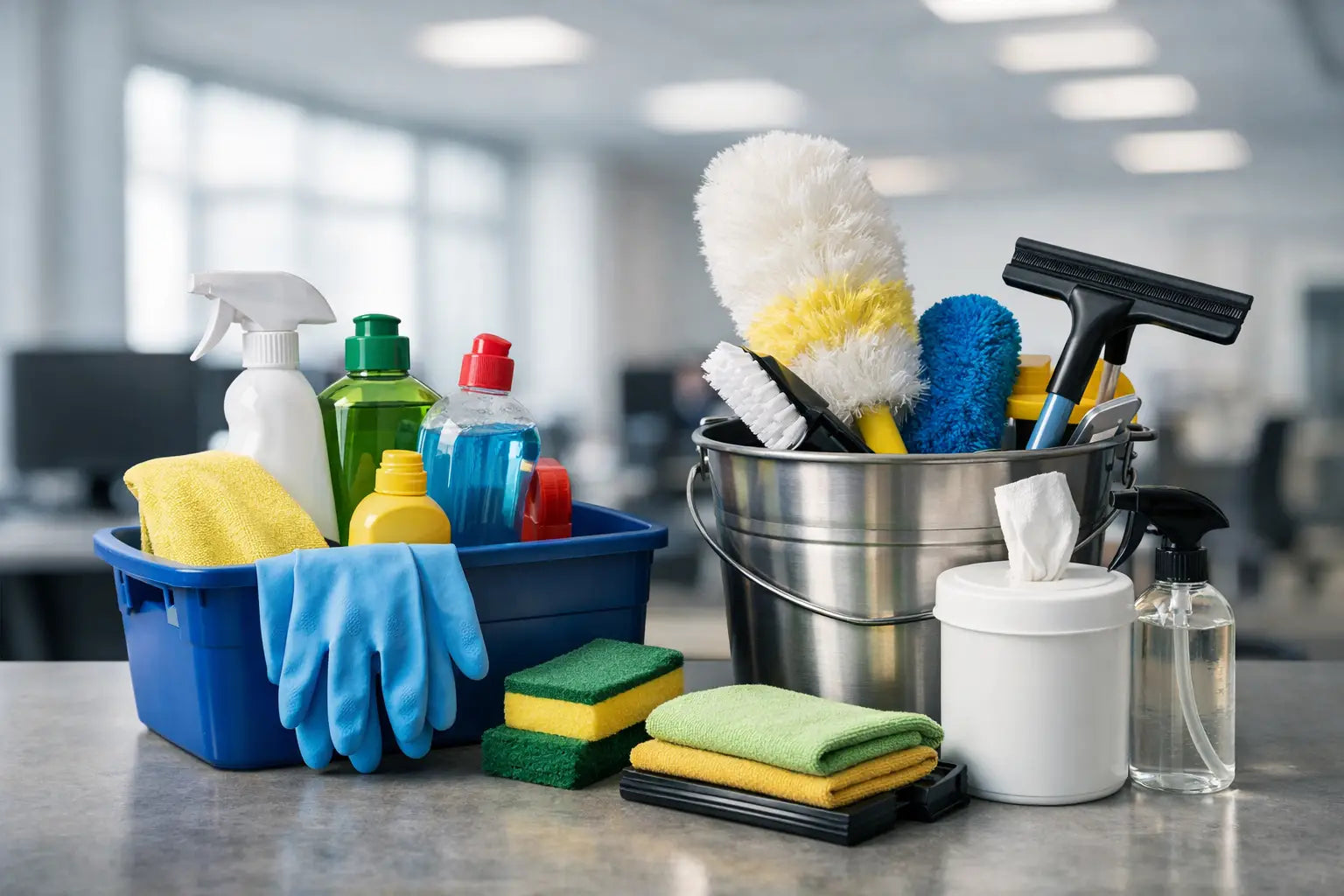
That is why commercial cleaning supplies usually work best when they are treated as a system rather than a random collection of products. Surface cleaners, disinfectants, gloves, paper goods, trash liners, mops, cloths, and scrubbers all support each other. If one category is missing, cleaning slows down. If several categories are inconsistent, staff start improvising, which often leads to wasted product, uneven results, or avoidable cross-contamination.
The right setup also depends on the type of operation. A caterer handling off-site events will need portability and fast restocking. A small office may prioritize simple all-purpose cleaning and restroom supplies. A restaurant typically needs a broader mix, including degreasers, disposable gloves, absorbent paper products, and sturdy trash bags that can keep up with heavy volume.
How to choose commercial cleaning supplies without overspending
Price matters, but unit price alone can be misleading. The cheaper option is not always the lower-cost option if it tears easily, runs out quickly, or requires staff to use more of it to get the same result. Commercial buyers usually get better value by looking at performance, pack size, and reorder frequency together.
For example, paper products should be judged on absorbency and durability, not just case cost. Trash liners should match the weight and type of waste being handled. Gloves need to fit the task, because a glove that rips during use creates more waste and slows staff down. Cleaning cloths and sponges should hold up to repeated use long enough to justify their price.
There is also a storage trade-off. Buying in bulk usually lowers per-unit cost, but only if you have the space and can move inventory before it becomes clutter. Smaller operations often benefit from a more focused ordering rhythm. Larger businesses may save more by consolidating bigger orders across categories.
That is one reason many buyers prefer a one-stop source. Combining cleaning materials with disposable and operational essentials cuts down on fragmented purchasing. If your team already needs cups, containers, bags, paper goods, and food-service disposables, it makes sense to source cleaning staples alongside them when possible. Fewer orders often means less admin time, better stock visibility, and a more predictable supply routine.
The core categories worth keeping in stock
Most businesses do not need every specialty product on the market, but they do need dependable basics. Surface cleaners are the daily foundation for counters, tables, and shared touchpoints. Disinfecting products matter most in restrooms, food-service areas, and high-traffic spaces where hygiene expectations are high.
Paper towels, toilet tissue, napkins, and related paper products support both cleanliness and presentation. Gloves are essential for food handling, janitorial work, and fast cleanup tasks. Trash bags and liners should match bin sizes and waste volume so they do not fail during busy periods. Mops, buckets, brooms, dustpans, and scrub pads are still practical essentials, especially for floors and spills that need immediate attention.
In many operations, disposable items also support cleaning efficiency. Takeaway businesses, event organizers, and kitchens often reduce cleanup time when they pair smart packaging choices with the right cleaning products. Spill-prone environments may need extra absorbent paper products. High-turnover service spaces may need stronger replenishment of liners, cups, wipes, and gloves.
The goal is not to build the biggest stockroom. It is to build one that covers your real daily use.
Matching supplies to your environment
Not every space should be cleaned the same way, and not every product belongs in every setting. Food-service businesses need supplies that support sanitation and speed. Offices often need quiet, simple products that work well for desks, breakrooms, and bathrooms without overwhelming staff or visitors with strong scents. Hospitality environments may care more about presentation, consistent restocking, and quick turnaround between guests or events.
Households buying in larger quantities often have a different need. They may be stocking for family use, parties, seasonal gatherings, or shared living spaces. In that case, the best commercial cleaning supplies are often the ones that offer dependable value and reduce the frequency of reordering. Bulk paper goods, gloves, trash bags, and everyday cleaners can make sense at home too, especially when convenience and price are both priorities.
This is where practical buying beats overbuying. A product that is excellent in an industrial kitchen may be unnecessary for a small office. A basic all-purpose cleaner may be enough for a home host, while a catering business will likely need a more complete range of cleaning and disposable supplies working together.
Why consistency matters more than variety
Many supply problems come from inconsistency, not shortage. When product sizes change too often, staff have to adjust how they use them. When quality varies from order to order, cleaning standards slip. When buyers source from too many places, restocking becomes harder to track.
Consistency helps with training, budgeting, and daily execution. Staff should know which gloves to use, which liners fit each bin, which paper products belong in each area, and how often key items need to be restocked. The more predictable the supply setup, the easier it is to keep operations moving.
That predictability is especially useful for businesses with repeat demand. Restaurants, offices, and event teams work better when they can reorder familiar products quickly. A straightforward online supply process saves time, reduces purchasing friction, and makes it easier to maintain the same standard week after week.
A smarter way to manage supply levels
Running out of supplies creates obvious problems, but overstocking creates quieter ones. It ties up cash, takes over storage space, and makes inventory harder to manage. The better approach is to identify fast-moving items, moderate-use items, and backup stock.
Fast-moving items are your essentials - paper towels, toilet tissue, gloves, trash bags, and high-use surface cleaners. These need close monitoring and regular replenishment. Moderate-use items might include specialty cleaners, scrub pads, or extra mop heads. Backup stock covers peak periods, seasonal traffic, or larger events.
If your business sees volume spikes, ordering based only on average weekly use can leave you short. A catering company around holidays or an office during a large event week may burn through products much faster than normal. On the other hand, smaller buyers should not let one busy week push them into buying months of extra stock they do not need.
A dependable supplier helps here by making reordering simple and keeping a broad assortment available in one place. That is part of the value of shopping with a practical source like White Pack, where operational basics, disposables, and cleaning essentials can support the same buying routine.
Commercial cleaning supplies are a workflow decision
Cleaning products are often treated like a simple checklist item, but they shape daily workflow more than many buyers expect. The right products save time during setup, service, cleanup, and restocking. They reduce interruptions. They help teams work faster without cutting corners.
That matters whether you are managing a restaurant, running events, overseeing an office, or simply trying to keep a busy household stocked without extra hassle. Reliable supplies make routine work easier. They also help protect the standard people remember when they walk into your space.
The best buying decision is usually not the fanciest product or the cheapest case. It is the one that fits your space, your usage, and your ordering rhythm well enough that cleaning stays consistent without becoming a daily problem. When your supplies match the way you actually operate, the whole space works better.