Cart
0
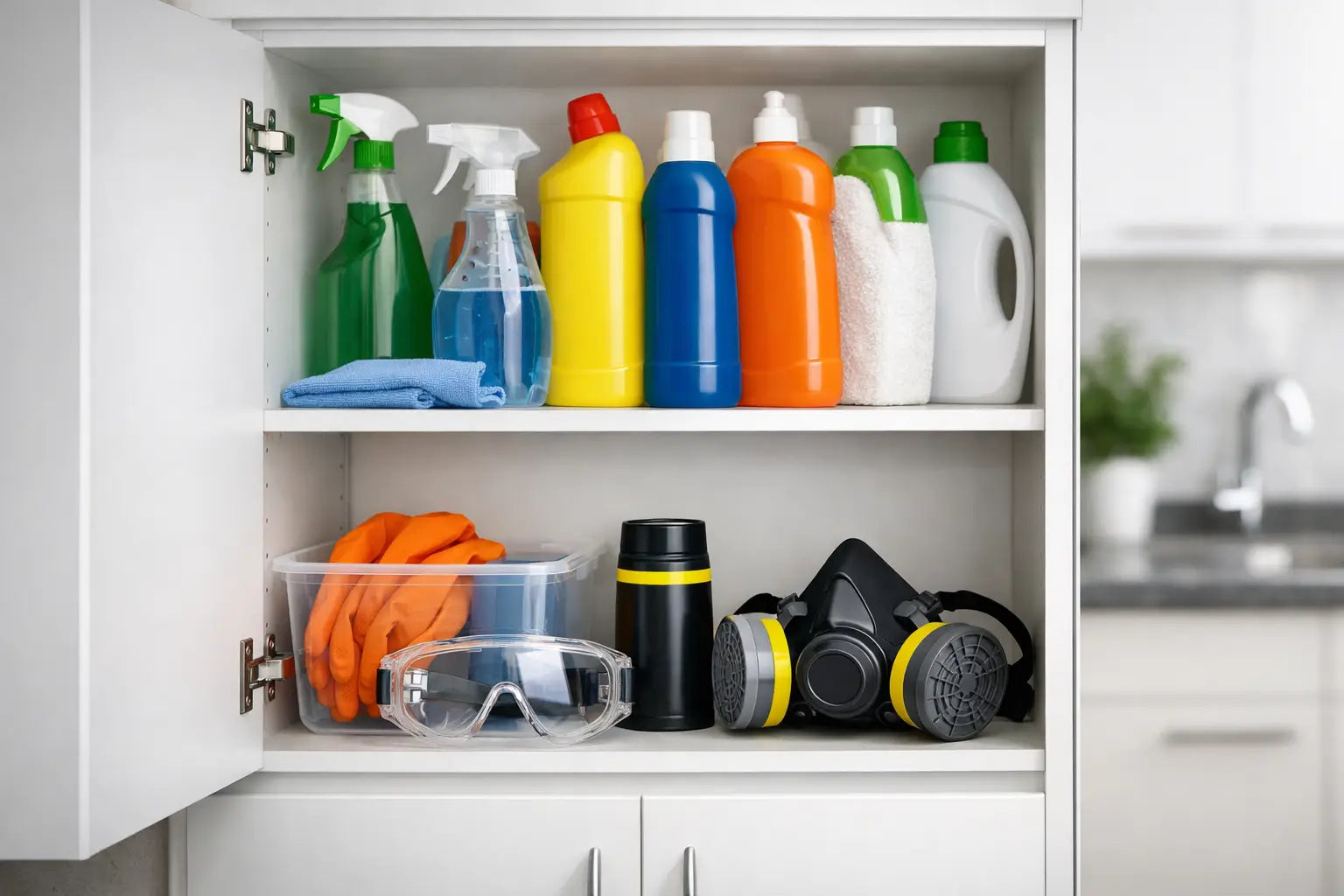
A leaking bleach bottle under a sink can turn into a much bigger problem than a mess. In a home, it can put children and pets at risk. In a restaurant, office, or event space, it can create chemical exposure, damaged inventory, and avoidable downtime. That is why understanding كيفية تخزين مواد التنظيف بأمان matters for both everyday households and business operations.
Safe storage is not just about keeping products out of sight. It is about preserving product performance, reducing risk, and making sure staff or family members can use the right item quickly without guesswork. When cleaning products are stored well, spaces run more smoothly, replenishment is easier, and accidents are far less likely.
Why safe storage matters more than most people think
Cleaning chemicals are designed to do a job fast. Degreasers cut through buildup, disinfectants target germs, and specialty solutions handle stains, glass, or floors. That same strength is exactly why storage needs more attention than a casual shelf or crowded cabinet.
Heat can degrade some formulas. Moisture can damage labels, making instructions hard to read. Poorly sealed caps can lead to fumes, leaks, or cross-contamination. In commercial settings, there is another issue - speed. When teams are moving quickly, unclear storage can lead to the wrong product being used on the wrong surface, or worse, dangerous mixing.
There is also a cost angle. Replacing damaged products, cleaning up spills, or dealing with product waste adds expense that most buyers would rather avoid. A simple, consistent storage system protects both people and purchasing budgets.
كيفية تخزين مواد التنظيف بأمان in the right location
The best storage area is cool, dry, and well ventilated. That sounds simple, but many people default to under-sink cabinets, laundry corners, back rooms, or supply closets without checking whether those spaces actually meet basic safety needs.
For homes, a high cabinet with a child-resistant latch is usually better than low-access storage, especially for products like bleach, drain cleaners, or concentrated sprays. Under-sink storage may be convenient, but it is often humid and easy for children or pets to reach. If you do use it, the space should be secured and kept free from food items, dishes, and paper products.
For businesses, supply closets should be separate from food storage, prep areas, and disposable service items. Cleaning supplies should never share shelving with cups, containers, straws, takeaway bags, or anything used directly in food service. Even when products are sealed, separation reduces contamination risk and keeps inspections and internal controls much cleaner.
Temperature matters too. Do not store products next to ovens, water heaters, utility rooms that trap heat, or outdoor sheds that swing between extreme cold and high heat. Some products lose effectiveness when exposed to temperature stress, and pressurized containers may become unstable.
Keep products in their original containers
One of the most common storage mistakes is transferring cleaners into unmarked spray bottles or reused food containers. It may look organized, but it creates confusion fast. A clear bottle filled with blue liquid might be glass cleaner, disinfectant, or something much stronger. Without the original label, there is no easy way to confirm usage directions, dilution requirements, or first-aid information.
Original packaging is designed for that product. It includes compatible materials, secure caps, and the details needed for safe handling. If a business uses secondary bottles for diluted solutions, those bottles should be clearly labeled every time with the product name and intended use. Anything less creates a preventable risk.
This is especially important in shared environments like offices, restaurants, and cleaning crews where multiple people may access the same supplies. A neat shelf is helpful, but a correctly labeled shelf is what actually keeps people safe.
Separate products that should not be near each other
Not every cleaner belongs in the same bin or on the same shelf. Some products are fine side by side, but others should be stored with more distance and control. Bleach is the most obvious example. It should be kept away from ammonia-based cleaners, acids, and other reactive chemicals. The danger usually happens during use, but careless storage increases the chance of spills and accidental mixing.
A practical approach is to group products by function and risk level. Everyday surface sprays can go in one section. Stronger disinfectants, bleach products, and concentrated chemicals should have a separate section. Floor care products, restroom cleaners, and kitchen-safe cleaners should each have their own defined place when possible.
For smaller households, that may mean using simple shelf dividers. For commercial spaces, it may mean assigning separate bins or clearly marked shelf zones. The goal is not overcomplication. The goal is reducing errors when someone is in a hurry.
Make access controlled, not difficult
Safe storage should not slow work down so much that people ignore it. If supplies are too hard to access, employees may leave bottles sitting out. If household storage is too inconvenient, products end up on counters, in laundry baskets, or in bathrooms within easy reach.
The better approach is controlled access. In a home, that means secure but reachable storage for adults. In a business, it often means a designated janitorial area or locked cabinet with clear internal organization. Staff should know where items belong and where to return them after use.
This is where consistency pays off. When the same product is always in the same spot, reordering is easier, daily cleaning is faster, and missing items stand out right away. A dependable system supports both safety and efficiency.
Ventilation, leaks, and shelf condition
A storage space can look clean and still be a problem. Fumes build up in tightly closed, poorly ventilated areas. Plastic shelving can warp under heavier containers. Cardboard boxes absorb leaks and hide small spills until damage spreads.
Check storage shelves regularly. Bottles should stand upright with caps fully closed. Heavier containers belong on lower shelves to reduce fall risk. Absorbent materials like towels, paper goods, or disposable food-service items should not be packed around chemicals. If a bottle is cracked, sticky, swollen, or missing part of its label, it should be dealt with immediately according to the product instructions.
Good ventilation does not mean storing everything in an open public area. It means avoiding trapped, stagnant spaces where fumes can collect. A dedicated closet with airflow is better than a sealed cabinet crammed next to food inventory.
How to store cleaning supplies safely in busy workplaces
Commercial environments add another layer of pressure because storage has to support turnover, multiple users, and faster replenishment. A single shelf with random products may work for a small household, but it rarely works for a restaurant, hotel, office, or event operation.
The most effective setup is simple: assign a storage zone, label it clearly, separate products by type, and keep only the quantities needed for near-term use in active work areas. Bulk stock can be kept in a designated back-up area, but it should still follow the same rules around temperature, labels, and separation from consumables.
It also helps to standardize what gets purchased. Too many overlapping products create confusion and waste. If your team uses one dependable glass cleaner, one approved disinfectant, one floor solution, and one degreaser, storage becomes easier to manage than if every area orders its own version. This is where a practical supply partner such as White Pack fits naturally into the workflow - fewer sourcing headaches, more consistent restocking, and a cleaner system overall.
Train the people who actually use the products
Even the best storage plan fails if nobody follows it. In homes, that means making sure all adults understand where products are kept and why certain items should stay locked or elevated. In businesses, it means basic training for everyone who handles cleaning supplies, not just supervisors.
Training does not need to be complicated. Staff should know which products require dilution, which should never be mixed, where each item is stored, and what to do if there is a leak or damaged container. They should also know that food containers are never acceptable substitutes for chemical storage.
Short, repeated reminders usually work better than one long session. Practical habits are built through repetition.
A quick storage check that prevents bigger problems
If you want to improve safety fast, start with a five-minute review of your current setup. Look for low cabinets accessible to children, missing labels, products stored near food or disposables, leaking caps, and overcrowded shelves. These are the issues that cause most preventable problems.
You do not need a complicated compliance program to make meaningful improvements. Often, the smartest fix is simply moving products to a better location, separating a few high-risk items, and creating a standard place for each category.
Safe storage is one of those operational basics that pays off quietly. Products last longer, people work with more confidence, and your space stays easier to manage day after day. A cleaner setup starts before the first spray bottle is ever opened.