Cart
0
A shift can go sideways fast when the sanitizer bucket is empty, the degreaser is down to a few drops, and there are no clean towels left at the line. A solid restaurant cleaning supplies checklist keeps that from happening. It helps you stay ready for rushes, pass inspections with fewer surprises, and protect both staff and guests without overbuying products you do not really need.
For most restaurants, cleaning is not one task. It is a constant cycle that changes by station, surface, and time of day. The supplies that make sense for a fast-casual counter setup may not be enough for a full-service dining room with restrooms, prep areas, and back-of-house storage. That is why a good checklist should cover the full operation, not just the kitchen.
What a restaurant cleaning supplies checklist should cover
At minimum, your checklist should be built around four zones: food prep, cooking, front-of-house, and restrooms. Each area has different cleaning demands, different safety concerns, and different product turnover.
Food prep areas need products that clean effectively without creating unnecessary risk around ingredients and contact surfaces. Cooking areas usually need heavier-duty options because grease and carbon buildup are part of daily service. Front-of-house cleaning is more visible to guests, so appearance matters just as much as sanitation. Restrooms need dependable odor control, disinfecting power, and restocking discipline.
The smartest approach is to separate your checklist into daily-use essentials and periodic deep-clean items. Daily-use products move fast and should be reordered before you run low. Deep-clean supplies may last longer, but when you need them, you need them on hand.
Core kitchen cleaning supplies
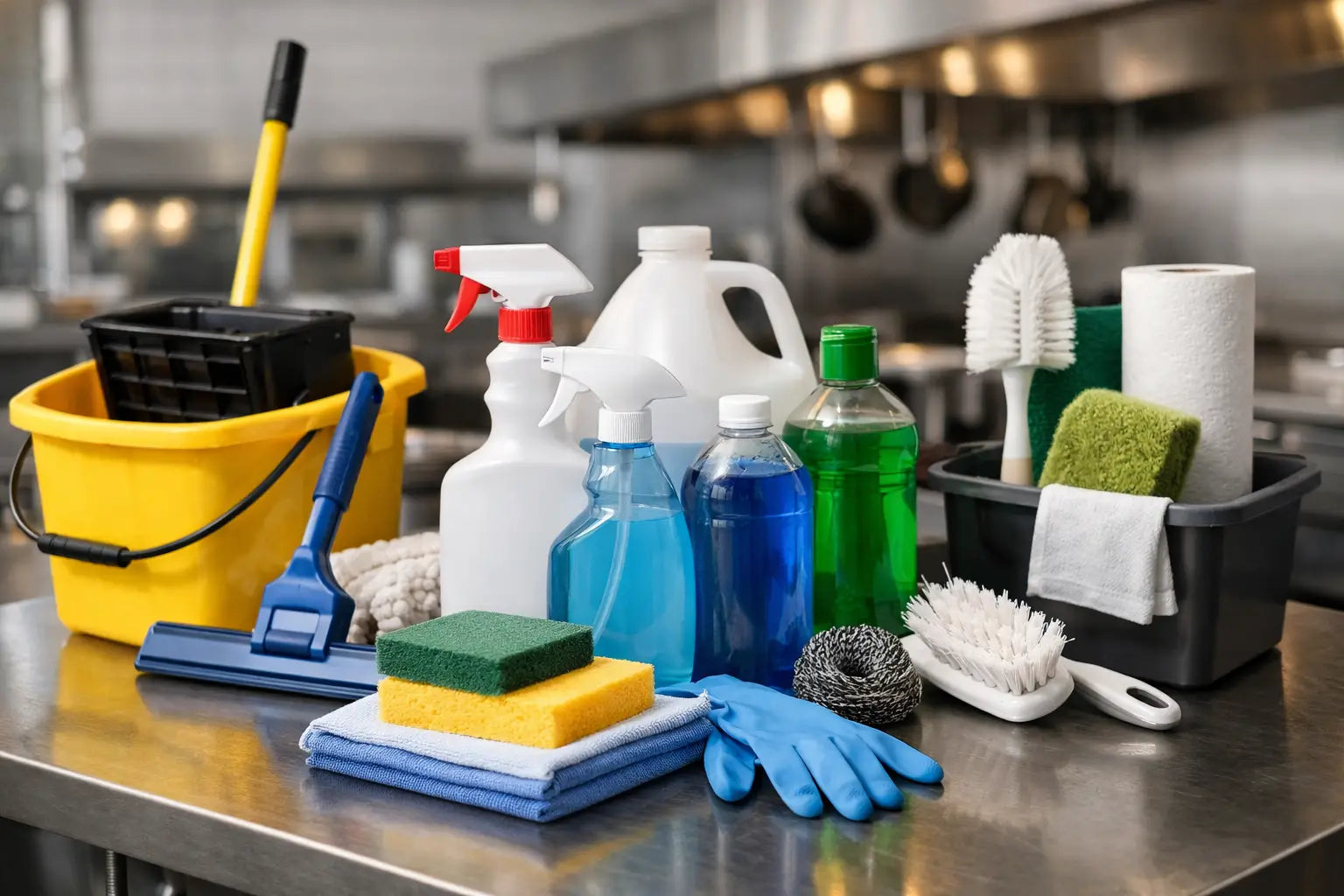
Back-of-house is where most of your cleaning volume happens, so this section should be the backbone of your restaurant cleaning supplies checklist. Start with the basics: dish soap, sanitizing solution, disinfectant, degreaser, and floor cleaner. These are not interchangeable, and using one product for every task usually leads to poor results or wasted product.
Dish soap handles general washing for utensils, prep items, and washable surfaces. Sanitizing solution is essential for food-contact surfaces after cleaning. Disinfectant is better suited for non-food-contact areas where germ control is the goal. Degreaser is what keeps cook lines, hoods, splash zones, and nearby walls from building up layers that become harder and more expensive to remove later. Floor cleaner matters because restaurant floors collect grease, spills, and food debris quickly.
You will also want scrub pads, sponges, microfiber cloths, cleaning towels, mop heads, mop buckets, brooms, dustpans, and squeegees. Towels and cloths are easy to overlook until you are short on them during service. It is usually more cost-effective to keep a healthy backup stock than to stretch worn-out materials too long.
Trash liners belong on the kitchen list too. A broken or undersized bag creates extra labor, extra mess, and avoidable odors. If your kitchen handles high-volume prep or heavy wet waste, thicker liners are usually worth the cost. For lighter-duty bins, standard liners may be enough.
Supplies for dishwashing and sink stations
Dish areas need their own attention because they burn through supplies quickly. In addition to dish soap, keep pot and pan cleaner, descaling products if you have hard water buildup, scrub brushes, steel wool where appropriate, drying racks, and gloves.
Not every operation needs the same strength of cleaner here. A café with light food prep may not need the same heavy-duty products as a high-output grill or catering kitchen. The trade-off is simple: buying too mild a product can increase labor, while buying too aggressive a product for light use can raise costs without much benefit.
Supplies for grease-heavy cooking areas
Fry stations, grill lines, and oven zones need stronger support. Your checklist should include grill cleaner, oven cleaner, degreaser, scraper tools, and heavy-duty scouring pads. If your menu is oil-heavy, these items will move faster than you expect.
This is one area where buying in bulk often makes sense. Running out of degreaser during a busy week usually means buildup gets pushed to the next shift, and that buildup always takes more time to remove later.
Front-of-house cleaning essentials
Guests may never see your prep sinks, but they notice fingerprints on glass, sticky tabletops, and dusty corners right away. Front-of-house supplies should support both appearance and hygiene.
Include surface cleaner or sanitizer for tables, glass cleaner for windows and doors, dusting cloths, floor cleaner, mop supplies, and spot-cleaning products for spills. If you use disposable table covers, placemats, cups, or takeaway packaging, keep those stocked separately from your cleaning items so teams do not mix service inventory with janitorial supply.
For counters, host stands, and payment areas, quick-access wipes or spray-and-wipe solutions are practical. These spots need frequent cleaning throughout service, so convenience matters. A product that works well but takes too long to use often gets skipped when traffic picks up.
Restroom cleaning supplies
Restrooms shape customer perception more than many operators realize. You can serve great food, but if the restroom looks neglected, people assume the same about the kitchen.
Your checklist should include toilet bowl cleaner, disinfectant spray, glass cleaner, sink and fixture cleaner, floor cleaner, air freshening products if appropriate, toilet paper, paper towels, hand soap, and trash liners. A plunger and dedicated restroom cleaning tools should also be stored separately from kitchen equipment.
Paper products matter here just as much as chemicals. If soap or paper towels run out, guests notice immediately. Keeping backup stock in storage is not overkill. It is basic operational control.
Disposable cleaning and sanitation support items
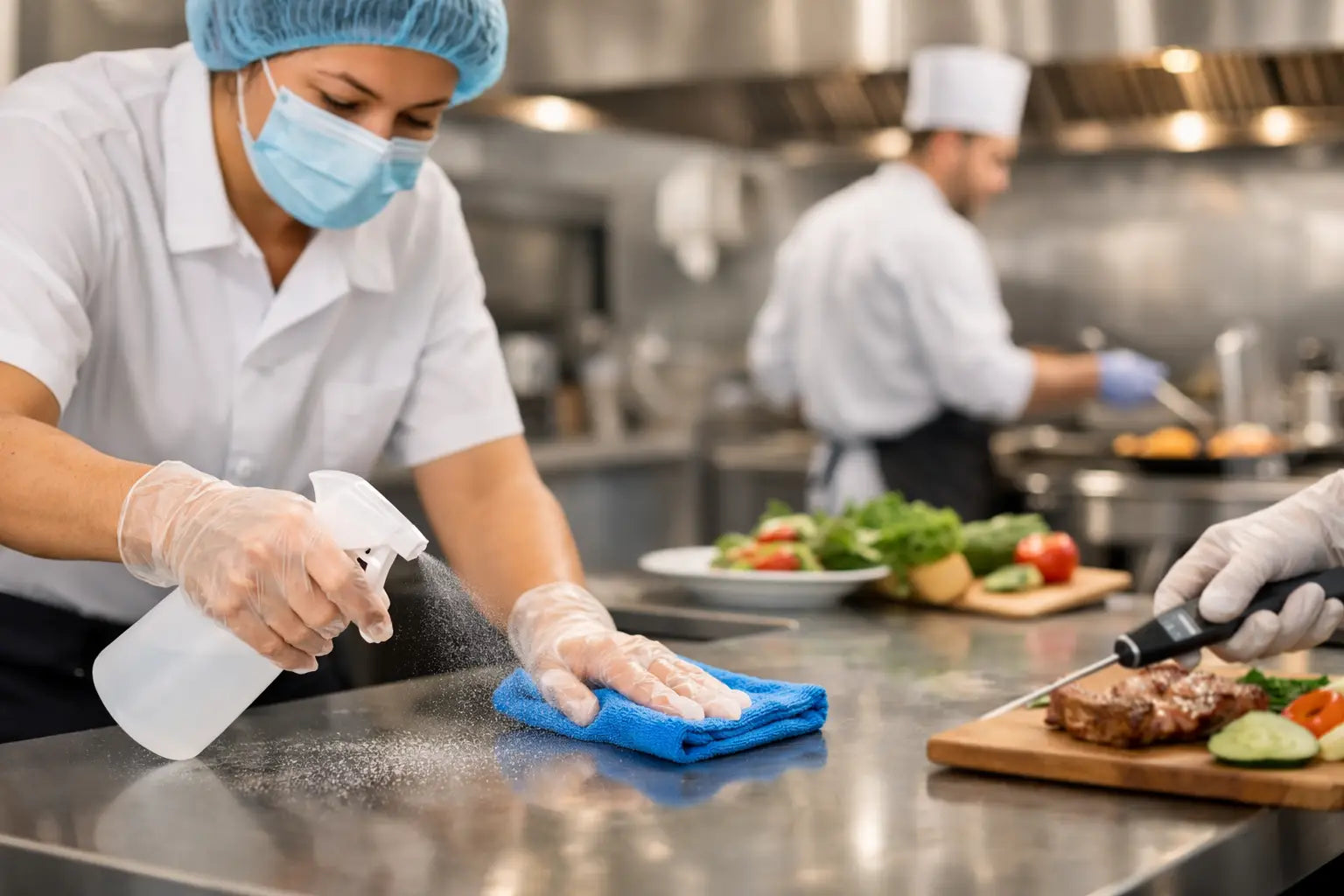
A practical restaurant cleaning supplies checklist should also cover the disposable items that support hygiene and cleanup speed. That includes disposable gloves, paper towels, wipes, trash bags, and disposable cloth alternatives for certain tasks.
These products help reduce cross-contamination risk when used correctly, and they can make cleanup more efficient during peak hours. They also give managers more flexibility. If laundry is delayed or reusable cloths run short, disposable backup supplies keep the operation moving.
For businesses that already source packaging, cups, containers, and cleaning products together, consolidating these purchases can save time and simplify reordering. That is one reason many operators prefer a single supply partner like White Pack for everyday operational essentials.
How to organize your checklist by frequency
A checklist works best when it matches real usage. One master list is helpful, but ordering becomes easier when you break it into daily, weekly, and monthly review items.
Daily-use products usually include sanitizer, dish soap, degreaser, gloves, paper towels, trash liners, hand soap, and restroom paper products. Weekly review items may include glass cleaner, floor care products, scrub pads, and backup cloth stock. Monthly review items often include deep-clean chemicals, specialty descalers, or seasonal extras tied to business volume.
If your team manages multiple shifts, assign responsibility clearly. A checklist that belongs to everyone usually belongs to no one. One person should own counts, another can approve reorder points, and both should know what low stock actually means.
Common buying mistakes to avoid
The biggest mistake is buying too narrowly. Some restaurants stock chemicals but forget tools, liners, gloves, and replacement mop heads. Others overbuy specialty products and underbuy the basics they use every day.
Another common issue is choosing the cheapest option without thinking about performance. Lower-cost products can be the right move, but only if they hold up under your actual workload. If a thinner trash bag tears more often or a weaker cleaner requires double the effort, the lower shelf price does not save money.
Storage matters too. Bulk buying can reduce cost per unit, but only if you have dry, organized space and a system to rotate stock. If products are stored poorly, you may end up with waste, damaged packaging, or staff using the wrong item because labeling is unclear.
Build a checklist that fits your restaurant
There is no single perfect list for every operation. A small coffee shop, a food truck commissary, and a full-service restaurant all have different cleaning patterns. What matters is covering every area, matching products to actual use, and keeping enough supply on hand to avoid last-minute shortages.
A useful checklist should be easy to scan, easy to update, and realistic about consumption. If you revise it only after a problem, you are already behind. Review it based on sales volume, menu changes, seasonality, and staff feedback from the floor and kitchen.
Clean operations run better because they are stocked better. When the right supplies are in place, your team works faster, your space stays safer, and daily service feels a lot more controlled.