Cart
0
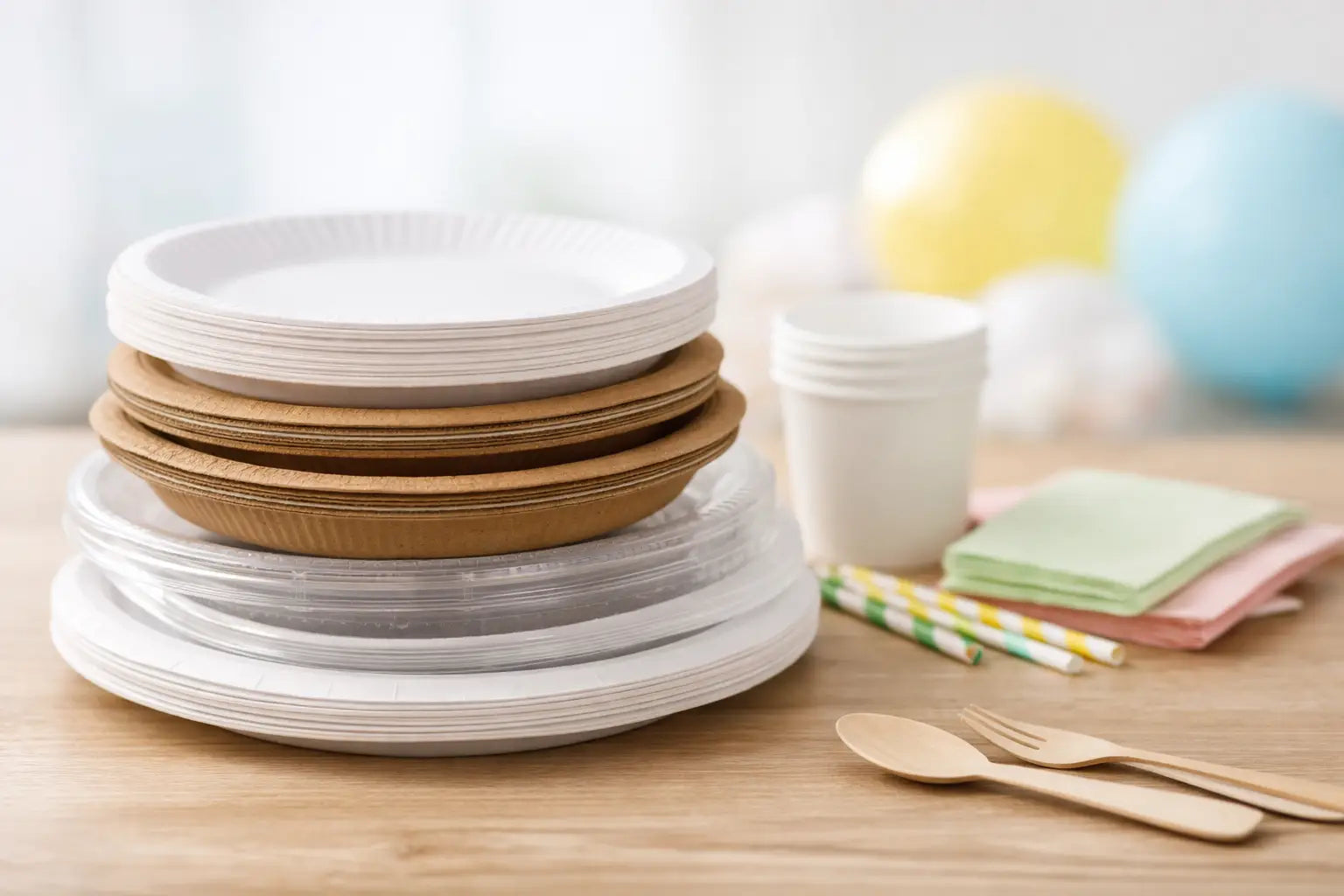
Running out of plates halfway through service is the kind of problem that feels small until guests are holding food with napkins. If you are asking how many disposable plates needed for a party, office lunch, catering job, or family event, the right answer depends on three things: guest count, menu type, and whether people will use more than one plate.
That is why a simple headcount is not enough. A coffee-and-cake setup needs far fewer plates than a buffet with saucy mains, sides, and dessert. The goal is to order enough to keep service smooth without overspending or storing cartons of extras you will not use.
How many disposable plates needed for most events
For a basic estimate, start with one main plate per guest for light meals and two plates per guest for full meals or self-serve events. If dessert is being served separately, add one dessert plate per guest unless guests can use the same plate comfortably. For children, you can often count slightly lower if portions are simple, but mixed-age events still need a cushion.
Here is the practical rule many buyers use:
- Light snacks or cake only: 1 plate per guest
- Standard meal service: 1.5 to 2 plates per guest
- Buffet or cookout: 2 to 3 plates per guest
- Meal plus separate dessert: add 1 dessert plate per guest
Why plate counts are usually higher than guest counts
Many event hosts assume 50 guests means 50 plates. In practice, that can be too tight.
At buffets, people often return for seconds with a fresh plate. At outdoor events, wind, spills, or dropped items can increase use. At office lunches and catered events, guests may take one plate for food and another for dessert, fruit, or pastries. If the plate is smaller than the meal requires, usage goes up again because guests double up.
This is where plate size and strength matter just as much as quantity. A durable dinner plate can reduce the need for stacking two thin plates together. A separate dessert or salad plate can also help control waste by matching the plate to the portion instead of forcing every item onto one oversized plate.
A simple formula to calculate how many disposable plates needed
If you want a reliable number, use this formula:
Guest count x expected plate usage per person + 10% backup
For example, if you have 100 guests and expect each person to use 2 plates, you need 200 plates. Add 10% backup, and your target becomes 220 plates.
That backup is not excessive. It covers late arrivals, accidental waste, extra servings, and the simple fact that live events are rarely exact. For business use, that margin is even more useful because running short during service creates disruption that costs more than a small overage.
Plate planning by event type
Birthday parties and family gatherings
For a casual birthday party with pizza, snacks, and cake, plan on 2 plates per person. One is usually used for the main food, and one for cake or dessert. If you are serving only cake and finger foods, 1 to 1.5 plates per guest is usually enough.
For children’s parties, simple foods can reduce plate use, but desserts, craft mess, and quick turnovers often push counts back up. If parents are staying, calculate for total attendance, not just the kids.
BBQs, picnics, and outdoor cookouts
Outdoor meals usually require more plates, not fewer. Burgers, sides, sauces, fruit, and dessert make guests more likely to take a clean plate for round two. Plan on 2 to 3 plates per guest, especially if the event runs several hours.
If the menu includes greasy or heavy foods, choose stronger plates so guests do not double-stack. That can lower overall usage and make service easier.
Weddings, large parties, and catered events
For formal or semi-formal events, count plates by course. If you are serving appetizers, dinner, and dessert separately, calculate each plate type on its own. A 150-person event may need 150 appetizer plates, 180 to 300 dinner plates depending on service style, and 150 dessert plates.
Plated service tends to be more predictable. Buffets need more backup because guests serve themselves and often replace plates between trips.
Office lunches and workplace events
For staff lunches, meetings, and breakroom events, 1.5 to 2 plates per person usually works. If the meal is boxed or preportioned, use the lower end. If employees are serving themselves from shared trays, use the higher end.
Dessert-heavy office events can increase demand quickly. Sheet cake, cookies, fruit trays, and separate snack stations often lead to more plate use than a single lunch service.
Restaurants, food service, and takeout support
Commercial buyers should estimate from service style rather than guest count alone. A quick-serve operation with single-plate meals can order more tightly. A catering team, buffet line, or event venue needs a wider safety margin because demand shifts by menu and guest behavior.
It also makes sense to align plate counts with matching cups, cutlery, trays, and takeaway containers. Ordering these items together helps avoid the common problem of having enough plates but not enough supporting disposables to complete service.
Choosing the right plate size can reduce waste
One reason buyers end up using too many plates is choosing one size for every food type. That sounds simpler, but it often creates waste.
Dinner plates are best for full meals, grilled items, and buffet service. Dessert plates work better for cake, pastries, and fruit. Smaller plates for snacks or appetizers keep usage more controlled and usually look cleaner during service.
If you expect heavier foods, do not cut corners on plate strength. A weak plate often turns into two plates because guests stack one under another for support. Paying attention to material and durability can lower total consumption, even if the per-unit cost is slightly higher.
When to order extra plates
There are situations where your backup should be more than 10%.
Increase your overage if guests are serving themselves, children are attending, the event is outdoors, or the menu includes messy foods with sauces, dressings, or multiple rounds. Add more cushion if vendors, staff, entertainers, or drivers will also eat.
For business events, launches, open houses, and catered functions, the safest approach is to protect the guest experience first. The cost of a shortfall is usually higher than the cost of a small surplus.
Common mistakes that lead to plate shortages
The biggest mistake is ordering exactly one plate per person for any event involving a meal. Another is forgetting dessert, appetizers, or vendor meals. Buyers also underestimate how often guests replace plates at buffets or outdoor events.
The last common issue is mismatching the plate to the menu. If the plate is too small, too flimsy, or not suited to the food, usage rises. Smart planning is not just about quantity. It is also about choosing products that fit the job.
A quick planning example
Say you are hosting 75 guests for a backyard graduation party with burgers, sides, and cake. This is not a one-plate event. A realistic estimate is 2 plates per guest, plus dessert service if separate.
You could plan 150 dinner plates and 75 dessert plates, then add a modest backup. That puts you closer to 165 dinner plates and 85 dessert plates. That quantity keeps service moving and gives you room for seconds, spills, or extra guests.
If you are ordering for a larger office, restaurant, or catering job, the same logic scales. Start with how people will eat, not just how many people are coming.
The best plate count is the one that supports the event without forcing last-minute fixes. When you match quantity, size, and durability to the way food will actually be served, buying disposable plates becomes a straightforward supply decision instead of a guessing game. White Pack is built for exactly that kind of practical planning.