Cart
0
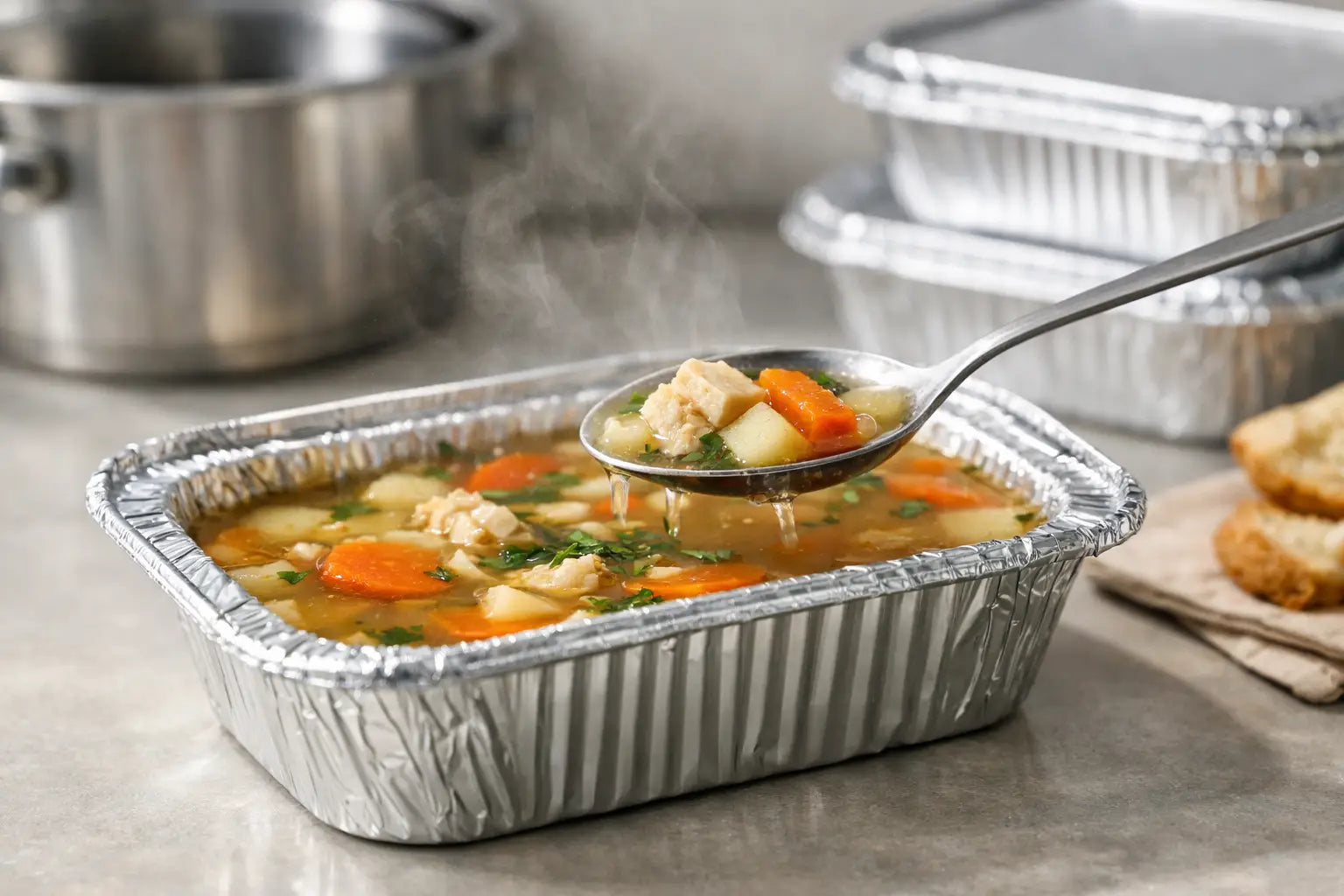
Hot soup is easy to serve until the container starts to matter. If you are packing broth for takeout, sending chowder to an event, or storing leftovers at home, one question comes up fast: can foil containers hold soup?
The short answer is yes, foil containers can hold soup, but only under the right conditions. They work best for short-term holding, transport, reheating in many cases, and high-volume food service where speed matters. They are not automatically the best choice for every soup, every lid style, or every delivery setup. The real answer depends on thickness, fill level, temperature, travel time, and whether the soup is thin, creamy, oily, or acidic.
Can foil containers hold soup without leaking?
They can, provided the container is made for food service and has enough structure for liquid use. A quality foil container is not just a sheet of aluminum folded into shape. It is pressed to create walls, a base, and a rim that can support hot contents. That matters because soup puts pressure on seams, especially when it is carried, stacked, or moved in bulk.
Leak risk usually comes from handling, not from the foil material itself. If the container gets squeezed at the sides, overfilled to the rim, or topped with a loose-fitting lid, the chance of spills goes up. Thin broth is more likely to slosh than a thick stew, so the type of soup makes a difference too.
For restaurants, caterers, and event teams, foil containers are often a practical option when the soup is being served soon and the handoff is controlled. For households, they can be useful when portioning leftovers or sending food to gatherings. In both cases, the container needs to match the job.
When foil containers are a good choice
Foil containers make sense when convenience, availability, and heat tolerance matter. They handle hot food well, which is one of the main reasons they stay popular in food service. If you are filling soup straight from a hot line or kitchen prep area, foil can manage that temperature better than many lightweight alternatives.
They are also useful for batch packing. If a kitchen is preparing multiple portions of soup for pickup, staff can fill, cover, and stage them quickly. They stack reasonably well, help keep operations moving, and are easy to store before use.
Another advantage is reheating flexibility. Many customers like containers that can go from refrigerator to oven in the right setting. That is not true for every disposable food container, but foil gives more flexibility here. For prepared soups, baked pasta soups, French onion soup, or side portions that may need warming again, that can be a real benefit.
Where foil containers have limits
The biggest weakness is insulation. Foil handles heat, but it does not keep soup hot for as long as insulated containers do. If the order is heading out for a longer delivery route, the soup may lose heat faster than expected. That does not mean foil fails. It means it may need backup, such as a fitted lid, an outer bag, or faster dispatch.
Another limitation is shape stability during rough transport. A rigid plastic soup container often feels more secure in a cup holder or crowded takeout bag. Foil can bend if it is gripped too tightly or packed under heavier items. For short trips, that may be fine. For delivery apps, catering drop-offs, or large mixed orders, container strength becomes more important.
Acidic soups also deserve a closer look. Tomato-based soups, lemony broths, and other highly acidic recipes are usually fine for short-term contact, but foil is not the best choice for long-term storage of acidic foods. If the soup will sit overnight or longer, especially in the refrigerator, another container type may be the safer and cleaner option.
Choosing the right foil container for soup
Not all foil containers perform the same way. Depth matters. A shallow tray may technically hold liquid, but it is less practical for soup because surface movement increases spill risk. Deeper containers are usually the better choice because they control sloshing and leave room for a lid.
Rim strength matters too. A reinforced rim helps the container keep its shape when lifted, sealed, or stacked. That is especially useful in commercial kitchens where speed can lead to rougher handling. If staff are filling dozens of portions during a rush, a stronger rim reduces problems.
Lids are just as important as the base. A container that holds soup well can still become a poor choice if the lid does not fit securely. For liquid foods, the lid should sit tight and stay in place during transport. If the lid is loose, steam, drips, and spills become far more likely.
If you are buying for business use, it helps to think in terms of the full serving process. Filling, carrying, stacking, sealing, transporting, and reheating all affect whether a foil container will work well in practice.
Best uses by soup type
Thicker soups tend to perform better in foil containers than very thin ones. Chili, potato soup, creamy chicken soup, lentil soup, and chunky vegetable soups are usually easier to manage. They move less during transport and create less splash pressure against the lid.
Thin broths, consommé, and noodle soups can still work, but they need more care. Leave headspace, secure the lid properly, and avoid packing them where they can tip. If the soup has a lot of free liquid, the risk is less about the foil and more about motion during carrying.
How to prevent spills and handling problems
A few practical steps make a big difference. Do not fill foil containers to the top. Leaving some space below the rim helps reduce splashing when the container is moved. It also gives the lid a better chance to stay clean and sealed.
Set the filled container on a flat surface before applying the lid. If the rim is bent, reshape it gently first. Even a small dent can affect how the lid sits. In a busy kitchen, that can be easy to miss, and small fit issues often become leaks later.
For transport, keep soup containers upright and separate them from heavy entrees. If they are packed under dense items, the sides can compress. A simple bagging routine helps here. Soup goes level, supported, and away from products that can shift onto it.
For larger operations, staff training matters more than people expect. The container may be suitable, but inconsistent filling and packing create avoidable failures. Good supplies help, but process matters too.
Are foil containers good for home use?
Yes, especially when you want a simple, disposable option for meal prep, sharing food, or storing short-term leftovers. They are handy for family events, holiday cooking, and sending soup home with guests. They also work well when you do not want to risk losing reusable containers.
That said, if you plan to freeze soup for longer periods or store acidic recipes for several days, another material may be more practical. Foil is useful, but it is not the answer to every storage need. Households usually benefit most when they use foil containers for convenience and short-cycle food handling, not as a one-size-fits-all solution.
The practical answer to can foil containers hold soup
So, can foil containers hold soup? Yes, and they can do it well when the container is deep enough, sturdy enough, and paired with a secure lid. They are a solid option for hot filling, quick service, takeout staging, catering support, and short-term home use.
The trade-off is that they need smart handling. They are less forgiving during long transport, they do not insulate as well as specialized soup containers, and they are not ideal for every recipe or storage timeline. Buyers who think about soup type, travel distance, and lid fit usually get the best results.
If your goal is dependable service without overcomplicating supply choices, foil containers can be a practical part of the setup. The key is simple: match the container to the soup, not just the shelf.